

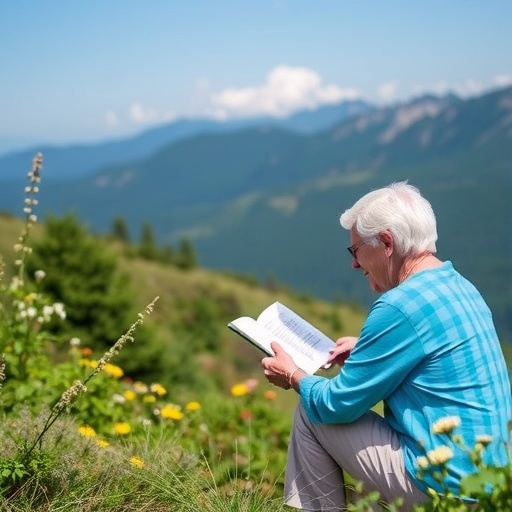
In an era marked by rapid demographic shifts and increasing longevity, the question of how to bolster resilience among older populations has become a critical focus for researchers, policymakers, and healthcare providers alike. Recent groundbreaking work conducted by Cornu, Marchal, and Keune, published in BMC Geriatrics (2026), provides a compelling synthesis on how nature-based interventions (NBIs) can effectively enhance the resilience of older adults. This study utilizes a best fit framework approach to unpack the complex interplay between natural environments and the psychosocial mechanisms that contribute to adaptive capacity in later life.
Resilience—the ability to recover from adversity, maintain psychological well-being, and sustain physical health—is a multifaceted construct, especially in older persons who often face compounding challenges due to age-related physiological decline, social isolation, and the burden of chronic diseases. Traditional resilience-building strategies have primarily concentrated on medical and social interventions, but emerging evidence points to the powerful role of nature. Nature-based interventions encompass activities ranging from horticultural therapy and green exercise to exposure to natural landscapes, all designed to leverage the restorative qualities of the environment.
The study begins by conducting a rigorous theoretical synthesis, integrating diverse strands of evidence from gerontology, environmental psychology, and public health. Utilizing a ‘best fit’ framework synthesis methodology, the authors systematically collated data from multiple qualitative and quantitative studies to discern the underlying processes by which NBIs nurture resilience. This methodological choice is significant because it bridges theoretical frameworks with empirical findings, yielding a robust conceptual understanding rather than isolated observations.
One of the pivotal insights of the research is the identification of distinct resilience pathways activated by nature encounters. Physiologically, exposure to natural environments has been shown to reduce cortisol levels, lower blood pressure, and mitigate systemic inflammation—biomarkers intimately tied to stress and resilience. These biological effects serve as the substrate upon which psychological benefits are constructed. Psychologically, nature incumbents often report enhanced mood, reduced anxiety, and improved cognitive functioning, which collectively amplify coping capacities in the elderly.
Beyond the individual physiological and psychological effects, the authors emphasize the indispensable role of social interactions facilitated by nature-based activities. Group gardening, community nature walks, or wilderness outings provide rich grounds for social cohesion, which is a cornerstone of resilience. Social connectedness reduces feelings of loneliness, fosters a sense of purpose, and nurtures mutual support networks. The study convincingly argues that NBIs act as catalysts for strengthening these social buffers.
A critical technical element addressed by the synthesis is the dose-response relationship inherent in nature exposure—how much interaction with nature is required to yield significant resilience benefits remains an open question. The authors dissect various models, proposing that a minimum threshold of exposure time, frequency, and intensity is necessary, but these parameters vary based on personal health status, cultural context, and environmental settings. This nuanced understanding is essential for tailoring interventions that maximize efficacy.
The ecological characteristics of the natural settings themselves also emerge as determinants of intervention success. Biodiverse, accessible, and well-maintained green spaces are more likely to evoke positive engagement and sustained participation among older adults. Conversely, environments that are perceived as unsafe or poorly designed may discourage use and thereby attenuate the potential for resilience gains. The inclusion of environmental quality and usability metrics elevates the discussion to a systems-level perspective.
Importantly, the study navigates the challenge of heterogeneity within the older adult population. Individual differences—in mobility, sensory capabilities, cognitive status, and personal preferences—necessitate adaptive intervention designs. The best fit framework adeptly incorporates these variables, suggesting that customizable and flexible nature-based programs are paramount for inclusivity and impact.
Technological innovations are also highlighted as augmentative tools in facilitating NBIs. Virtual reality experiences simulating nature or augmented reality overlays in botanical gardens expand accessibility for those with mobility limitations or residing in urban settings devoid of ample green spaces. The intersection of technology and nature exposure represents a promising frontier, although the authors caution about the lack of robust empirical validation at this nascent stage.
From a policy perspective, the implications of this synthesis are far-reaching. It underlines the urgency of integrating green infrastructure planning with public health strategies aimed at aging populations. Urban design that prioritizes abundant, safe, and engaging natural spaces emerges not just as a matter of aesthetics but as a critical determinant of societal resilience. Subsidized programs that facilitate nature engagement for older adults could be strategically positioned to diminish healthcare costs and improve quality of life.
The authors also underscore gaps in the current research landscape, advocating for longitudinal studies that track resilience trajectories over time relative to sustained nature exposure. They suggest integrating wearable biosensors to objectively monitor physiological markers alongside subjective well-being reports, thus enhancing the granularity and reliability of future investigations. Cross-cultural comparisons would further elucidate the universality or context-dependence of the observed resilience mechanisms.
Another layer of complexity addressed involves the psychological constructs mediating the benefits of NBIs. Concepts such as sense of place, environmental identity, and mindfulness are woven into the interpretive framework. These constructs help explain why mere exposure to greenery may be insufficient without emotional and cognitive engagement. Facilitating active, meaningful interactions with nature becomes a priority for practitioners designing intervention protocols.
The study’s holistic perspective also incorporates the intergenerational dimension, suggesting that nature-based activities that engage older adults alongside younger family members or community groups can amplify social and emotional resilience. Intergenerational programming may break cycles of isolation and foster a renewed sense of agency and societal contribution among the elderly.
Crucially, the best fit framework synthesis does not treat resilience as a static endpoint but as a dynamic, adaptive process. This temporal view accommodates the ebb and flow of personal circumstances and environmental contexts, highlighting the need for ongoing nature engagement rather than episodic contact. It proposes mechanisms for sustained motivation including goal setting, feedback loops, and community reinforcement.
In conclusion, the work by Cornu and colleagues represents a seminal contribution that not only deepens scientific understanding but also galvanizes actionable pathways for enhancing the well-being of older adults via nature-based interventions. The integration of physiological, psychological, social, and environmental factors into a coherent framework equips stakeholders with the knowledge to harness natural environments as vital assets in resilience promotion. As populations age globally, such interdisciplinary and pragmatic research offers a beacon of hope and innovation.
Integrating these findings into public health agendas and urban planning schemata will require collaborative efforts spanning governments, healthcare systems, community organizations, and landscape architects. Beyond the evident health benefits, promoting nature engagement among older persons can foster societal values of sustainability, connectedness, and intergenerational solidarity. Ultimately, this research invites us to reconsider the very fabric of aging, situating nature as a profound and accessible instrument of resilience in the sunset years.
Subject of Research: Investigation of how nature-based interventions enhance resilience in older adults using a best fit framework synthesis approach.
Article Title: How do nature-based interventions increase the resilience of older persons? A best fit framework synthesis.
Article References:
Cornu, T., Marchal, B., Keune, H. et al. How do nature-based interventions increase the resilience of older persons? A best fit framework synthesis. BMC Geriatr (2026). https://doi.org/10.1186/s12877-026-07122-5
Image Credits: AI Generated


