

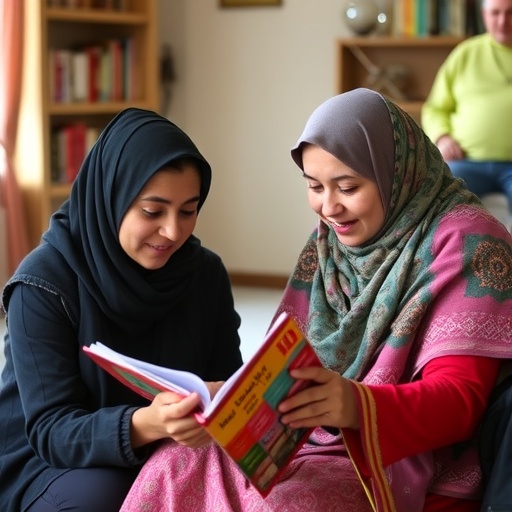
In an era where health information is more accessible than ever, the importance of health literacy cannot be overstated. A recent study conducted in Northern Iran sheds light on how enhancing patient education through health literacy can significantly impact patient outcomes. The groundbreaking research, led by a team including Abadi, Attari, and Ghalandari, reveals insightful findings from a comprehensive cross-sectional study that questions the existing methods of patient education and offers innovative strategies for improvement.
Health literacy, defined as the ability to obtain, process, and understand basic health information, plays a pivotal role in empowering patients. The study highlights that a patient’s ability to comprehend medical instructions, navigate the healthcare system, and make informed decisions about their health are critical to achieving better health outcomes. This need for effective communication and education transcends numerous barriers, including linguistic differences, educational backgrounds, and varying levels of health knowledge among patients.
The researchers conducted their study with a well-defined objective: to assess the current state of health literacy among patients in Northern Iran and identify the gaps in patient education. By meticulously designing a questionnaire that measured health literacy levels, the team was able to gather a wealth of data from diverse demographic groups. This approach ensured that the findings are not only robust but also representative of the larger population.
One of the key revelations from the study is that many patients struggle with understanding medical terminology and instructions. For instance, individuals frequently reported confusion when trying to comprehend prescription labels or discharge instructions from healthcare providers. This disconnect between healthcare professionals and patients can lead to non-compliance with treatment regimens and ultimately hinder recovery. Therefore, the researchers emphasize the urgency of incorporating clearer communication strategies to bridge this gap.
The results of the study point toward a stark realization: a patient’s comprehension of health information directly correlates with their healthcare outcomes. In cases where patients are informed and knowledgeable about their conditions, they tend to adhere more closely to prescribed treatments and maintain healthier lifestyles. Conversely, the lack of understanding can lead to complications, increased healthcare costs, and adverse health effects. Hence, health literacy emerges as a fundamental factor in enhancing patient care.
To address the educational deficiencies identified, the researchers propose several innovative strategies aimed at bolstering health literacy among patients. One such strategy involves the use of visual aids and simplified language when conveying medical information. The integration of multimedia resources, such as videos and infographics, can make understanding complex health concepts more attainable. The study encourages healthcare providers to tailor their communication to meet the specific needs of each patient, enhancing overall engagement in their health management.
Moreover, the use of digital platforms and telemedicine has gained momentum in the healthcare sector, particularly in the wake of the COVID-19 pandemic. The study indicates that leveraging technology to disseminate health information can significantly enhance patient education. Mobile applications and educational websites, when designed with user-friendly interfaces, can empower patients to access reliable health information at their convenience, reinforcing their understanding and engagement with their health issues.
The implications of this research extend beyond the borders of Northern Iran. Health systems worldwide can draw parallels from these findings, recognizing that the challenge of health literacy is not confined to specific regions. Different communities face varied barriers to obtaining health information, and as such, solutions must be equally diverse. Globally, there is a pressing need for health care systems to adapt and innovate their educational approaches, especially as patient populations become increasingly diverse.
Continuing education for healthcare practitioners is also paramount. Investments in training programs that enhance communication skills and cultural competencies among providers can significantly elevate the quality of patient education. By adopting a patient-centered approach and valuing input from patients, healthcare providers can create an atmosphere that promotes learning and understanding.
Furthermore, the study opens the floor to discussions about policies aimed at improving health literacy. Governments and health organizations need to prioritize the development and implementation of health literacy programs. Collaborative efforts across sectors, including education, government, and community organizations, are essential to create a sustainable infrastructure for health education that reaches all individuals, regardless of their socio-economic status.
In conclusion, the findings from this comprehensive study in Northern Iran bring to light the critical role of health literacy in patient education and healthcare outcomes. By addressing the barriers patients face in understanding health information, we can enhance not only individual health outcomes but also public health on a larger scale. As we move forward, it is imperative for healthcare systems to tackle health literacy head-on, ensuring that every patient has the knowledge and resources they need to manage their health effectively. With increased awareness of health literacy’s importance, a future where patients are better informed and empowered to take charge of their health is within reach.
Subject of Research: Health literacy and patient education
Article Title: Enhancing patient education through health literacy: findings from a cross-sectional study in Northern Iran
Article References: Abadi, S.G., Attari, S.M., Ghalandari, M. et al. Enhancing patient education through health literacy: findings from a cross-sectional study in Northern Iran. Discov Educ 4, 565 (2025). https://doi.org/10.1007/s44217-025-00991-9
Image Credits: AI Generated
DOI: https://doi.org/10.1007/s44217-025-00991-9
Keywords: health literacy, patient education, healthcare outcomes, Northern Iran, health communication.


