

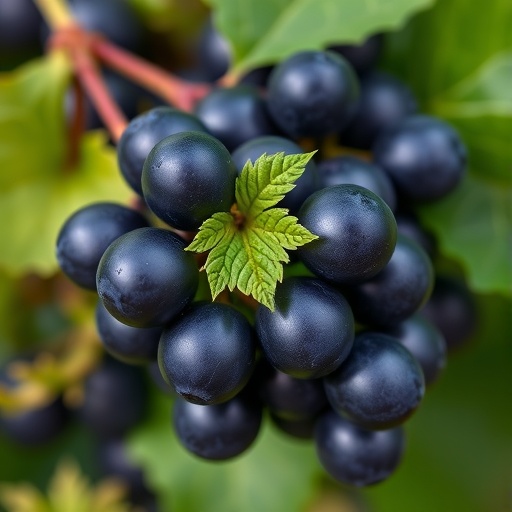
In a groundbreaking study that could redefine the therapeutic landscape for hepatocellular carcinoma (HCC), researchers have unveiled a novel mechanism by which black grape anthocyanins sensitize cancer cells to a commonly used chemotherapy drug, 5-fluorouracil (5-FU). This discovery hinges on the intricately synchronized regulation of autophagy and apoptosis—two fundamental cellular processes governing survival and programmed cell death. The implications of this research extend far beyond the immediate context, offering hope for more effective, targeted, and less toxic cancer treatments.
Hepatocellular carcinoma, a primary malignancy of the liver, represents one of the most prevalent and lethal cancers worldwide. Conventional chemotherapy, including 5-FU, often encounters resistance, limiting its efficacy and leading to poor clinical outcomes. The search for agents that can enhance chemosensitivity has thus become a critical pursuit. Black grape anthocyanins, natural bioactive compounds responsible for the fruit’s characteristic deep purple color, have emerged as promising candidates due to their potent antioxidant, anti-inflammatory, and anti-cancer properties.
The study investigates the molecular interplay between autophagy—a cellular degradation and recycling process—and apoptosis, the programmed death of damaged or harmful cells. Traditionally, these processes have been viewed as mutually exclusive; however, recent insights suggest a complex crosstalk that can be harnessed to tip the balance towards cancer cell death. By applying black grape anthocyanins to HepG2 cells, a widely used in vitro model for HCC, researchers demonstrated a synchronized activation of autophagy and apoptosis that significantly enhances the cytotoxic effects of 5-FU.
Advanced molecular assays revealed that anthocyanins modulate key signaling pathways, including the AMPK/mTOR axis, which is pivotal for autophagy regulation. Activation of AMPK leads to the inhibition of mTOR, a major negative regulator of autophagy, thereby promoting autophagic flux. This surge in autophagy creates a cellular environment wherein damaged organelles and proteins are efficiently removed, sensitizing cells to apoptosis induced by chemotherapeutic stress. Concurrently, anthocyanins upregulate pro-apoptotic factors such as Bax while downregulating anti-apoptotic proteins like Bcl-2, ensuring an irreversible commitment to cell death.
Another notable facet of this research is the dual role of reactive oxygen species (ROS) in mediating the synchronized response. Black grape anthocyanins, while acting as antioxidants in normal cells, paradoxically induce ROS accumulation in cancer cells. Elevated ROS levels trigger oxidative stress, which serves as a signal to activate both autophagy and apoptosis pathways. This selective toxicity toward malignant cells underscores the therapeutic potential of anthocyanins as adjuvants in chemotherapy.
The study further explored the timing and dosage regimen of co-treatment with 5-FU and anthocyanins. Optimal synchronization of drug administration maximizes therapeutic efficacy while minimizing adverse effects. The combination treatment not only reduced cell viability but also impaired colony formation and migration of HepG2 cells, indicating a promising strategy to curb tumor growth and metastasis.
The translational relevance of these findings is particularly compelling. Considering the accessibility and relative safety of natural compounds, black grape anthocyanins could be developed into complementary therapies that enhance the effectiveness of existing chemotherapeutic agents. This approach aligns with the broader movement toward precision medicine, where combination treatments are tailored to exploit specific vulnerabilities within cancer cells.
Analyzing the molecular signatures of treated cells via Western blotting and immunofluorescence microscopy confirmed enhanced expression of LC3-II, a hallmark of autophagosome formation, along with increased cleavage of caspase-3, a critical executor of apoptosis. These biomarkers collectively validate the synchronized activation of autophagy and apoptosis induced by the anthocyanin and 5-FU combination.
Importantly, the study addresses a vital challenge in cancer therapy: the development of chemoresistance. By elucidating the mechanisms underlying chemosensitization, it opens avenues to overcome resistance pathways that often arise during prolonged treatment. The induction of autophagy-dependent apoptosis provides a novel therapeutic axis that can circumvent traditional resistance mechanisms.
While the current research is limited to cell line models, it paves the way for future in vivo studies and clinical trials. Investigating the pharmacokinetics, bioavailability, and safety profile of black grape anthocyanins in animal models and humans will be essential steps toward clinical translation. Moreover, exploring the synergistic effects of anthocyanins with other chemotherapy drugs could broaden the applicability of these findings.
This innovative study also resonates with the broader theme of leveraging natural products for drug discovery. Anthocyanins, abundantly found in various berries and fruits, represent a vast and largely untapped reservoir of bioactive compounds that can modulate crucial cellular pathways. Harnessing their potential not only contributes to cancer therapy but also advocates for dietary interventions as preventive or adjunctive measures.
In conclusion, the synchronization of autophagy and apoptosis by black grape anthocyanins constitutes a compelling mechanism for chemosensitizing hepatocellular carcinoma cells to 5-FU treatment. This dual regulation enhances the therapeutic efficacy of chemotherapy while potentially reducing side effects through targeted action on cancer cells. The study exemplifies the successful integration of natural compounds with traditional chemotherapeutics, offering a promising paradigm for future cancer treatments. As the fight against liver cancer continues, such innovative approaches bring renewed hope for improved survival and quality of life for patients worldwide.
Subject of Research: Chemosensitization mechanisms in hepatocellular carcinoma cells via autophagy-apoptosis synchronization induced by black grape anthocyanins in combination with 5-fluorouracil.
Article Title: Autophagy-Apoptosis Synchronization: A Mechanism of Black Grape Anthocyanins Mediated Chemosensitization of 5-FU in HepG2 Hepatocellular Carcinoma Cells.
Article References:
Shireen, Z., Saha, S., Das, U. et al. Autophagy-Apoptosis synchronization: A mechanism of black grape anthocyanins mediated chemosensitization of 5-FU in HepG2 hepatocellular carcinoma cells. Med Oncol 43, 106 (2026). https://doi.org/10.1007/s12032-025-03177-3
Image Credits: AI Generated


