

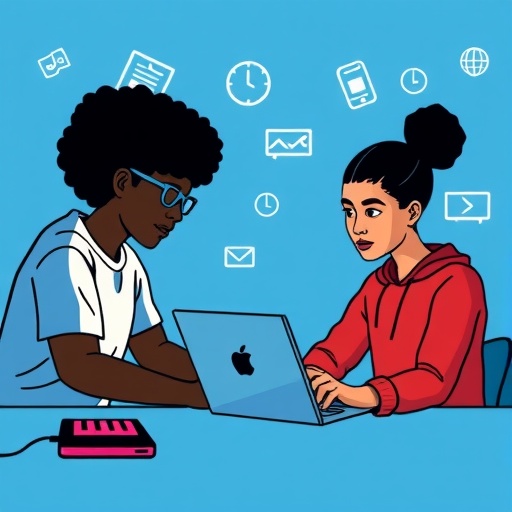
A groundbreaking new study conducted by scholars from the University of California, Riverside, and the University of Southern California has uncovered significant racial and ethnic disparities in the digital literacy exhibited by adolescents. Contrary to longstanding assumptions, Black and Latino teenagers demonstrate markedly advanced abilities in recognizing and combating online disinformation, particularly content related to race and ethnicity, surpassing their white counterparts in both speed and accuracy of detection.
This research reveals that these youths are not only adept at identifying false claims and racist propaganda but also more likely to engage in critical verification processes using credible and authoritative sources. Moreover, they actively respond by generating factual, corrective content on digital platforms. Such skills, the study authors emphasize, largely stem from lived experiences rather than formal educational instruction, highlighting a critical gap in current school curricula.
Avriel Epps, an assistant professor at UC Riverside’s School of Education and the study’s lead author, underscores that these adolescents have cultivated sophisticated digital literacy interventions. Their ability to navigate and challenge online spaces infused with racialized content reflects experiential learning developed through ongoing interactions with digital racism. This critical insight challenges previous academic narratives that have often underestimated the digital competencies of Black youth.
Published in the peer-reviewed journal New Media & Society, the findings directly contest earlier research suggesting that Black adolescents lag behind in digital literacy. Epps and co-author Brendesha Tynes, a professor of education and psychology at USC and principal investigator for the National Survey of Critical Digital Literacy, investigated this paradox by examining a comprehensive dataset of adolescents’ real-time digital engagement.
Their methodology involved daily diary entries submitted by over 100 Black adolescents, alongside similarly sized samples of Latino and white youths aged 11 to 19. Participants recorded their interactions with race-related digital content, allowing the research team to meticulously assess what they define as Critical Race Digital Literacy (CRDL) — the capacity to recognize, critique, and evaluate media through a racialized lens sensitive to manifestations of racism.
This CRDL framework revealed a consistent pattern where Black and Latino teens were significantly more proactive in challenging racist and misleading digital content. Their tactics included crafting original social media posts that refuted false narratives, sharing evidence-based articles from reputable sources, and engaging in digital activism aimed at supporting their communities and countering stereotypes.
The study suggests that these youths’ heightened vigilance and skillfulness are not coincidental but a direct result of the necessity to navigate environments rife with racial microaggressions and systemic bias, both online and offline. Epps explains that this continual exposure fosters a kind of hyper-awareness that translates effectively into online critical literacy practices, enabling these adolescents to counteract misinformation with greater acuity.
In contrast, white adolescents demonstrated a lower propensity to question or verify race-related misinformation, a finding attributed not to intellectual capacity but to differential lived experiences. Since white youths generally lack the same exposure to racialized hostility and digital racism, they may lack the same urgency or incentive to develop critical digital literacy skills in this specific context.
The study’s outcome highlights important nuances overlooked in prior research, such as a 2021 report by the Stanford History Education Group that found Black students scoring lower on digital media analysis tasks overall. Crucially, that work did not isolate content concerning race or racialized misinformation, a gap that the present study addresses with technological precision and nuanced racial framing.
In an era where misinformation campaigns are increasingly sophisticated and often weaponized along racial lines, the findings pose urgent implications for educators, policymakers, and digital platform designers. Many U.S. high schools are incorporating digital literacy education; however, the racialized dimensions of misinformation remain largely absent from these efforts. Compounding the problem, political resistance to teaching systemic racism—such as opposition to critical race theory—further restricts candid classroom discussions on race and digital equity.
Epps and Tynes advocate for harnessing the lived expertise of youth of color as a foundational pillar for developing more culturally relevant and equitable digital literacy pedagogy. They argue that rather than shifting responsibility onto these adolescents, education systems should recognize, validate, and build upon the critical competencies they already possess. This approach would make digital literacy education more pertinent and just.
Importantly, the researchers emphasize that culturally responsive teaching transcends mere content integration; it fundamentally enhances learning across disciplines. Whether in math, language arts, or digital citizenship, curricula that reflect and honor students’ diverse cultural backgrounds foster deeper engagement and critical thinking, especially concerning digital media and misinformation.
The published article, “Racial-ethnic differences in adolescents’ daily enactment of critical race digital literacy skills: A daily diary study,” further delineates the complexities of these findings, elaborating on the mechanics of CRDL within adolescent populations. In addition to Epps and Tynes, co-authors Matthew Coopilton of Cal State Northridge and Devin English from Rutgers University contributed to the research.
As misinformation continues to evolve in sophistication and impact, this study provides an essential recalibration of assumptions about racial digital literacy gaps. It calls for educators and policymakers to embrace the digital acumen of Black and Latino youths as a transformative resource—not only challenging systemic inequities online but also fostering a more inclusive and effective educational framework.
Subject of Research: People
Article Title: Racial-ethnic differences in adolescents’ daily enactment of critical race digital literacy skills: A daily diary study
News Publication Date: 28-Dec-2025
Web References: 10.1177/14614448251404416
Image Credits: UC Riverside/USC
Keywords: digital literacy, misinformation, critical race digital literacy, Black adolescents, Latino youth, racial-ethnic differences, online disinformation, digital activism, digital citizenship, culturally responsive pedagogy


