

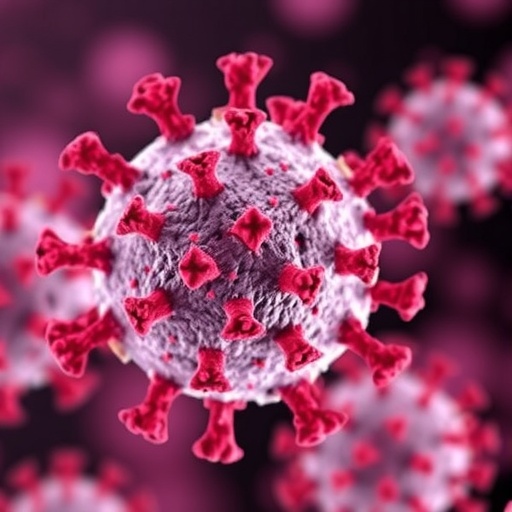
In a groundbreaking advance that promises to redefine our approach to treating life-threatening infections, scientists have developed a novel bioengineered viral system capable of editing RNA in macrophages directly within living organisms. This innovative technique, detailed in a recent publication in Nature Communications, harnesses chemogenetic principles to orchestrate precise molecular interventions against sepsis, a condition that remains one of the most formidable challenges in critical care medicine worldwide.
Sepsis, often described as the body’s catastrophic response to infection, leads to widespread inflammation, multiple organ failure, and frequently death. Despite extensive research, existing treatments for sepsis are largely supportive, focusing on controlling infection and managing symptoms rather than targeting the underlying dysregulation of immune responses. The new study authored by Xi, W., Xu, Y., Bao, W., and colleagues represents a paradigm shift, demonstrating the feasibility of in vivo RNA editing to modulate macrophages—key immune cells implicated in the inflammatory cascade that drives sepsis progression.
At the heart of this breakthrough is the design of bioengineered viruses tailored to deliver precise RNA editing enzymes specifically to macrophages residing in the bloodstream and affected tissues. By integrating chemogenetic control elements, the scientists ensured that the RNA editing activity could be selectively activated in response to administered small molecules, allowing for temporal regulation and minimizing off-target effects. This degree of control is unprecedented in the field of RNA therapeutics, particularly within the delicate immune microenvironment during sepsis.
The technology exploits the unique ability of macrophages to phagocytose and respond to viral vectors, turning them into efficient vehicles for delivering therapeutic payloads. Upon infection by these bioengineered viruses, the macrophages undergo site-specific RNA editing mediated by engineered enzymes derived from ADAR (adenosine deaminases acting on RNA) family proteins. These enzymes catalyze the conversion of adenosine to inosine in RNA transcripts, effectively correcting pathogenic RNA sequences or modulating gene expression profiles to attenuate hyperinflammatory states.
Beyond simple proof-of-concept, the research team validated the therapeutic potential of their approach in robust animal models of sepsis. Treated subjects exhibited marked reductions in systemic inflammation markers, improved organ function, and significantly enhanced survival rates compared to untreated controls. The in vivo editing not only tempered harmful cytokine storms but also preserved the essential pathogen-killing functions of macrophages, striking a critical balance that has eluded previous immunomodulatory strategies.
The implications of this study extend far beyond sepsis. The approach exemplifies a versatile platform whereby RNA editing can be precisely and safely executed in specific immune cell populations, opening avenues to tackle diverse diseases rooted in immune dysregulation, including autoimmune disorders and chronic inflammatory conditions. Moreover, the chemogenetic dimension introduces a layer of external control, granting clinicians the ability to finely tune therapeutic activity in dynamic clinical scenarios.
A critical technical challenge addressed by the team was engineering viral vectors that combine high specificity with minimal immunogenicity. By employing sophisticated molecular engineering strategies, the vectors avoid triggering detrimental immune responses that could otherwise exacerbate sepsis pathology or undermine treatment efficacy. The careful optimization of viral capsid proteins and promoter elements ensured selective targeting and robust RNA editing activity exclusively in macrophages.
Furthermore, the temporal control afforded by chemogenetics mitigates risks associated with constitutive editing enzyme activity, such as unintended genomic or transcriptomic alterations. The system requires administration of non-toxic small molecule inducers to activate RNA editing machinery, enabling reversible and dose-dependent modulation of therapeutic interventions. This innovative control mechanism empowers personalized treatment regimens tailored to individual patient responses and disease trajectories.
The bioengineering feats underpinning this methodology represent a confluence of advances in virology, molecular biology, synthetic biology, and immunology. The research team successfully integrated knowledge from diverse domains to create a modular, adaptable viral platform capable of intracellular RNA modifications with extraordinary precision. Their work highlights the transformative potential of combining synthetic biology tools with immunotherapy to devise next-generation treatments for complex diseases.
Despite the remarkable success demonstrated in preclinical models, several questions remain as this technology moves toward clinical translation. The long-term safety of bioengineered viral vectors in human patients, potential immunogenicity upon repeated dosing, and scalability of viral production are areas requiring thorough investigation. Regulatory frameworks for in vivo RNA editing therapeutics also need to evolve to address unique challenges posed by such cutting-edge modalities.
The study’s lead authors express optimism that with continued refinement, in vivo chemogenetic RNA editing could be integrated into comprehensive sepsis management protocols, greatly augmenting existing antimicrobial and supportive therapies. By selectively reprogramming macrophages, the immune system’s frontline defenders, their method offers a tailored immunomodulatory approach that adapts dynamically to the rapidly evolving landscape of severe infections.
Beyond sepsis, this paradigm of precise intracellular editing presents exciting prospects for personalized medicine. Customized editing programs could potentially be designed to address genetic susceptibilities or immune dysfunctions on a patient-by-patient basis, heralding an era where viral vectors become therapeutic ‘smart devices’ capable of repairing molecular defects in situ. The convergence of chemogenetics and viral vector engineering thus stands at the forefront of a new frontier in biomedical innovation.
This pioneering research opens the door to harnessing the vast potential of RNA editing technologies within immune cells, effectively rewriting the script of immune responses from within. If successfully translated into the clinic, it could revolutionize the therapeutic landscape for a myriad of inflammatory and infectious diseases that currently have limited treatment options, dramatically improving patient outcomes and saving lives.
The implications of the study also stimulate broader discussions around bioethics and safety in deploying genetically engineered viral systems in human subjects. Transparency, rigorous oversight, and robust risk-benefit analyses will be critical to ensuring responsible advancement of this promising technology. The balance between therapeutic innovation and patient safety remains a paramount consideration as the field progresses.
As molecular tools continue to evolve in sophistication and controllability, the seamless integration of chemogenetic switches into therapeutic viral vectors exemplifies the cutting edge of synthetic biology. This synergy not only elevates the precision of gene regulation but also enhances the clinical applicability of RNA editing as a transformative modality. The ongoing exploration and expansion of these tools signal a future where molecular medicine adapts fluidly to complex disease environments with unprecedented efficacy.
In summary, the development of bioengineered viruses capable of in vivo chemogenetic RNA editing of macrophages represents a landmark achievement in immunotherapy and molecular medicine. By enabling direct, controlled modulation of immune cell function, this technology offers a beacon of hope in the relentless battle against sepsis and beyond. The ingenuity and multidisciplinary collaboration embodied in this work set a new standard for therapeutic innovation and pave the way toward a new era of precision medicine.
Subject of Research:
In vivo chemogenetic RNA editing of macrophages for sepsis treatment using bioengineered viral vectors.
Article Title:
In vivo chemogenetic RNA editing of macrophages by bioengineered viruses for sepsis treatment.
Article References:
Xi, W., Xu, Y., Bao, W. et al. In vivo chemogenetic RNA editing of macrophages by bioengineered viruses for sepsis treatment. Nat Commun (2025). https://doi.org/10.1038/s41467-025-67655-y
Image Credits: AI Generated


