

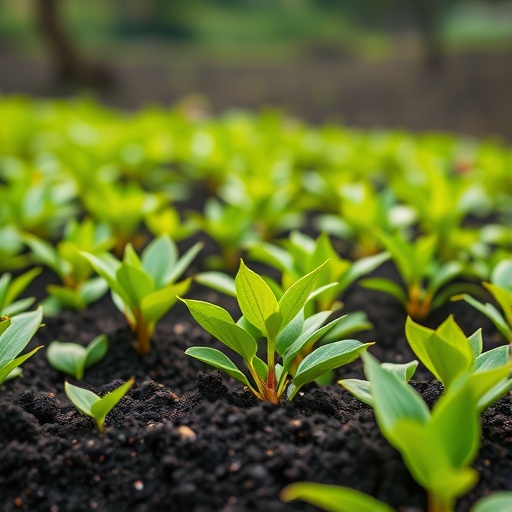
A recent comprehensive review published in the journal Biochar unveils the transformative potential of biochar in revolutionizing tea cultivation, a crop central to global economies and cultures. Tea, derived from the Camellia sinensis plant, supports millions of livelihoods but faces mounting agronomic challenges due to decades of intensive farming practices. These practices have led to severe soil degradation, acidification, and contamination by heavy metals, jeopardizing both yield quality and food safety. The study presents biochar as a multifaceted tool to rehabilitate tea-growing soils and promote sustainable agricultural systems.
Biochar is a porous, carbon-rich substance produced through pyrolysis—the controlled heating of biomass such as rice husks, bamboo, or tea residues—in low oxygen environments. This process converts agricultural waste into a highly stable material with a complex surface chemistry that interacts dynamically with the soil environment. Unlike traditional fertilizers, biochar modifies the soil’s physical and chemical structure, thereby establishing a more resilient growing medium. The review highlights how incorporating biochar into tea plantations can address the most pressing soil health issues encountered in tea agroecosystems today.
One of the essential benefits of biochar lies in its capacity to amend acidic soils, a widespread problem in tea cultivation areas. By elevating soil pH, biochar neutralizes acidity, making nutrients more available to the tea plants. This change simultaneously enhances the soil’s cation exchange capacity, allowing it to retain essential nutrients longer and reduce leaching. These alterations improve root zone conditions, fostering more robust root growth and facilitating better water retention—critical factors for plant health and yield stability in varying climatic conditions.
The implications of biochar extend beyond physical and chemical soil improvement. The review underscores its influential role in reshaping soil microbial ecosystems. Biochar supports the proliferation of beneficial bacteria and fungi integral to nutrient cycling and organic matter decomposition. These microbial communities are instrumental in converting soil nutrients into accessible forms for plants, thus amplifying nutrient use efficiency. Enhanced microbial activity also bolsters the soil’s resilience against pathogens and environmental stressors, which is vital for maintaining sustainable tea production systems.
Perhaps most strikingly, biochar demonstrates a remarkable ability to mitigate heavy metal contamination, a persistent concern in many tea-producing regions due to industrial pollution and legacy agrochemical use. The porous structure and reactive surfaces of biochar immobilize toxic metals such as lead and cadmium, drastically reducing their bioavailability. Consequently, this limits metal uptake by tea plants and prevents hazardous accumulation in tea leaves, crucial for protecting consumer health and meeting stringent food safety standards. In some documented cases, biochar reduced heavy metal levels in harvested tea by over 50%.
Beyond agronomic benefits, biochar plays a significant environmental stewardship role by sequestering carbon in soil, offering a dual advantage in climate change mitigation. Its chemical stability ensures that carbon remains locked away for long periods, preventing its release as atmospheric CO2. Furthermore, biochar-treated soils emit lower quantities of potent greenhouse gases like nitrous oxide, thereby reducing the agricultural carbon footprint. This positions biochar not only as a soil amendment but also as a cutting-edge climate-smart agricultural technology.
The reviewed field studies consolidate evidence that biochar applications can increase tea yields by 10 to 40%, a substantial margin that could uplift farmer incomes and meet surging global demand. Equally important is the enhancement in tea leaf quality, including elevated levels of amino acids and polyphenols. These compounds contribute to the distinctive flavors and health-promoting properties of tea, offering both growers and consumers a premium product. Such quality improvements underscore biochar’s role in producing nutritionally and economically superior tea.
Despite the promising results, the authors caution that the efficacy of biochar is not universal and depends on multiple interacting factors. The type of feedstock used, the pyrolysis process conditions, soil characteristics, and the quantity of biochar applied all influence outcomes. Overapplication can provoke nutrient imbalances or diminish the effectiveness of biochar amendments. Therefore, region-specific research and carefully calibrated application strategies are necessary to harness biochar’s full potential sustainably.
The review identifies critical knowledge gaps needing urgent attention to advance biochar technology in tea cultivation. Notably, long-term field trials remain scarce, particularly in tropical climates where tea is extensively farmed. Additionally, the complex interactions between biochar, distinct tea cultivars, and diverse environmental conditions are poorly understood. Addressing these gaps will be vital for optimizing biochar formulations, tailoring applications to local agroecosystems, and ensuring consistent benefits over time.
To realize the transformative promise of biochar, interdisciplinary research integrating soil science, microbiology, agronomy, and environmental engineering must intensify. Collaboration between academic institutions, industry stakeholders, and tea growers will be essential for translating laboratory findings into practical, scalable solutions. Moreover, policy frameworks should incentivize the adoption of biochar technologies by promoting sustainable biomass sourcing, supporting farmer education, and funding long-term agronomic studies.
In the face of escalating environmental challenges and growing global tea consumption, sustainable intensification of tea production is imperative. Biochar emerges as a holistic, multifunctional solution that simultaneously improves soil health, bolsters crop resilience, mitigates pollution risks, and contributes to climate mitigation. This nexus of benefits positions biochar as a cornerstone technology for the future of sustainable Camellia sinensis cultivation, promising to safeguard the livelihoods and health of millions while preserving the environment.
The publication of this review marks a pivotal moment in the journey toward greener, safer, and higher-quality tea agriculture worldwide. With continued research and innovation, biochar could unlock a new era of environmentally responsible and economically viable tea farming, meeting both producer needs and consumer expectations in an increasingly sustainability-conscious world.
Subject of Research: Biochar’s impact on soil health, microbial interactions, and sustainable cultivation of Camellia sinensis (tea)
Article Title: Biochar–soil–tea nexus: a review of soil health, microbial interactions, and sustainable Camellia sinensis cultivation
News Publication Date: March 9, 2026
References: Islam, M.S., Xia, S. Biochar–soil–tea nexus: a review of soil health, microbial interactions, and sustainable Camellia sinensis cultivation. Biochar 8, 71 (2026). DOI: 10.1007/s42773-026-00580-5
Image Credits: Md Shafiqul Islam & Shangwen Xia


