

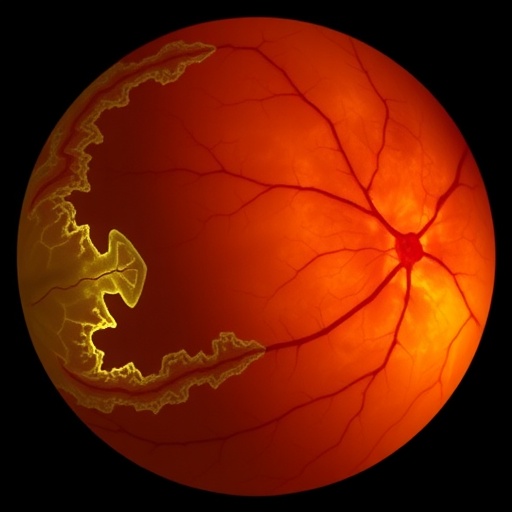
In the realm of diabetic retinopathy (DR), a serious condition affecting millions worldwide, recent research has unveiled a promising intervention involving baicalin, a naturally occurring flavonoid derived from the roots of Scutellaria baicalensis. This study, conducted by Gao and colleagues, sheds light on the molecular mechanisms by which baicalin influences the progression of DR, particularly through the RAGE/PXDN/PI3K/AKT signaling pathway. As diabetes continues to rise globally, understanding and mitigating the complications associated with the condition, such as DR, has never been more crucial.
Diabetic retinopathy is characterized by progressive damage to the retina’s blood vessels, which can lead to vision loss and blindness. One of the primary drivers of this condition is chronic inflammation and oxidative stress, exacerbated by high blood sugar levels. This research highlights the significance of addressing these underlying issues through targeted therapies. Baicalin emerges as a potential therapeutic agent that not only possesses antioxidant properties but also modulates inflammatory responses.
The RAGE (Receptor for Advanced Glycation End-products) pathway is increasingly recognized for its role in mediating inflammatory processes. In the context of DR, RAGE activation leads to the release of pro-inflammatory cytokines and promotes vascular permeability. Gao’s team investigated how baicalin impacts this pathway, revealing that it could inhibit RAGE expression and subsequently reduce inflammatory cascades. This finding is pivotal, as it provides a dual action: not only does baicalin combat inflammation, but it also restores vascular integrity in the retina.
Furthermore, the research highlights the involvement of PXDN (Peroxidasin), an essential extracellular matrix component that contributes to retinal vascular remodeling. PXDN has been implicated in the progression of DR, primarily due to its role in maintaining the structural integrity of retinal blood vessels. Baicalin’s ability to downregulate PXDN is a breakthrough that could pave the way for new therapeutic strategies aimed at preserving retinal health in diabetic patients.
Additionally, the PI3K/AKT pathway emerged as a critical axis mediating baicalin’s beneficial effects. This pathway is known for its role in cellular growth, survival, and metabolism, influencing various cellular functions that directly impact retinal health. Activation of PI3K/AKT has protective effects on retinal neurons, and baicalin appears to enhance this cascade, thereby providing neuroprotective benefits. The interplay between these pathways illustrates baicalin’s multifaceted approach to tackling DR.
The elucidation of these mechanisms is not merely academic; it holds clinical significance. With the population of diabetic individuals steadily increasing, there is an urgent need for innovative and effective treatment modalities to prevent the onset and progression of DR. Baicalin, with its natural origin and favorable safety profile, presents a compelling candidate for further investigation.
The research prompts a reevaluation of traditional treatment paradigms, particularly those that prioritize pharmacological interventions over natural ones. The bioavailability and efficacy of baicalin suggest that it could be integrated into existing treatment regimens, contributing to a holistic approach to diabetes management. This shift in perspective could lead to better patient outcomes and reduced healthcare burdens associated with DR.
Moreover, the implications of this study extend beyond DR alone. Understanding how natural compounds like baicalin interact with complex molecular pathways may inform broader strategies in managing various diabetes-related complications, such as neuropathy and nephropathy. The potential for baicalin to serve as a prototype for future drug development is particularly intriguing, given its dual role in combating oxidative stress and inflammation.
As researchers continue to explore the potential of baicalin, future studies are likely to investigate optimal dosing strategies and the compound’s efficacy in clinical settings. Investigating its synergistic effects with existing anti-diabetic medications could yield exciting results and further potently reinforce its protective capabilities against retinal degeneration.
The ongoing research into baicalin highlights the importance of bridging traditional medicine with modern scientific inquiry. By leveraging the ancient wisdom held in natural products, the biomedical community can uncover hidden opportunities to treat and prevent diseases that are crippling modern society, such as diabetic retinopathy.
In conclusion, the exploration of baicalin as a therapeutic agent in diabetic retinopathy offers a glimmer of hope for millions at risk of vision loss. As Gao and team shed light on the intricate pathways involved, it becomes increasingly clear that nature has much to offer in the quest to combat the complications of chronic diseases. Efforts to harness the power of such compounds may prove to be pivotal in transforming the landscape of diabetes-related care, fostering the development of novel strategies that prioritize both efficacy and safety.
As we anticipate further research and clinical trials, the findings underscore the potential shift in how we approach diabetes management, combining the best of pharmacological advancements with the time-tested benefits of natural products. The future of diabetic retinopathy treatment may well reside in this balanced approach, paving the way for improved patient outcomes and a brighter vision for those affected by this debilitating condition.
Subject of Research: Diabetic Retinopathy and the Role of Baicalin
Article Title: Baicalin affects the progression of diabetic retinopathy through the RAGE/PXDN/PI3K/AKT pathway.
Article References:
Gao, Y., Liu, H., Yang, T. et al. Baicalin affects the progression of diabetic retinopathy through the RAGE/PXDN/PI3K/AKT pathway.
J Transl Med (2025). https://doi.org/10.1186/s12967-025-07590-0
Image Credits: AI Generated
DOI: 10.1186/s12967-025-07590-0
Keywords: Diabetic retinopathy, Baicalin, RAGE pathway, PXDN, PI3K/AKT, Inflammation, Oxidative stress, Natural compounds.


