

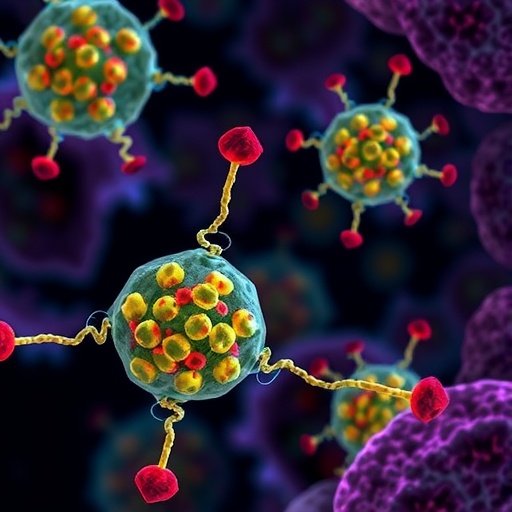
In a groundbreaking study that could reshape our understanding of colorectal cancer therapeutics, researchers have uncovered a novel mechanism by which bacterial protein-oleate complexes induce a form of programmed cell death reminiscent of ferroptosis. This discovery offers promising new avenues for cancer treatment, particularly by targeting the vulnerability of colorectal cancer cells through membrane disruption and interference with critical cellular signaling pathways.
Colorectal cancer remains one of the leading causes of cancer-related mortality worldwide, and despite significant advances, effective treatments with minimal side effects are still in high demand. The recent findings shed light on an innovative natural strategy, leveraging bacterial proteins combined with oleate, a common fatty acid, to trigger cancer cell death. This approach diverges from traditional chemotherapies, focusing instead on biochemical modulation of the tumor microenvironment and intracellular signaling.
Central to the study is the concept of ferroptosis, a distinctive cell death pathway characterized by iron-dependent lipid peroxidation and membrane damage. Unlike apoptosis or necrosis, ferroptosis culminates in catastrophic impairment of the cell membrane integrity, leading to cell demise. The research highlights how bacterial protein-oleate complexes wield this mechanism by disrupting the delicate balance of cellular redox states within colorectal cancer cells.
A pivotal component in this mechanism involves the β-catenin-GPX4 axis—a critical molecular pathway governing cellular proliferation and antioxidative defense. β-catenin is widely recognized for its role in cell adhesion and gene transcription within the canonical Wnt signaling pathway, which is frequently deregulated in colorectal cancers. GPX4 (glutathione peroxidase 4), on the other hand, acts as a guardian against oxidative membrane damage by reducing lipid peroxides. The study reveals that these bacterial protein-oleate complexes inhibit this protective axis, thereby sensitizing cancer cells to ferroptosis-like death.
The researchers utilized a meticulous experimental design combining biochemical assays, molecular biology techniques, and high-resolution imaging to dissect the interaction between bacterial factors and cancer cell membranes. Their data confirm that the complexes integrate into the lipid bilayer, inducing permeabilization accompanied by oxidative stress. This process precipitates the collapse of oncogenic β-catenin signaling, further amplifying cellular distress and leading to irreversible damage.
Moreover, the study explores the therapeutic potential of leveraging gut microbiota-derived components to modulate cancer progression. The interplay between the microbiome and host cellular physiology has attracted considerable interest, and these findings suggest that specific bacterial proteins complexed with fatty acids can be harnessed as bioactive agents to selectively kill cancer cells. This represents a compelling example of how microbiota metabolism might be redirected to benefit cancer therapy.
Of particular note is the ability of bacterial protein-oleate complexes to overcome resistance mechanisms typically encountered in colorectal cancer treatment. Many tumors develop heightened antioxidant defenses to evade ferroptotic death, primarily through the upregulation of GPX4 and related enzymes. By directly targeting and inhibiting the β-catenin-GPX4 axis, these complexes introduce an innovative strategy to bypass such resistance and effectively induce cell death.
This study’s in vitro models demonstrated significant cytotoxic effects on colorectal cancer cells with minimal impact on non-cancerous colon epithelial cells, suggesting a measure of selectivity and safety. Such selectivity is a crucial consideration for the translation of these findings into clinical applications, minimizing collateral damage to healthy tissue during treatment.
Further analysis revealed that the bacterial protein component is essential for the targeting and delivery of oleate into cancer cells, indicating a sophisticated mechanism of uptake and membrane interaction. This protein-facilitated oleate delivery enhances membrane perturbation and ensures effective inhibition of β-catenin signaling, culminating in pronounced ferroptotic activity.
The implications of these findings extend beyond colorectal cancer, as the molecular pathways affected—particularly GPX4-mediated lipid repair—are conserved across various cancer types. This raises the exciting possibility that bacterial protein-fatty acid complexes could serve as a platform technology, adapted to multiple malignancies characterized by dysregulated redox homeostasis and membrane integrity.
In addressing future research directions, the authors underscore the necessity for in vivo validation using animal cancer models to examine pharmacodynamics, biodistribution, and possible immune system interactions. Understanding the complex immunological landscape will be paramount, given that ferroptotic cell death can modulate immune responses, potentially enhancing antitumor immunity in combination with other immunotherapies.
Interestingly, the study opens doors to biotechnological innovation, encouraging the design of engineered bacterial proteins with enhanced oleate-binding capabilities or modified fatty acid profiles to tailor therapeutic effects. Such bioengineering endeavors could optimize potency and specificity, translating this natural mechanism into clinically viable drug candidates.
This breakthrough also challenges the conventional view that bacterial metabolites primarily contribute to cancer progression or inflammation. Instead, it positions select bacterial products as strategic effectors capable of reprogramming tumor survival pathways. Harnessing microbial biochemistry in this manner stands at the crossroads of oncology, microbiology, and pharmacology, heralding a new paradigm in cancer treatment.
Finally, this research reflects a growing trend towards integrating multidimensional approaches that include microbiome modulation, targeted molecular interference, and lipid-mediated cell death pathways. By uniting these fields, it offers a holistic and innovative approach to combat one of the most stubborn and deadly types of cancer, providing hope for improved patient outcomes and personalized therapies.
In conclusion, bacterial protein-oleate complexes represent a potent and selective inducer of ferroptosis-like death in colorectal cancer cells, acting through disruption of cell membranes and inhibition of the β-catenin-GPX4 survival axis. This work provides a visionary outlook on exploiting microbial molecules for next-generation cancer therapeutics, and ongoing studies will determine its full applicability in clinical oncology.
Subject of Research: Colorectal cancer cell death mechanisms induced by bacterial protein-oleate complexes
Article Title: Bacterial protein-oleate complexes induce ferroptosis-like cell death in colorectal cancer cells by disrupting cell membranes and inhibiting the β-catenin-GPX4 axis
Article References: Ullah, N., Yabrag, A., Ali, A. et al. Bacterial protein-oleate complexes induce ferroptosis-like cell death in colorectal cancer cells by disrupting cell membranes and inhibiting the β-catenin-GPX4 axis. Cell Death Discov. (2026). https://doi.org/10.1038/s41420-026-03097-9
Image Credits: AI Generated
DOI: https://doi.org/10.1038/s41420-026-03097-9


