

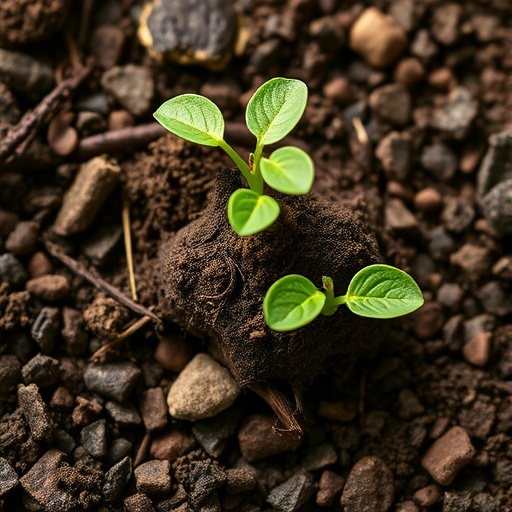
The intricate interplay between soil composition and microbial dynamics has become a focal point of agricultural research, shedding light on the complex mechanisms that underpin soil organic matter (SOM) persistence. As indispensable reservoirs of nutrients, SOM plays a vital role in ecosystem health, influencing everything from plant growth to carbon sequestration. Recent investigations have delved deeper into the molecular features that govern SOM stability, revealing vital insights into the temporal dynamics of these features and their broader ecological implications.
Central to the discourse is the investigation of molecular diversity and thermodynamic stability within SOM, particularly as seen in long-term experimental fields of both paddy and upland soils, subjected to over three decades of study. The findings illuminate the relationship between molecular characteristics and the resilience of organic matter within various environmental conditions. This exploration provides a framework for understanding how SOM can be manipulated for greater agricultural productivity and sustainability.
The use of thermogravimetric analysis presents a novel approach to discerning the thermostability of SOM. This technique measures the weight changes that occur as organic matter is heated, providing insights into thermal degradation patterns. The research uncovering enhanced SOM thermostability correlates strongly with the variation in thermodynamic stability over prolonged periods, suggesting a pivotal relationship between molecular structure and environmental resilience. Such analyses underscore the relevance of molecular characteristics as indicators of SOM health and longevity.
The temporal dynamics revealed in this study indicate a notable trade-off between molecular diversity—the vast array of organic molecules present in the soil—and their thermodynamic stability. Over the decades of observation, researchers noted that as the diversity of SOM molecules diminished, their stability tended to increase. This decline in diversity, paired with increased stability, raises critical questions about the nature of organic matter composition and the implications for soil fertility and sustainability practices in agriculture.
A striking element of this research is the role of microbial communities in shaping SOM characteristics. The increased bacterial richness found in these long-term fields indicates that microbial diversity is not merely a byproduct of soil health but rather a fundamental driver of SOM stability. Microorganisms actively participate in the decomposition and transformation of organic matter, contributing significantly to the development of stable SOM. This intricate relationship prompts a reevaluation of agricultural practices that prioritize microbial diversity as a means to bolster SOM persistence.
The findings presented in this research offer compelling evidence for the implementation of strategies that foster bacterial richness in agricultural soils. By enhancing microbial diversity and promoting ecosystem stability, farmers can cultivate soils that are not only productive but also resilient to climate change and other environmental stressors. The implications for sustainable farming practices are profound, suggesting that investment in soil health through microbial management could yield substantial benefits.
Moreover, the negative relationship observed between molecular diversity and thermodynamic stability prompts further inquiry into soil management practices. Understanding this trade-off can lead to the development of targeted strategies aimed at sustaining both diversity and stability, thus optimizing SOM for carbon sequestration and nutrient cycling. Techniques that promote a diverse microbial community while maintaining the stability of focused organic compounds will be essential in this endeavor.
The research highlights the importance of integrating biological and chemical aspects of soil health to develop a holistic understanding of sustainable agriculture. Scientists and agronomists alike are urged to embrace this integrative approach, recognizing that the fate of soil organic matter is intricately linked to microbial diversity. By fostering an environment that cultivates diverse bacterial populations, farmers can enhance the resilience of their soils while mitigating the impacts of degradation.
As the discourse surrounding agricultural practices continues to evolve, the significance of molecular dynamics within SOM cannot be overstated. The research reinforces the idea that soil management strategies must consider the intricate balance between microbial diversity and organic matter stability. A forward-thinking approach will require interdisciplinary collaboration, drawing knowledge from microbiology, soil chemistry, and agricultural practices.
In conclusion, the persistent inquiry into soil organic matter dynamics reveals not only the complexities of molecular interactions but also the opportunities for innovative agricultural solutions. The findings from long-term experimental data provide a roadmap for enhancing soil health through microbial management, promising improvements in agricultural productivity and sustainability. Indeed, as farmers and researchers grapple with the challenges of the modern agricultural landscape, they are presented with a unique chance to rewrite the narrative surrounding soil management.
In essence, the understanding of soil organic matter persists as a vital key to unlocking the full potential of agricultural systems, where microbial diversity and molecular stability converge to create resilient ecosystems. By embracing these principles, the future of agriculture can shift toward sustainability, biodiversity, and climate resilience, ensuring nourishment not just for the present but for generations to come.
Subject of Research: Soil Organic Matter (SOM), Molecular Diversity, Bacterial Richness
Article Title: Bacterial richness enhances the thermostability of soil organic matter via a long-term trade-off between molecular diversity and thermodynamic stability.
Article References:
Wu, M., Lugato, E., Li, P. et al. Bacterial richness enhances the thermostability of soil organic matter via a long-term trade-off between molecular diversity and thermodynamic stability. Nat Food (2025). https://doi.org/10.1038/s43016-025-01253-5
Image Credits: AI Generated
DOI: https://doi.org/10.1038/s43016-025-01253-5
Keywords: Soil Organic Matter, Molecular Diversity, Thermodynamic Stability, Bacterial Richness, Sustainable Agriculture


