

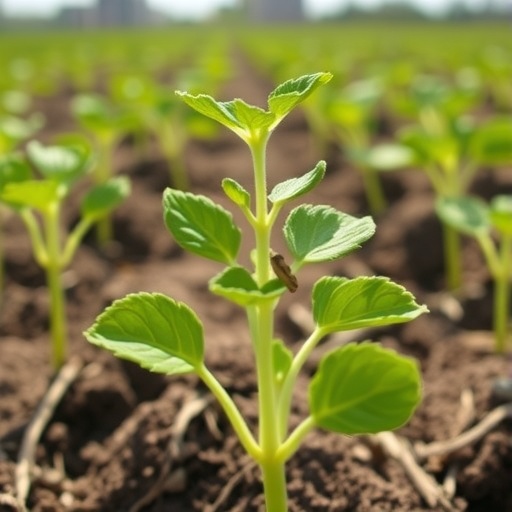
In a remarkable breakthrough for agricultural science, researchers are delving into the genomic intricacies of a specific strain of Bacillus subtilis, known as BSS.2162. This particular bacterium has been isolated from the Caatinga biome, a unique ecosystem located primarily in Brazil, characterized by its semi-arid climate. The study highlights the genome sequencing of BSS.2162 and its potential applications in promoting plant growth, especially under the challenging conditions presented by drought stress.
The Bacillus subtilis species is well known for its diverse capabilities, ranging from biocontrol of plant pathogens to enhancing soil health. By focusing on the genomic features of strain BSS.2162, scientists aim to uncover specific genes that might contribute to its effectiveness as a plant growth promoter. The ability to thrive in harsh environmental conditions, such as drought, represents an essential quality for microorganisms involved in agriculture, particularly in regions that are increasingly affected by climate change.
The research team employed advanced sequencing technologies to decode the entire genome of BSS.2162. This intricate process involves analyzing the genetic material’s structure, function, and evolution, thereby allowing for a comprehensive understanding of the organism at a molecular level. By mapping the genetic blueprint, researchers can identify key traits that enable the bacterium to support plant growth and resilience under water-limited conditions.
Notably, the study underscores the competitive advantage that the Caatinga’s native microorganisms possess. These organisms have evolved robust mechanisms to endure prolonged periods of drought, which can offer invaluable insights into natural processes that can be harnessed for agricultural advancement. Focusing on these natural strategies provides a pathway to developing sustainable agricultural practices that minimize reliance on chemical fertilizers and pesticides.
One of the standout findings from the BSS.2162 genome sequence is the presence of genes associated with phytohormone production. These hormones, including auxins and cytokinins, are crucial for regulating plant growth and development. By producing these growth-promoting substances, Bacillus subtilis BSS.2162 can enhance root elongation, increase nutrient uptake, and bolster the overall health of plants facing stress.
Moreover, researchers discovered gene clusters linked to the synthesis of antimicrobial compounds. This suggests that BSS.2162 not only aids plants in their growth but also helps protect them from soil-borne pathogens. By providing a dual function of growth promotion and disease resistance, this strain of Bacillus subtilis may play a pivotal role in fostering sustainable agriculture, particularly in regions susceptible to drought and soil degradation.
Through rigorous laboratory experiments, scientists validated the functional implications of the genomic findings. The strain BSS.2162 was tested on various crop plants, revealing significant improvements in growth metrics such as root length, biomass accumulation, and overall plant vigor compared to control groups. These empirical data strongly support the genomic insights gleaned from sequencing, further reinforcing the strain’s potential as a biofertilizer.
The implications of this research extend far beyond laboratory walls. As global food security becomes increasingly threatened by climate change, drought, and soil erosion, the agricultural sector is under immense pressure to find innovative solutions. Utilizing beneficial microorganisms like Bacillus subtilis BSS.2162 offers a promising avenue for enhancing crop resilience and productivity while fostering environmentally friendly farming practices.
For farmers facing the daunting challenges posed by drought, biofertilizers derived from native microbial strains could prove to be a game changer. By integrating such solutions into their farming systems, they can improve yields, sustain livelihoods, and effectively contribute to local food security. In this context, the role of the scientific community is critical in translating these findings into practical applications that farmers can implement.
Importantly, this study raises awareness of the valuable functions that microorganisms play in ecosystems alike. The Caatinga biome, often overlooked, is rich in biodiversity and hosts a wealth of microbial species with untapped potential. Future research efforts should thus prioritize the exploration and characterization of additional native strains, as they may uncover further solutions for agricultural challenges.
This groundbreaking research not only sheds light on a single strain of Bacillus subtilis but also highlights the pressing need to adopt sustainable practices that leverage natural biodiversity. By harnessing the capabilities of beneficial microorganisms, the agricultural community can move towards a more resilient and sustainable future — one where crops can flourish even in the face of climate adversities.
In conclusion, the genome sequencing of Bacillus subtilis BSS.2162 represents a significant stride towards understanding how microorganisms can transform agriculture, particularly in regions prone to drought stress. As scientists continue to unravel the complexities of microbial genomics, it becomes evident that these tiny organisms hold the key to enhancing crop resilience and ensuring food security in a rapidly changing world.
As the challenges of climate change intensify, the agricultural world anticipates the implementation of findings from this study into real-world practices. By doing so, we not only promote sustainable agriculture but honor the biodiversity of regions like the Caatinga biome that nurture such valuable organisms. The future may well depend on the collaborative efforts of scientists, farmers, and policymakers to unleash the full potential of microbial life in support of global food security.
Subject of Research:
The potential of Bacillus subtilis BSS.2162 for promoting plant growth under drought stress.
Article Title:
Genome sequence of Bacillus subtilis BSS.2162 isolated from Caatinga biome reveals potential for plant growth promotion under drought stress.
Article References:
de Souza, V., Cansanção, I.F., Bonin, E. et al. Genome sequence of Bacillus subtilis BSS.2162 isolated from Caatinga biome reveals potential for plant growth promotion under drought stress. 3 Biotech 16, 48 (2026). https://doi.org/10.1007/s13205-025-04671-1
Image Credits:
AI Generated
DOI:
https://doi.org/10.1007/s13205-025-04671-1
Keywords:
Bacillus subtilis, drought stress, genomic sequencing, plant growth promotion, sustainable agriculture.


