

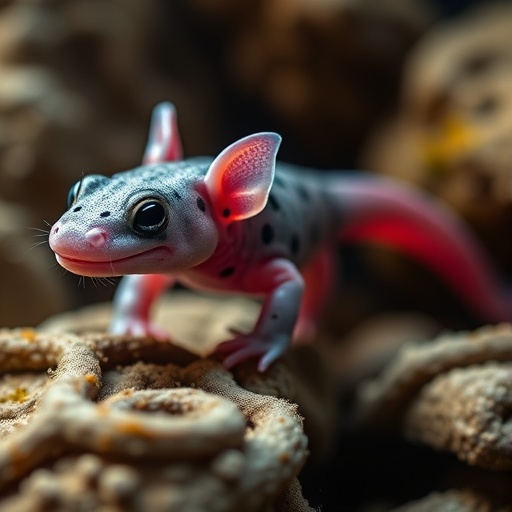
The remarkable regenerative capacity of the axolotl has long fascinated biologists, yet the pulmonary system of this amphibian remains comparatively understudied. Recent groundbreaking research by Güneş, Gürgen, Kaplan, and colleagues brings new clarity to the structural and biochemical nuances of axolotl lungs, contrasting neotenic (larval form) and metamorphic states to unveil pivotal mechanisms underpinning pulmonary regeneration. Published in Scientific Reports in 2026, this work sheds unprecedented light on how axolotl lungs maintain function and restore damage—discoveries that could revolutionize regenerative medicine and inspire novel treatments for human lung diseases.
At the core of this study lies the axolotl’s unique ability to exist in neotenic form as well as undergo metamorphosis, enabling researchers to compare lung morphology and chemistry during these distinct developmental stages. The scientists harnessed advanced ultrastructural imaging techniques such as transmission electron microscopy alongside sophisticated histochemical assays to explore cellular and molecular characteristics of lung tissue in both life stages. Their multifaceted approach revealed striking differences in epithelial cell ultrastructure, extracellular matrix composition, and enzymatic activity that correlate with regenerative potential and respiratory function.
Initial electron microscopic analyses exposed pronounced morphological differences in the lining of lung alveoli between neotenic and metamorphic axolotls. In the neotenic state, lung epithelia displayed highly specialized pneumocytes with abundant lamellar bodies, suggestive of surfactant production critical to reducing alveolar surface tension. Metamorphic lungs, by contrast, exhibited extensive remodeling of extracellular matrix fibers and a denser population of fibroblast-like cells, potentially providing enhanced structural support as the amphibian adapts to terrestrial gas exchange demands. These findings hint at a dynamic interplay between cellular architecture and functional adaptation in axolotl lung development.
Histochemical staining further illuminated the biochemical underpinnings of axolotl pulmonary function. Utilizing markers selective for mucopolysaccharides, collagen subtypes, and oxidative enzymes, the investigators documented a notable shift in extracellular matrix components and antioxidant defenses accompanying metamorphosis. Notably, neotenic lungs contained higher concentrations of sulfated glycosaminoglycans and antioxidant enzymes such as catalase and superoxide dismutase, compositionally priming the tissue for rapid regeneration after injury. This chemical environment presumably counters oxidative stress resulting from fluctuating oxygen levels in aquatic habitats.
One of the most compelling aspects of this work lies in its implications for enhancing lung regeneration. Pulmonary diseases in humans often arise from irreversible damage to the alveolar epithelium and interstitium. The axolotl’s capacity to efficiently regenerate lung tissue without fibrosis or scarring, as revealed by the identified ultrastructural and histochemical signatures, offers a biological template for therapeutic innovation. Understanding the molecular orchestration behind surfactant production, extracellular matrix remodeling, and oxidative stress mitigation may inform bioengineered scaffolds, targeted drugs, or gene therapies designed to emulate these regenerative pathways.
Further investigation into the stem and progenitor cell niches within the axolotl lungs revealed robust cellular plasticity contributing to regeneration. The research team observed proliferating cells with traits consistent with basal epithelial progenitors and mesenchymal stem cells, localized in distinct zones that expand upon injury. This cellular compartmentalization mirrors regenerative patterns seen in mammalian lung repair but with far greater efficiency and fidelity, underscoring the axolotl’s unparalleled regenerative prowess. These basal cell populations demonstrate potential as a source for translational research aiming to awaken dormant regenerative programs in human lungs.
Importantly, the study addressed the functional consequences of these ultrastructural and biochemical features by correlating lung morphology with respiratory physiology. Measurements of pulmonary compliance and gas exchange efficiency indicated that metamorphic axolotl lungs compensate for increased terrestrial oxygen demands via structural stiffness and enhanced surfactant secretion. Meanwhile, neotenic lungs maintain elasticity suited for aquatic respiration, facilitated by the abundance of lamellar bodies and mucopolysaccharide-rich extracellular matrix. This adaptive divergence nurtures optimal lung function respective to environmental contexts, highlighting evolutionary ingenuity.
The authors also probed the molecular signaling pathways governing lung maturation and regeneration, identifying upregulation of key regulators such as fibroblast growth factors (FGFs), transforming growth factor-beta (TGF-β), and matrix metalloproteinases (MMPs) during tissue remodeling. These molecules coordinate epithelial-mesenchymal interactions essential for alveolar growth and repair. Their temporal expression patterns suggest a finely tuned balance between matrix degradation and synthesis, an equilibrium that prevents scarring and fosters complete functional restoration. Targeting these pathways in clinical settings could modulate fibrosis and promote lung regeneration.
In addition to intrinsic cellular factors, the study emphasized the role of the immune environment in pulmonary regeneration. Macrophage populations within the axolotl lungs exhibited phenotypic plasticity, shifting from pro-inflammatory to pro-regenerative profiles following injury. This immunomodulatory capacity facilitates clearance of cellular debris while fostering a microenvironment permissive for regeneration, contrasting sharply with chronic inflammation driving pathological fibrosis in mammalian lungs. Deciphering these immune mechanisms may inspire therapeutic strategies aiming to recalibrate immune responses during lung injury in humans.
Environmental influences on lung morphology and regeneration were also considered. Variations in water oxygen content and temperature affected pulmonary tissue ultrastructure and enzymatic profiles, demonstrating the axolotl’s phenotypic flexibility. These findings underscore the importance of extrinsic factors in modulating tissue regeneration and metabolic demands, offering clues to optimizing ex vivo organ culture systems or mimicking natural regenerative stimuli in clinical therapies.
The meticulous integration of ultrastructural, histochemical, molecular, and physiological data in this study provides a comprehensive portrait of axolotl lung biology. The insights gleaned illuminate fundamental principles governing lung adaptation and regeneration, bridging developmental biology and regenerative medicine. This work not only advances understanding of amphibian biology but also propels translational research aimed at remedying human pulmonary conditions such as acute respiratory distress syndrome, chronic obstructive pulmonary disease, and idiopathic pulmonary fibrosis.
Looking ahead, the authors advocate for deeper functional genomics studies and in vivo lineage tracing to map regeneration dynamics at single-cell resolution. Coupling these approaches with bioengineering techniques could enable the development of biomimetic lung tissues equipped with innate regenerative capabilities. As climate change and respiratory ailments escalate globally, harnessing nature’s regenerative solutions embodied by the axolotl offers a beacon of hope for innovative, durable treatments.
This research carries broad interdisciplinary significance, poised to spark cross-pollination between herpetology, cellular biology, immunology, and clinical medicine. The axolotl’s lungs, once overlooked, now emerge as a living laboratory for unlocking the secrets of tissue regeneration. Such knowledge has the potential to initiate a paradigm shift in the approaches to lung repair and rehabilitation, transforming patient outcomes and healthcare futures worldwide.
In sum, the investigation unveils the sophisticated architectural and biochemical blueprint that empowers axolotl lungs to regenerate efficiently across developmental stages. By dissecting the convergent factors of cellular structure, molecular signaling, and environmental adaptability, the study provides a foundational resource that may ultimately translate into groundbreaking therapies for human lung disease. It reaffirms the axolotl’s status as a regenerative powerhouse and a beacon for scientific discovery in the era of regenerative medicine.
Subject of Research: Pulmonary regeneration in neotenic and metamorphic axolotl lungs focusing on ultrastructural and histochemical analysis.
Article Title: Ultrastructural and histochemical insights into neotenic and metamorphic axolotl lungs with clues to pulmonary regeneration.
Article References:
Güneş, A., Gürgen, D.G., Kaplan, A.A. et al. Ultrastructural and histochemical insights into neotenic and metamorphic axolotl lungs with clues to pulmonary regeneration. Sci Rep (2026). https://doi.org/10.1038/s41598-026-45215-8
Image Credits: AI Generated


