

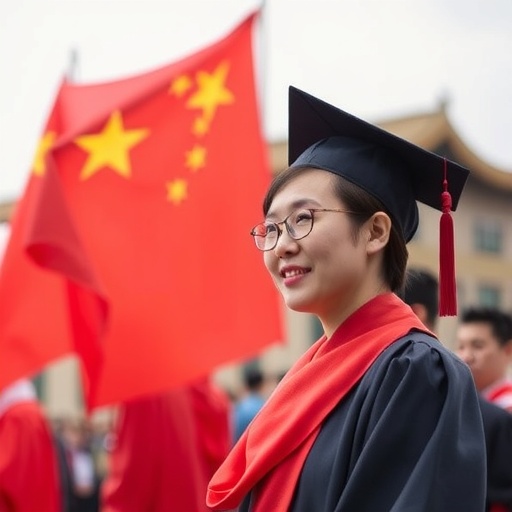
In an intriguing exploration of the academic landscape, the relationship between authoritarian supervision and research career aspirations among Chinese PhD students emerges as a complex interplay of motivation, aspiration, and psychological effects. Liu and Zou’s forthcoming study sheds light on a phenomenon that has profound implications for the academic community, particularly in cultures where traditional modes of authority prevail. As the research landscape becomes increasingly competitive, understanding the psychological dynamics at play becomes essential.
The study discusses how the hierarchical nature of academia, particularly in authoritarian contexts, shapes the ambitions and motivations of young researchers. Authoritarian supervision, often characterized by rigid structures and a lack of autonomy, can exert a dual influence on the aspirations of PhD students. On one hand, some students may thrive under such conditions, finding clarity in the expectations set forth by their supervisors, and on the other hand, many may experience stifled creativity and reduced motivation due to the oppressive nature of authoritarian oversight.
At the core of Liu and Zou’s analysis lies the notion that authoritarian supervision can create a dichotomy in the academic aspirations of students. For some, the influx of structured guidance can accelerate their academic progress, instilling a sense of discipline and purpose. In contrast, others may perceive the same system as suffocating, leading them to question their career paths and aspirations. This duality raises critical questions about how educational systems should evolve in an era where creativity and interdisciplinary collaboration are increasingly valued.
The implications of this study extend far beyond the confines of academia. As globalization continues to influence educational practices, there is a growing need for institutions, particularly in authoritarian regimes, to reconsider their supervisory practices. A more balanced approach that fosters independence while providing guidance could open new avenues for innovation and creativity. By creating an academic environment that encourages critical thinking and autonomy, institutions can cultivate a new generation of researchers who are not only well-versed in their fields but are also equipped to push the boundaries of knowledge.
Moreover, the research exposes the psychological toll of authoritarian supervision on students. High levels of stress and anxiety are commonplace in rigid academic environments, often leading to burnout and a decline in academic performance. Students are caught in a paradox where the very structure meant to support their success instead becomes a barrier to their aspirations. Factors such as mental well-being, social connections, and the ability to engage with peers in a collaborative environment become crucial aspects of the academic experience that are often neglected in authoritarian settings.
Liu and Zou’s findings lend insight into the importance of mentorship in a PhD journey. Effective mentorship transcends authoritarian structures, placing an emphasis on fostering meaningful relationships between supervisors and students. Such relationships can serve as a source of empowerment, allowing students to navigate their academic paths with confidence. In contrast, authoritarian supervision can lead to a lack of engagement and a perception of isolation, which ultimately affects academic success.
A compelling aspect of this research is the emphasis on cultural context. In cultures where respect for authority is entrenched, the impact of supervisory styles may differ significantly from those in more egalitarian societies. Understanding the nuances of these cultural differences is essential for academics and administrators who wish to create inclusive environments that accommodate diverse educational backgrounds and aspirations.
Furthermore, this study illuminates the broader implications for the workforce beyond academia. As PhD graduates transition into professional roles, their experiences under authoritarian supervision may shape their work attitudes and collaborations. The ability to adapt to diverse leadership styles and work frameworks can influence career trajectories and job satisfaction. Consequently, the effects of supervisory styles during graduate studies may resonate throughout a professional career, necessitating a reevaluation of how educational institutions prepare students for life after academia.
In conclusion, Liu and Zou’s research offers a critical examination of the complex dynamics surrounding authoritarian supervision and its multifaceted effects on the academic aspirations of PhD students in China. This study not only contributes to the ongoing discourse on educational practices in authoritarian contexts but also serves as a clarion call for academic institutions to reconsider their supervisory methodologies. In an increasingly interconnected world, fostering environments that prioritize autonomy, mentorship, and psychological well-being may prove to be essential in developing a vibrant and innovative educational landscape.
Becoming aware of these challenges allows stakeholders within the academic community to devise strategies that empower students rather than confine them. Such transformation is essential as universities strive to nurture scholars who will contribute meaningfully to global knowledge. As the study articulates, the path forward may thus hinge upon grappling with the perennial balance between authority and autonomy in educational settings—an essential dialogue for the future of higher education.
By taking heed of the lessons illuminated in Liu and Zou’s research, educational institutions can endeavor not merely to adapt but to lead in cultivating an academic culture that thrives on aspiration, creativity, and the kind of collaborative spirit that will be vital for facing the complex challenges of the future.
Subject of Research: Effects of authoritarian supervision on research career aspirations among Chinese PhD students
Article Title: A double-edged sword: the effects of authoritarian supervision on research career aspirations among Chinese PhD students.
Article References:
Liu, X., Zou, Y. A double-edged sword: the effects of authoritarian supervision on research career aspirations among Chinese phd students.
High Educ (2025). https://doi.org/10.1007/s10734-025-01606-w
Image Credits: AI Generated
DOI: https://doi.org/10.1007/s10734-025-01606-w
Keywords: Authoritarian supervision, PhD students, research aspirations, academic culture, mentorship, psychological well-being.


