

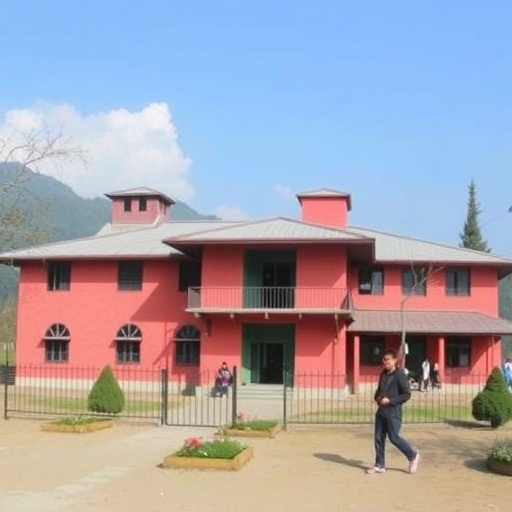
In a groundbreaking study set to be published in 2025, researchers have developed a rapid visual screening method aimed at assessing seismic hazards in school buildings across Sikkim, India. This innovative approach addresses a pressing need for effective safety measures in a region known for its geological instability. The research, primarily conducted by a team led by G.P. Sharma, A.K. Sinha, and S. Patil, explores the efficiency of visual inspections as an alternative to more time-consuming and costly engineering assessments.
Seismic hazards pose an eminent threat to structures in seismically active regions, particularly in areas like Sikkim, where the population density within educational facilities is notably high. The researchers acknowledge that the majority of schools in the region are not designed to withstand significant seismic events. The consequences are dire; earthquakes not only threaten the physical safety of students and staff but can also result in catastrophic infrastructural damage. Thus, implementing a reliable method for seismic assessment is vital.
The rapid visual screening method proposed by the researchers hinges on a straightforward yet detailed visual inspection of school buildings. By focusing on the identification of structural vulnerabilities, the method aims to provide an immediate assessment of a building’s ability to endure seismic activity. This approach is particularly beneficial for resource-constrained settings where detailed engineering analyses may not be feasible. Consequently, school administrators can prioritize which buildings require immediate attention or remediation.
Moreover, the methodology detailed in the study provides a systematic framework that can be universally applied. It does not depend on expensive technology or specialized personnel, making it a cost-effective solution for schools in various regions. This universality is particularly beneficial in developing areas, where financial and technical resources are often limited. Through simple training programs, local builders or school officials can be empowered to execute this screening method independently.
Implementation is as crucial as the methodology itself. The findings of the research emphasize the necessity of creating awareness among educational authorities and local governments regarding the risks posed by earthquakes. The visual screening process not only opens the door for a faster assessment cycle but also serves as an impetus for potential funding and resources to address identified risks. Ensuring that school structures are safe from seismic threats will ultimately provide peace of mind to parents and communities.
The rapid visual screening method further allows for the collection of extensive data on building vulnerabilities. As more schools undergo evaluation, researchers can aggregate and analyze this information to identify common risk factors and trends. This data can drive future initiatives aimed at strengthening educational infrastructures across Sikkim and potentially other similarly affected regions. It sets the groundwork for a larger-scale movement towards improving infrastructure resilience against natural disasters.
In addition to enhancing safety, another significant advantage of this method is community engagement. Engaging community members in the visual inspection process cultivates a sense of ownership and responsibility toward the safety of educational environments. During the training sessions, local stakeholders become champions of seismic safety, thereby amplifying the reach and impact of the initiative beyond mere assessments. Collaborative efforts between local governments and citizens are crucial for establishing long-lasting safety standards.
The implications of this research extend beyond the immediate benefits to school safety. The rapid visual screening method reflects a broader trend of advocating for proactive disaster risk reduction strategies in society. It signals a shift from reactive measures to preventive tactics in urban planning and school architecture. Additionally, integrating such methods into public policy can foster resilience against not only seismic hazards but a range of natural disasters, further protecting vulnerable communities.
The study builds on existing methodologies while addressing their shortcomings. Traditionally, seismic assessments have primarily relied on detailed engineering investigations, which can take significant time, resources, and specialized knowledge. The innovative aspect of Sharma and his team’s research lies in presenting a visual assessment that simplifies the initial evaluation phase, making seismic safety accessible to a broader audience. This democratization of seismic risk assessment is a crucial step toward more widespread disaster preparedness.
Ultimately, the research conducted by Sharma, Sinha, and Patil aims to significantly mitigate potential casualties and infrastructural damage arising from seismic activity. Their findings reinforce the importance of prioritizing safety in educational environments and promote the essential nature of proactive assessments. By focusing on school buildings, the study not only protects the young minds of tomorrow but fosters a culture of safety within the community.
The need for robust, innovative assessment techniques is underscored by the increasing frequency and intensity of seismic events worldwide. As climate change continues to influence geological activity, the consequences can be particularly harsh for vulnerable populations, especially children. Therefore, the importance of research like this, which places the safety of educational facilities at the forefront, cannot be overstated.
In conclusion, the rapid visual screening method for seismic hazard assessment proposed by G.P. Sharma, A.K. Sinha, and S. Patil is set to revolutionize safety evaluations in schools throughout Sikkim. This pioneering approach not only anticipates the immediate dangers faced by school buildings but also fosters a sustainable model for ensuring future safety and resilience against natural disasters.
Subject of Research: Rapid visual screening method for seismic hazard assessment in school buildings.
Article Title: Rapid visual screening method for seismic hazard assessment of school buildings in Sikkim.
Article References:
Sharma, G.P., Sinha, A.K. & Patil, S. Rapid visual screening method for seismic hazard assessment of school buildings in Sikkim.
Discov Sustain (2025). https://doi.org/10.1007/s43621-025-02511-z
Image Credits: AI Generated
DOI:
Keywords: Seismic hazards, School safety, Visual screening method, Structural vulnerabilities, Emergency preparedness, Community engagement, Disaster risk reduction, Infrastructure resilience.


