

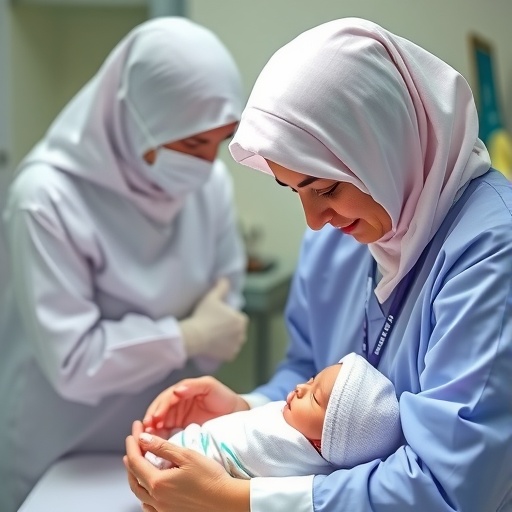
In the realm of healthcare, particularly in the field of neonatal care, the significance of individualizing developmental practices cannot be overstated. A recent study conducted in Saudi Arabia highlights this growing awareness among healthcare professionals, specifically regarding the knowledge, attitudes, and practices of nurses working in neonatal intensive care units (NICUs). The research shines a light on the pivotal role that nurses play in ensuring that newborns receive tailored care that not only meets their immediate health needs but also supports their long-term developmental goals.
The increasing survival rates of premature and critically ill infants necessitate a focus on individualized developmental care. This approach recognizes that each baby is unique and requires specific interventions that cater to their individual developmental trajectories. The study undertaken by AlTalaq and colleagues emphasizes how nursing staff can contribute to this nuanced care model. In the NICU, where the environment can be overwhelming, implementing individualized developmental care is paramount for nurturing the infant’s growth and facilitating their transition to the outside world.
One of the key findings of this research is the prevailing gap in nurses’ knowledge regarding individualized developmental care practices. Despite considerable advancements in neonatal care, there remains a lack of comprehensive training for nurses that encompasses these specific practices. The study suggests that enhancing educational programs is critical for equipping healthcare professionals with the competencies to provide such specialized care. The implications of these findings extend beyond immediate clinical outcomes, impacting the overall healthcare system in Saudi Arabia, where the demand for quality neonatal care continues to rise.
Moreover, the study highlights the attitudes of nurses towards the implementation of individualized developmental care. While many nurses expressed a strong commitment to improving their practice, there were indications of uncertainty surrounding specific methods and interventions. This underscores the need for continuous professional development that addresses both theoretical knowledge and practical implementation of individualized care. Institutions must advocate for an education system that prioritizes hands-on training and interdisciplinary collaboration to foster a coherent understanding of these practices among healthcare teams.
Another critical aspect of this cross-sectional study is its examination of the existing practices in NICUs. The results indicate that while some individualized care techniques are being utilized, there remains significant variability in their application. This inconsistency poses a challenge to achieving standardized care across different units. By establishing clear guidelines and protocols, healthcare facilities can ensure that all infants benefit from the optimum care that aligns with best practices and established research findings.
The notion of individualized developmental care extends beyond just addressing the medical needs of infants; it encompasses a holistic approach that aims to support families as well. Parents play a crucial role in the care of their newborns, and the study suggests that providing support and education to families is just as important as the clinical care provided by nurses. Engaging parents in their infants’ care not only helps in building their confidence but also allows for a more cohesive approach to nurturing the child’s development.
As global research continues to evolve in the field of neonatal care, engagement with evidence-based practices remains essential. The study conducted in Saudi Arabia contributes to this ongoing dialogue by bringing to light the importance of adapting care approaches to meet the unique needs of each infant. This helps in promoting not only better clinical outcomes but also enhances the overall experience for families navigating the complexities of neonatal care.
Importantly, the study’s findings should serve as a catalyst for further research in various contexts. Understanding how cultural factors influence nurses’ attitudes and practices regarding individualized developmental care can open up avenues for targeted interventions and tailored educational programs. This is especially relevant in diverse healthcare systems where variations in practices may arise from differing cultural norms and values.
In considering the broader implications of the study, it is crucial to acknowledge the role of policy in shaping nursing education and practice. Policymakers must be informed about the significance of individualized developmental care to ensure that this approach is integrated into nursing curricula and continuing education programs. By promoting a legislative framework that supports such initiatives, healthcare systems can enhance the quality of care provided to vulnerable populations.
As we explore the potential impact of this study, it becomes evident that addressing the knowledge gap among nurses is essential for improving outcomes in neonatal care. Educational institutions and healthcare facilities must collaborate to create comprehensive training programs that provide nurses with the tools necessary to implement individualized care effectively. This not only supports the professional growth of nurses but also ultimately benefits infants and their families.
The findings of AlTalaq et al. emphasize a promising direction for future research in neonatal care. Investigating the effectiveness of different educational interventions and training programs on nurses’ knowledge and practices can provide further insight into optimizing care in NICUs. These studies can serve as a foundation for establishing evidence-based protocols that guide practice and facilitate ongoing improvement within the healthcare system.
In conclusion, the research conducted among nurses in Saudi Arabia regarding individualized developmental care in neonatal units is both timely and significant. The study highlights the existing gaps in knowledge and practice, calling for an urgent need for education and policy changes that address these issues. As the healthcare landscape continues to evolve, ensuring that all infants receive personalized, compassionate, and developmentally appropriate care must remain a priority. By investing in the education of nursing professionals and fostering an environment that emphasizes individualized practices, we can work towards a brighter future for the most vulnerable members of our society.
Subject of Research: Nurses’ knowledge, attitudes, and practices regarding individualized developmental care in NICUs.
Article Title: Nurses’ knowledge, attitude, and practice of newborn individualized developmental care at neonatal intensive care unit in Saudi Arabia: a cross-sectional study.
Article References:
AlTalaq, H., Bubshait, K., AlDossary, L. et al. Nurses’ knowledge, attitude, and practice of newborn individualized developmental care at neonatal intensive care unit in Saudi Arabia: a cross-sectional study.
BMC Nurs 24, 1448 (2025). https://doi.org/10.1186/s12912-025-04087-5
Image Credits: AI Generated
DOI: https://doi.org/10.1186/s12912-025-04087-5
Keywords: Neonatal care, individualized developmental care, nursing education, Saudi Arabia, NICU practices.


