

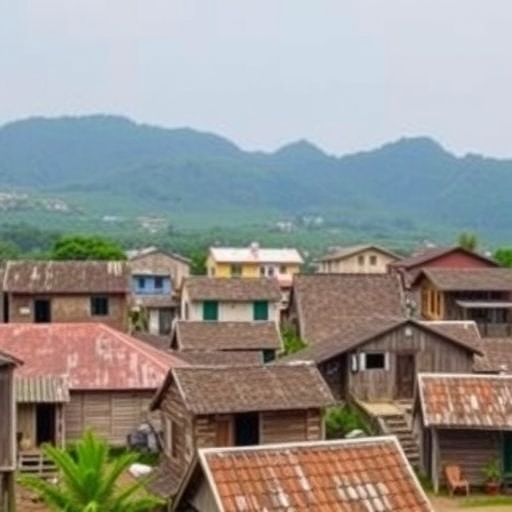
The Trang An landscape complex, recognized as a World Heritage Site, has long captivated the imagination of scholars, ecologists, and policymakers alike. Located in Northern Vietnam, this natural marvel combines breathtaking scenery with significant cultural heritage, leaving many intrigued by the potential of such a locale. In their groundbreaking study, researchers including Duyen, T.N.L., Han, T.T., and Anh, H.H., delve into the intricate value of human settlements within this mesmerizing environment. Their work, titled “Place oriented human settlement value assessment in the world heritage Trang An landscape complex,” offers a compelling examination of the relationship between people and their environmental contexts, shedding light on the poignant connection that exists within this enchanting landscape.
The study embarks on a vital exploration of how human activities and settlements interact with the natural world, ultimately contributing to a sustainable future for the region. Through a systematic approach, the authors highlight the significance of integrating cultural and ecological assessments to fully understand the landscape’s multifaceted value. As they peel back the layers of human habitation in this evocative setting, the researchers accentuate the importance of preserving and promoting local identities while fostering sustainable development.
One striking aspect of their research is the application of various methodological frameworks, which provides a holistic understanding of the landscape’s value. By employing place-oriented assessments, the team makes clear how local communities derive their sense of belonging and identity from their surroundings. This perspective not only enriches the conversation around conservation but also emboldens local voices, empowering residents to advocate for sustainable practices that respect both their heritage and the environment.
Moreover, the authors address the challenges posed by contemporary issues, such as climate change and urbanization. These external pressures threaten the delicate balance of ecosystems and could irrevocably alter human settlement patterns. The researchers argue that understanding and assessing these dynamics is essential for any conservation strategy aimed at safeguarding the Trang An landscape complex. By focusing on the intricate interplay between environmental challenges and human settlement values, their findings provide deep insights applicable to similar locales facing analogous threats.
At the core of their inquiry lies a commitment to sustainability—an underlying theme that resonates throughout their interdisciplinary research. By juxtaposing traditional ecological knowledge with modern scientific insights, the authors offer innovative solutions to pressing challenges. They encourage the adoption of participatory approaches that engage local communities in dialogue, fostering collaborative efforts that bridge the gap between scientific research and grassroots practices. Such engagement nurtures a sense of ownership among residents, reinforcing the notion that they are not merely passive beneficiaries but active stewards of their environment.
This research holds broad implications beyond the confines of the Trang An landscape complex, suggesting that the frameworks developed could be adapted and applied to various cultural and ecological contexts worldwide. By illuminating a model that integrates human values with ecological sustainability, the authors contribute to an emerging paradigm in conservation education that prioritizes community engagement and intrinsic value.
In their critical examination, Duyen and her colleagues highlight the rich tapestry of cultural heritage that the Trang An landscape complex embodies. From ancient temples to artisanal crafts, every aspect of human endeavor intertwines with the surrounding environment, weaving narratives that resonate through generations. This recognition is a call to action for broader stewardship, urging stakeholders to honor and preserve such cultural legacies amidst rapid modernization.
The researchers also delve into governance structures that play a pivotal role in managing these heritages. By analyzing existing policies, they reveal the necessity for readily accessible frameworks that promote equitable participation. Sustainable practices, they argue, must be informed by local knowledge systems that highlight the diverse values people ascribe to their environments. The findings suggest a shift is needed towards more inclusive decision-making processes, ensuring that stakeholder voices are paramount in envisioning future developments.
Furthermore, the study emphasizes the interconnectedness of various factors, including social, economic, and environmental dimensions in sustaining human settlements. By mapping out these intricate relationships, the team advocates for a comprehensive approach that addresses the complexity of sustainable development. This nuanced understanding can lead to enriched policy frameworks that holistically approach human-environment interactions.
Notably, the authors draw attention to the potential of technology in enhancing these assessments and policymaking processes. Innovations such as Geographic Information Systems (GIS) and remote sensing technologies can capture data that reflects spatial and temporal dynamics. By harnessing these tools, stakeholders can better visualize changes occurring in the landscape, enabling informed decision-making that reflects the real-time challenges faced by communities.
As their research progresses, Duyen, Han, and Anh underscore the urgency of fostering dialogues that transcend academic and governmental silos. By creating platforms for interdisciplinary collaboration, they facilitate a sharing of knowledge that can engender more effective conservation strategies. This approach is not merely theoretical; it calls for actionable steps that galvanize practitioners across various sectors to work towards a shared vision of sustainability for the Trang An landscape complex.
Ultimately, the insights gleaned from this research not only illuminate the values surrounding human settlement in Trang An but serve as a microcosm of broader conversations taking place globally around conservation and sustainability. The authors encourage us to rethink our relationship with the environment, urging a paradigm shift towards practices that prioritize harmony over exploitation. Recognizing that local communities are positioned differently in the spectrum of environmental interaction will be fundamental in charting future pathways for development.
In conclusion, the work undertaken by Duyen and her colleagues marks a significant contribution to our understanding of human-environment relationships within the cherished confines of the Trang An landscape complex. Their call for collaborative governance, innovative methodologies, and renewed cultural appreciation stands as a beacon for future endeavors aimed at sustainable settlements worldwide. The solutions proposed within this research not only enhance the relevance of heritage conservation but also illuminate tangible pathways toward a resilient and harmonious coexistence with nature.
Subject of Research: Human settlement value assessment in the Trang An landscape complex.
Article Title: Place oriented human settlement value assessment in the world heritage Trang An landscape complex.
Article References:
Duyen, T.N.L., Han, T.T., Anh, H.H. et al. Place oriented human settlement value assessment in the world heritage Trang An landscape complex.
Discov Sustain (2026). https://doi.org/10.1007/s43621-026-02714-y
Image Credits: AI Generated
DOI:
Keywords: Sustainable development, cultural heritage, human-environment interaction, community engagement, conservation policy.


