

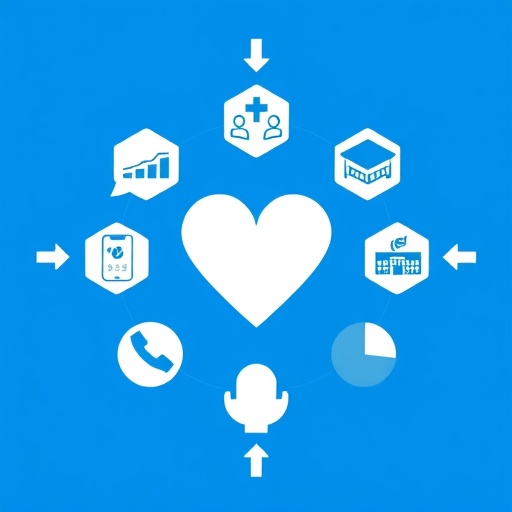
The healthcare landscape is undergoing transformative changes as the concept of a learning health system continues to gain traction among professionals within the industry. A recent scoping review conducted by a team of researchers led by C.M. Giroux, A. Thomas, and A. Bussières seeks to evaluate the preparedness of health organizations for embracing this innovative model of care. The findings of this study could serve as a pivotal point for decision-makers and stakeholders aiming to enhance the efficiency and effectiveness of healthcare delivery.
The learning health system is defined as an organizational framework that continuously integrates data and insights gleaned from patient care into the improvement of healthcare practices and outcomes. This model moves away from traditional healthcare delivery, which often operates in silos, and instead advocates for a culture of continuous learning and adaptation. By systematically leveraging patient data, health organizations can potentially provide more personalized care and make informed decisions that ultimately enhance patient outcomes.
Preparing health organizations for the transition to a learning health system involves several complex factors. The team conducted an extensive scoping review, analyzing existing literature on the preparedness of healthcare organizations. They focused on identifying the key determinants that influence readiness, such as leadership support, organizational culture, infrastructure, and workforce training. Their findings highlight the multifaceted nature of adapting to new models of care, which necessitates a comprehensive understanding of both the internal and external environments affecting healthcare organizations.
One of the primary aspects explored by the researchers was the importance of leadership in facilitating the transition to a learning health system. Strong and committed leaders play a vital role in fostering a culture that emphasizes learning, innovation, and patient-centered care. Leadership is instrumental in allocating necessary resources, advocating for change, and ensuring staff engagement throughout the process. This review underscores that without a supportive leadership network, healthcare organizations may struggle to implement learning initiatives effectively.
Another significant factor identified is the role of organizational culture in shaping readiness for implementing a learning health system. A culture that embraces innovation, collaboration, and open communication can significantly enhance the ability of healthcare organizations to adapt to change. Conversely, an ingrained resistance to change can serve as a barrier to progress. The team advocates for strategies that cultivate a positive organizational culture, which aligns with the principles of a learning health system.
Infrastructure is also a cornerstone of readiness. Health organizations must assess their current technological resources and capabilities to support a learning health system. This includes establishing robust data management systems that can collect, analyze, and interpret patient data efficiently. Moreover, as data privacy and security are paramount in healthcare, organizations need to ensure that their infrastructure adheres to regulatory standards while enabling innovative practices.
Workforce training and development emerge as crucial elements in the transition to a learning health system. The researchers pointed out that healthcare professionals must be equipped with the skills to analyze data, engage in collaborative decision-making, and apply evidence-based practices. Continuous education and professional development should be an integral part of the readiness assessment, ensuring that staff remains competent and confident in navigating the evolving healthcare landscape.
The scoping review also sheds light on the significance of patient involvement in the learning health system model. Engaging patients as active partners in their own care can lead to improved health outcomes and enhanced patient satisfaction. The researchers emphasize the need for healthcare organizations to develop strategies that facilitate patient participation in the decision-making process, as this not only empowers patients but also enriches the data ecosystem for learning.
Furthermore, the study highlights the challenges that health organizations may face in the transition process. Factors such as limited financial resources, bureaucratic red tape, and the existing legacy systems could impede progress. Awareness of these obstacles is crucial for stakeholders aiming to implement a learning health system, as it allows them to devise strategies for overcoming these challenges.
In conclusion, Giroux and colleagues’ scoping review serves as a timely reminder of the importance of assessing readiness for implementing a learning health system in healthcare organizations. The intersection of leadership, culture, infrastructure, workforce training, and patient engagement provides a comprehensive framework for organizations to evaluate their preparedness. As the healthcare ecosystem continues to evolve, understanding these dynamics will be essential for fostering innovative practices that improve patient care and outcomes.
Healthcare stakeholders are encouraged to take heed of the findings from this research to ensure that their organizations are adequately prepared for the transition to a learning health system. By doing so, they can not only enhance organizational effectiveness but also ultimately contribute to a more resilient and responsive healthcare system.
Subject of Research: Health organization readiness for implementing a learning health system.
Article Title: Evaluating health organization readiness for implementing a learning health system: a scoping review.
Article References:
Giroux, C.M., Thomas, A., Bussières, A. et al. Evaluating health organization readiness for implementing a learning health system: a scoping review.
Health Res Policy Sys (2025). https://doi.org/10.1186/s12961-025-01432-7
Image Credits: AI Generated
DOI: 10.1186/s12961-025-01432-7
Keywords: Learning health system, health organization readiness, organizational culture, leadership, patient engagement, workforce training, data management.


