

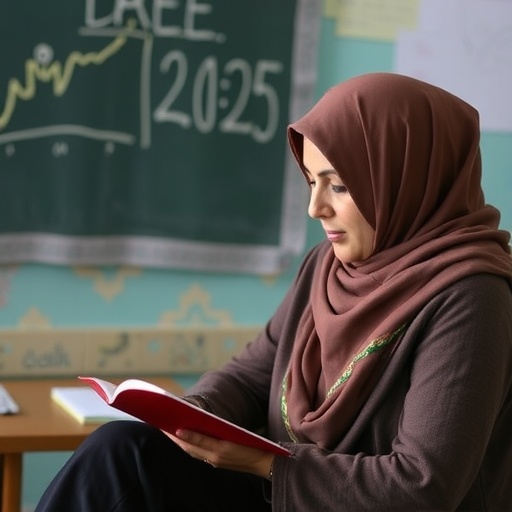
In a groundbreaking new study, researchers have taken significant strides in understanding mental health among students at Herat University, Afghanistan. The study revolves around a key psychological assessment tool known as the Depression, Anxiety, and Stress Scale (DASS-42). This scale, originally developed to measure these critical aspects of mental health, has shown strong applicability among various populations around the world. Yet, until now, its validation among Afghan students was unexplored. The current research spearheaded by Nasir Ahmad Shayan, along with colleagues A. Rahimi and A.M. Waseq, brings this important topic to the forefront of academic and mental health discussions.
Mental health has increasingly become a global concern, especially amidst the socio-political turmoil faced in regions like Afghanistan. For students, balancing academic pressures, emotional challenges, and a rapidly changing environment can become overwhelming. Various studies have indicated that university students are particularly susceptible to mental health issues. Therefore, understanding these specific stresses is not only timely but also crucial for future interventions and support systems within educational institutions.
The DASS-42 is a well-respected tool that quantifies levels of depression, anxiety, and stress through a series of systematic questions. The scale comprises 42 items, divided into three primary categories: depression, anxiety, and stress. Respondents rate their experiences over the past week on a scale from 0 to 3. Such a scale allows for nuanced insights into how individuals perceive their emotional and psychological state. The authors adapted this tool to reflect the cultural and contextual nuances necessary for the Afghan student populace.
One of the highlights of the research is the rigorous validation process utilized by the authors. This involved not only linguistic translation of the DASS-42 into the local language, but it also required contextual adjustments to ensure that cultural interpretations were aligned with the item constructs. This meticulous approach enhances the reliability of the results and ensures that the instrument accurately reflects the mental health issues faced by Herat University students.
In addition to cultural adaptations, instrument validation typically involves statistical analyses to establish reliability and validity measures. The researchers employed various statistical techniques to examine the internal consistency and factor structure of the DASS-42 among their respondents. High reliability coefficients were found, indicating that the adapted scale yielded consistent results across different demographic groups within the student body.
What sets this research apart is the emphasis on the emotional landscape of Afghan students. Known for their resilience, these students also carry the weight of their socio-economic backgrounds, gender roles, and the legacy of conflict in their homeland. The study sheds light on how such factors can contribute to degrees of depression, anxiety, and stress that may diverge from global norms. This understanding is essential, as it allows for the development of tailored support systems that address specific cultural and contextual needs.
Moreover, the implications of this research transcend academic circles. By laying the groundwork for future studies, the authors underscore the significance of mental health awareness in educational settings. Universities can adopt the findings from this study to implement targeted interventions, including counseling services and mental health awareness campaigns tailored to their student population. This is especially critical in a region where mental health has historically been stigmatized and overlooked.
Furthermore, the COVID-19 pandemic has exacerbated mental health issues globally. Students have faced unprecedented challenges including isolation, remote learning difficulties, and disruptions in social networks. This research provides a timely intervention point to explore the compounded effects of the pandemic on mental health for this specific group. By focusing on the mental health indicators revealed in the DASS-42 adaptations, stakeholders can better respond to the ongoing needs of Afghan students.
This study represents an evolving narrative in Afghan higher education, where mental health is gradually gaining prominence. Furthermore, Shayan and his colleagues have laid down a research framework that encourages both local and international scholars to explore mental health issues in diverse contexts, emphasizing the importance of cultural relevance in psychological assessment tools. Such initiatives can eventually foster greater public awareness and push for policy changes to improve student mental health services.
As universities globally adapt to modern educational demands, they must also foster an environment where mental health is regarded with the same seriousness as academic performance. The findings from this study may serve as a model for higher education institutions in comparable contexts, illustrating that comprehensive mental health approaches can enhance academic success and overall well-being.
In conclusion, the meticulous research conducted by Shayan and colleagues marks a pivotal contribution to the understanding of mental health within the context of Afghan universities. By validating the DASS-42, they provide a vital resource that can have long-lasting effects on the mental well-being of students at Herat University and beyond. The impact of this work will resonate through future policy decisions, mental health services, and academic support networks, thereby creating a more nurturing environment for all learners.
In essence, the study not only highlights the importance of validating mental health assessment tools but also underscores the need for culturally informed approaches to mental health research. This is particularly significant in regions afflicted by conflict and socio-economic strife where mental health often takes a backseat. The future of student mental health in Afghanistan looks brighter, thanks to the key insights and methodologies established in this pioneering research.
Subject of Research: Mental Health Assessment among Afghan University Students
Article Title: Translation, validation and reliability of depression, anxiety, and stress 42 (DASS-42) among Herat University students.
Article References:
Shayan, N.A., Rahimi, A., Waseq, A.M. et al. Translation, validation and reliability of depression, anxiety, and stress 42 (DASS-42) among Herat University students. Discov Ment Health 5, 199 (2025). https://doi.org/10.1007/s44192-025-00335-x
Image Credits: AI Generated
DOI: https://doi.org/10.1007/s44192-025-00335-x
Keywords: Depression, Anxiety, Stress, DASS-42, Afghan students, Mental health.


