

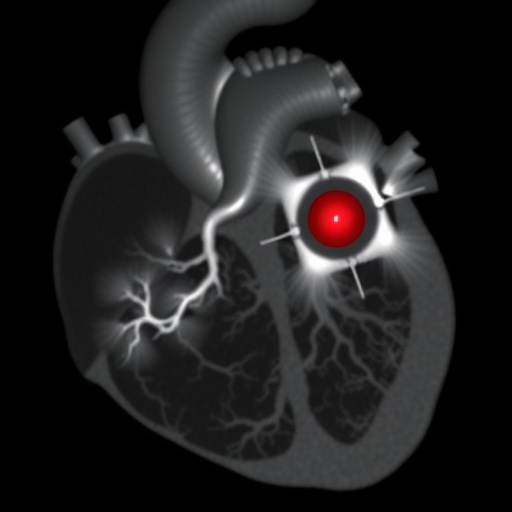
Kawasaki disease, an acute inflammatory condition primarily affecting children, continues to be a pressing subject in pediatric cardiology. As pediatricians and researchers delve deeper into intriguing facets of this disease, recent advances have surfaced, particularly concerning its implications on coronary arteries. Notably, the work of Chen, Feng, and Zhang sheds light on the evaluation of coronary artery lesions resulting from Kawasaki disease using coronary angiography, an essential tool that offers critical insights into this condition.
Kawasaki disease manifests in children as a combination of fever, rash, swollen lymph nodes, and inflammation of blood vessels, primarily affecting the coronary arteries. While often self-limiting, this disease poses a significant risk for cardiovascular complications, most notably coronary artery aneurysms. Unraveling the details of how Kawasaki disease may lead to these serious conditions has become a focal point for researchers. A major concern remains the long-term impact on heart health for children who have experienced Kawasaki disease, making comprehensive evaluation crucial.
The research conducted by Chen and colleagues employs cutting-edge coronary angiography techniques to investigate the extent and specifics of coronary artery involvement in affected children. This imaging technique provides exquisite detail that traditional approaches may overlook, allowing for better assessment of arterial integrity. By realizing precisely where lesions occur and how extensive they are, clinicians can make more informed decisions regarding treatment strategies and long-term monitoring.
In the study, a cohort of children diagnosed with Kawasaki disease underwent coronary angiography to assess their coronary arteries’ health. The results showcased a spectrum of abnormalities, from mild stenosis to significant aneurysm formation. Importantly, this research yielded valuable information regarding the odds of developing these lesions based on age, sex, and timing of intervention post-Kawasaki diagnosis, offering vital awareness for pediatric care providers.
The findings are particularly striking when considering the age demographics in relation to the severity of coronary involvement. Children who presented with Kawasaki disease at a younger age tended to show a higher incidence of coronary artery lesions. This correlation raises significant questions regarding the mechanisms at play and necessitates a deeper understanding of how age-related factors influence the disease’s progression and subsequent arterial complications.
Moreover, the importance of timely diagnosis and intervention cannot be overstated. The study underscores that children who received early treatment, such as intravenous immunoglobulin (IVIG), exhibited a lower likelihood of severe coronary artery lesions. These insights are crucial as they provide a tangible metric for clinicians to gauge the urgency of treatment and the potential benefits of early therapeutic strategies.
In the wake of this research, the discussions surrounding Kawasaki disease are evolving. The need for continued surveillance of these patients and their cardiovascular health is emerging as a cornerstone of pediatric practice. Regular follow-ups may include echocardiograms and serial angiographies to monitor changes over time, ensuring that children at risk are flagged early for any required interventions.
The implications of coronary artery lesions extend beyond the immediate effects of Kawasaki disease. Children with identified lesions will require long-term cardiovascular management, often extending into their adolescent and adult years. These findings emphasize the necessity for a holistic approach to treating Kawasaki disease, considering its long-term repercussions on health and quality of life.
Possibly most alarming is the fact that the prevalence of Kawasaki disease has been on the rise globally, prompting discussions about potential environmental and genetic contributors. As clinicians grapple with this uptick, they are urged to remain vigilant in recognizing symptoms early, ensuring those affected receive prompt evaluation and care.
To supplement these clinical findings, further studies are warranted to understand better the pathophysiology behind Kawasaki disease and its vascular implications. Research avenues could explore the genetic markers of susceptibility, the role of infectious agents, and environmental triggers that may predispose certain populations to this condition. With every discovery, the hope is to develop preventive strategies that could eventually alter the course of the disease.
Excitingly, advancements in technology also hold promise for the future of Kawasaki disease research. Novel imaging techniques and artificial intelligence could enhance the predictive capabilities in identifying children at risk for significant coronary artery damage. This evolution in medical technology may lead to a paradigm shift in how pediatric cardiologists approach the monitoring and treatment of Kawasaki disease.
In summary, the work of Chen, Feng, and Zhang contributes critical knowledge within the field of pediatric cardiology, specifically concerning the evaluation of coronary artery lesions in children afflicted with Kawasaki disease. The findings from their study reiterate the necessity of early diagnosis and intervention, highlighting the need for ongoing research to unlock further mysteries surrounding this complex condition.
As awareness grows, the hope is that pediatric care for Kawasaki disease will evolve into a proactive model focused on prevention and early intervention, safeguarding the long-term cardiovascular health of affected children. Every step taken toward understanding this disease brings the medical community closer to mitigating its long-term impact and ensuring healthier futures for children worldwide.
Subject of Research: Evaluation of coronary artery lesions in children with Kawasaki disease by coronary angiography.
Article Title: Evaluation of coronary artery lesions in children with Kawasaki disease by coronary angiography.
Article References:
Chen, L., Feng, T.T. & Zhang, D.F. Evaluation of coronary artery lesions in children with Kawasaki disease by coronary angiography.
BMC Pediatr (2026). https://doi.org/10.1186/s12887-026-06567-2
Image Credits: AI Generated
DOI: 10.1186/s12887-026-06567-2
Keywords: Kawasaki disease, coronary artery lesions, coronary angiography, pediatric cardiology, intravenous immunoglobulin, cardiovascular health.


