

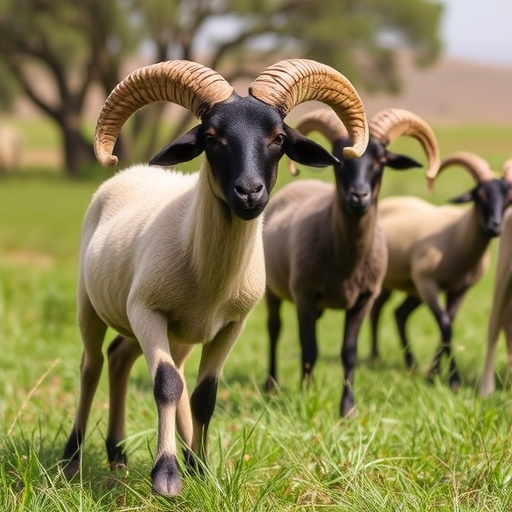
In the heart of Ethiopia’s South Omo Zone, a fascinating research endeavor explores the intertwined dynamics of agricultural practices and animal husbandry, focusing primarily on the Black-Head Somali sheep. This breed, known for its resilience in harsh environments, is crucial to the livelihoods of local pastoral and agro-pastoral communities. A new study spearheaded by Tadele, Maya, and Yemane delves deeply into the production practices related to these sheep, along with their growth and reproductive performances. The implications of these findings are significant for improving livestock management strategies in the region.
South Omo Zone, characterized by its diverse ecosystems, hosts a variety of livestock, but Black-Head Somali sheep hold a special place among local farmers. These sheep possess unique attributes, such as drought resistance and remarkable adaptability to extreme weather conditions, making them essential during periods of climate adversity. The recent study provides comprehensive insights into how these traits manifest in agricultural practices and the overall health of the sheep populations in the area.
In conducting this research, the authors meticulously documented the production practices utilized by local shepherds. They emphasized the traditional knowledge passed down through generations, which forms the backbone of livestock management in these communities. This knowledge encompasses grazing patterns, breeding cycles, and feed management, illustrating a rich tapestry of cultural practices that are intrinsic to the sustainability of livestock farming in the region.
Another significant aspect highlighted in the research is the growth performance of Black-Head Somali sheep. The study reveals that under optimal grazing conditions, these sheep exhibit impressive weight gains, which is essential for their market value and, consequently, the economic security of their owners. By examining various feeding regimes and their impact on growth rates, the researchers provide actionable insights for improving the productivity of sheep rearing practices.
Reproductive performance is another critical focus of the study. The authors discuss various factors influencing fertility rates, lamb survival, and overall reproductive efficiency within the Black-Head Somali sheep population. Through systematic data collection and analysis, the study identifies optimal breeding practices that enhance reproductive outcomes while considering the challenges posed by environmental stressors and disease prevalence in the region.
The researchers also delve into the agro-pastoral systems that coexist with traditional pastoralism in South Omo. This intersection highlights the adaptability of local farmers as they integrate crop farming with livestock rearing, thereby diversifying their income sources and enhancing food security. The findings indicate that mixed farming systems offer a buffer against the uncertainties of climate change, ultimately making communities more resilient.
In documenting the various challenges faced by pastoralists, the study showcases the ongoing struggle against limited resources, fluctuating market demands, and external pressures such as land encroachment. The researchers draw attention to the need for policy interventions that support sustainable practices and bolster the livelihoods of pastoral communities. A key recommendation from the study advocates for greater inclusion of local knowledge in the development of agricultural policies, ensuring that the voices of pastoralists are heard and their practices respected.
As the study unfolds, the complexity of livestock management in this region comes clearly into view. The interrelationship between environmental factors, cultural practices, and economic realities creates a multifaceted landscape where the Black-Head Somali sheep serve as a vital element. The researchers’ comprehensive approach sheds light on these dynamics, allowing for a deeper understanding of how to foster sustainable agricultural practices in similar contexts worldwide.
Moreover, the importance of research collaborations with local communities cannot be underestimated. Engaging with pastoralists not only enriches the study but also helps build trust and empowers communities. The authors underscore their commitment to participatory research, which sets a precedent for future studies focused on enhancing the livelihoods of pastoralists globally.
In closing, the research on the Black-Head Somali sheep in South Omo serves as a compelling case study of resilience and adaptation. The myriad insights gleaned from this study pave the way for transformative farming practices that can uplift pastoral communities. By focusing on sustainable production strategies and emphasizing the value of traditional knowledge, the researchers provide a roadmap towards enhancing both the welfare of the sheep and the livelihoods of the people who depend on them.
This extensive examination of production practices, growth metrics, and reproductive strategies highlights not only the significance of this particular breed but also the broader implications for pastoralism in the face of changing environmental conditions. As communities in South Omo continue to navigate these challenges, the findings from Tadele, Maya, and Yemane offer hope and guidance for a sustainable agricultural future.
Subject of Research: Black-Head Somali sheep production practices, growth and reproduction in South Omo Zone, Ethiopia.
Article Title: Production practices, growth and reproductive performances of black-head somali sheep in pastoral and agro-pastoral systems of South Omo Zone, Ethiopia.
Article References:
Tadele, Y., Maya, S. & Yemane, N. Production practices, growth and reproductive performances of black-head somali sheep in pastoral and agro-pastoral systems of South Omo Zone, Ethiopia.
Discov Sustain (2026). https://doi.org/10.1007/s43621-026-02659-2
Image Credits: AI Generated
DOI: 10.1007/s43621-026-02659-2
Keywords: Black-Head Somali sheep, pastoral systems, agro-pastoral systems, Ethiopia, livestock management, sustainable agriculture, reproductive performance, growth performance, environmental adaptation.


