


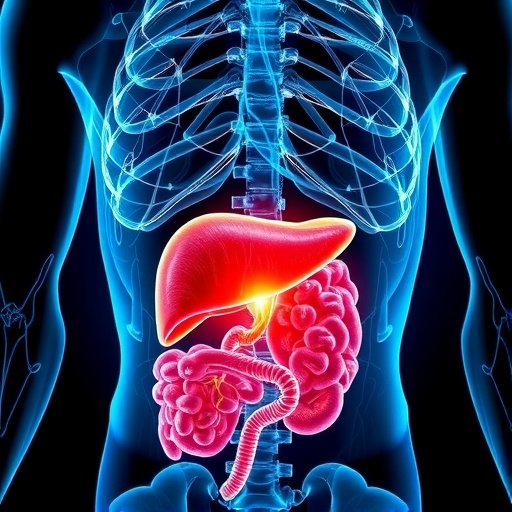
In a groundbreaking study poised to reshape our understanding of liver metabolism, researchers have unveiled a novel mechanism by which Arginase 1 (ARG1) orchestrates hepatic lipogenesis. This discovery, detailed in the latest issue of Nature Communications, illuminates how ARG1 influences fat synthesis within liver cells by modulating the ERK2/PPARγ signaling axis in an unexpected, non-canonical fashion. The implications of these findings extend far beyond basic science, potentially opening new avenues for therapeutic strategies targeting metabolic disorders including non-alcoholic fatty liver disease (NAFLD) and associated systemic complications.
Hepatic lipogenesis, the process by which liver cells convert excess nutrients into fat, plays a central role in maintaining energy homeostasis. Dysregulation of this process often leads to lipid accumulation and metabolic pathologies. Until now, the molecular players involved have largely been characterized through conventional pathways. However, the work led by Shao et al. challenges this paradigm by revealing a unique regulatory role for ARG1, an enzyme classically known for its involvement in the urea cycle, highlighting its influence over intracellular signaling cascades critical for lipid metabolism.
Diving deeper into the molecular intricacies, ARG1 has been shown to engage with extracellular signal-regulated kinase 2 (ERK2), a mitogen-activated protein kinase that subtly orchestrates various cellular functions including growth and differentiation. Traditionally, ERK2 activation is understood within stimulus-response frameworks such as growth factor signaling. Shao and colleagues demonstrate that ARG1 acts upstream to modulate ERK2 activity, not through its catalytic arginase activity, but via an alternative, non-enzymatic mechanism. This non-canonical signaling axis redefines ARG1’s functional repertoire, suggesting kinase regulation independent of classical enzymatic pathways.
The downstream impact revolves around peroxisome proliferator-activated receptor gamma (PPARγ), a nuclear receptor transcription factor heavily involved in the transcriptional regulation of genes controlling lipid uptake and storage. It emerges that ARG1’s modulation of ERK2 results in altered PPARγ activity, thereby adjusting gene expression patterns that facilitate hepatic lipogenesis. This link between ARG1 and PPARγ signaling is particularly notable because PPARγ itself has been a major drug target for metabolic syndromes, but the upstream regulatory networks that influence its activity in hepatocytes remain incompletely understood.
From a biochemical standpoint, the team employed state-of-the-art phosphoproteomic profiling and genetic manipulation techniques to map the signaling alterations engendered by ARG1. Notably, knockdown of ARG1 resulted in significant decreases in ERK2 phosphorylation states, accompanied by a corresponding reduction in PPARγ-mediated transcriptional output. Conversely, ARG1 overexpression enhanced lipid accumulation and drove lipogenic gene programs, firmly establishing its role as a positive regulator of hepatic fat synthesis. These multi-modal experiments underscore the robustness of their conclusions and highlight the precision of ARG1-dependent signaling within the liver.
Importantly, this novel signaling paradigm discards the traditional view of ARG1 merely as an enzyme catalyzing arginine hydrolysis to urea and ornithine. Instead, it assigns ARG1 a dual functional identity – enzymatic and signaling – redefining its suitability as a drug target. Given the rise of metabolic syndrome and NAFLD worldwide, targeting ARG1’s regulatory influence on ERK2/PPARγ signaling might yield therapeutics with greater specificity and fewer off-target effects compared to direct receptor or kinase inhibitors.
The physiological relevance of this signaling axis was corroborated through both in vitro hepatocyte models and in vivo mouse studies modeling hepatic lipid overload. ARG1 overexpressing mice presented pronounced steatosis, while ARG1-deficient mice demonstrated resistance to diet-induced fatty liver, further affirming ARG1’s causative role in hepatic lipid accumulation. These results not only validate the mechanistic insights at the organismal level but also stress the translational potential of manipulating ARG1 pathways to counter liver diseases.
The implications of this mechanism extend to systemic metabolic homeostasis given the liver’s pivotal role in governing whole-body lipid and glucose metabolism. Dysregulated hepatic lipid synthesis contributes to insulin resistance, systemic inflammation, and progression to more severe liver pathologies such as non-alcoholic steatohepatitis (NASH) and cirrhosis. By unveiling a fundamental molecular nexus between ARG1 and lipid metabolism, the findings provide a fresh molecular handle to interrogate how hepatic dysfunction triggers cascading systemic effects.
Additionally, the study sheds light on cross-talk between metabolic pathways and kinase signaling, illustrating how metabolic enzymes might moonlight as signaling scaffold proteins. This concept introduces new layers of complexity in cell biology and metabolic regulation, potentially prompting a reassessment of enzymatic functions across other metabolic diseases. Furthermore, it invites exploration into whether similar non-canonical signaling roles exist for other urea cycle enzymes or metabolic regulators.
Technological advances facilitating the study, such as CRISPR/Cas9-mediated gene editing and high-resolution mass spectrometry, were pivotal in delineating the nuanced ARG1-ERK2-PPARγ axis. These tools permitted dissecting the multifaceted interactions at molecular resolution, revealing phosphorylation events and transcriptional changes with unprecedented clarity. This integration of cutting-edge techniques exemplifies the modern approach to unraveling complex biological circuits.
Future research directions are poised to explore the therapeutic leverage points within this new signaling pathway. For instance, selectively disrupting ARG1’s interaction with ERK2 without impeding its enzymatic activity could suppress hepatic lipogenesis while preserving urea cycle function. Such specificity would be critical to avoid side effects like hyperammonemia associated with arginase inhibition. Moreover, investigations into how environmental factors such as diet or gut microbiota influence ARG1’s signaling role may offer holistic insight into metabolic disease etiology.
In conclusion, the study by Shao et al. represents a milestone in metabolic research by defining a hitherto unknown regulatory mechanism of hepatic lipogenesis mediated through ARG1’s modulation of ERK2 and PPARγ in a non-canonical manner. This paradigm shift in understanding liver metabolism paves the way for innovative therapeutic strategies targeting metabolic and liver diseases, potentially altering clinical approaches to one of the 21st century’s most urgent health challenges. The liver, traditionally viewed as a passive organ for detoxification and metabolism, emerges as an active signaling hub modulated by metabolic enzymes in unexpectedly intricate ways.
As metabolic disorders continue their global ascent, insights like those offered by this research underscore the importance of molecular precision in both diagnosis and treatment. The elucidation of unique signaling roles for classical enzymes such as ARG1 highlights the complex interplay between metabolism and intracellular communication, encouraging a reevaluation of current drug targets and fostering hope for more effective interventions. Given the study’s robust data and innovative perspective, it is poised to catalyze further discoveries within the intersecting fields of metabolism, signaling, and hepatology.
This seminal research ushers in a new era of metabolic biology—one where the boundaries between enzymatic activity and signal transduction blur, enabling cells to adaptively integrate nutrient sensing with gene regulation. The ramifications for human health and disease are profound, suggesting that the future of metabolic therapy lies in manipulating these dual-functional proteins. Shao and colleagues’ findings resonate as a call to action for deeper exploration of the molecular symphony governing lipid homeostasis at the crossroads of metabolism and signal transduction.
Cite Scienmag News
Ophelia Keating. (February 18, 2026). Arginase 1 Drives Liver Fat via ERK2/PPARγ Pathway. Scienmag. https://scienmag.com/arginase-1-drives-liver-fat-via-erk2-ppar%ce%b3-pathway/
Ophelia Keating. "Arginase 1 Drives Liver Fat via ERK2/PPARγ Pathway." Scienmag, 18 February 2026, https://scienmag.com/arginase-1-drives-liver-fat-via-erk2-ppar%ce%b3-pathway/. Accessed 3 September 2026.
Ophelia Keating. "Arginase 1 Drives Liver Fat via ERK2/PPARγ Pathway." Scienmag. February 18, 2026. https://scienmag.com/arginase-1-drives-liver-fat-via-erk2-ppar%ce%b3-pathway/


