

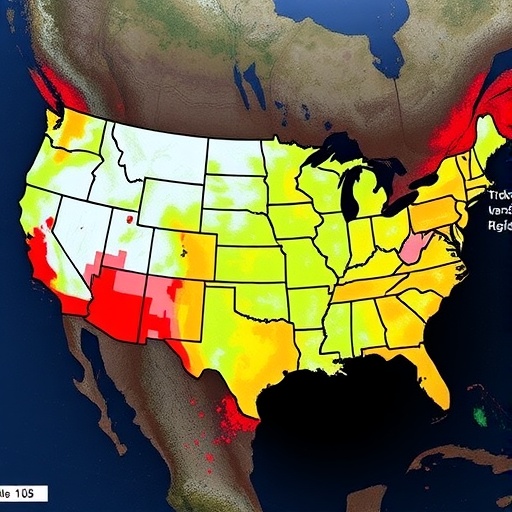
A groundbreaking study recently published in The Journal of Wildlife Management exposes the pervasive threat of mercury contamination across the United States’ National Wildlife Refuge System, the planet’s most extensive network of lands and waters preserved for the protection of fish, wildlife, and their habitats. This investigation represents an unprecedented effort to map mercury exposure on a refuge-wide scale, employing bioindicator species to reveal the geographical and ecological variability of this potent neurotoxin.
Researchers focused their examination on mercury bioaccumulation in dragonfly larvae, an organism recognized for its exceptional suitability as an environmental sentinel. Sampling 1,356 larvae across 30 diverse refuges nationwide between 2021 and 2023, the study offers a comprehensive snapshot of mercury distribution in these critical conservation areas. The cuticular tissues of dragonfly larvae enable quantification of methylmercury, the bioavailable and most toxic form of mercury, highlighting the pathways of contamination through aquatic food webs.
Remarkably, dragonfly mercury concentrations documented in these refuges spanned an extraordinary range, from less than 3 nanograms per gram to over 2,200 nanograms per gram dry weight. This spectrum not only matches but also mirrors the mercury levels detected in other types of protected lands, demonstrating the pervasiveness of mercury pollution even in remote, conserved environments. Such wide-ranging data underscore the complex factors influencing mercury cycling, including regional atmospheric deposition, local geology, hydrology, and anthropogenic emissions.
The implications of these findings are particularly alarming given that 80% of the refuges surveyed harbored locations with mercury concentrations categorized as moderate to high risk. This widespread contamination raises critical concerns for fish and wildlife species relying on aquatic systems for life-sustaining resources, many of which are integral components of broader ecosystem health. Mercury’s neurotoxic effects can impair reproduction, behavior, and survival, threatening biodiversity and habitat resilience.
Furthermore, the study advances the understanding of mercury exposure pathways by providing baseline measurements essential for tracking temporal trends and assessing the efficacy of management strategies aimed at reducing bioaccumulation. Such baseline data are invaluable for natural resource managers tasked with protecting ecological integrity against the backdrop of ongoing environmental change and pollution.
A significant contribution of this research lies in its application of a biosentinel approach, utilizing dragonfly larvae as cost-effective and sensitive indicators of mercury contamination. Jennifer Wilkening, PhD, the study’s corresponding author from the U.S. Fish and Wildlife Service, emphasized that this representational method is among the first to be deployed across a national refuge system. This approach allows for scalable monitoring and offers actionable insights to guide remediation and conservation efforts.
The study also highlights the need for a multidisciplinary perspective to unravel the complex environmental factors driving mercury exposure. Interactions between atmospheric mercury emissions, watershed characteristics, sediment chemistry, and biological uptake form a dynamic nexus influencing contamination levels in aquatic biota. Understanding these interrelations is crucial to designing targeted interventions that effectively mitigate mercury accumulation and propagate ecological recovery.
Recognizing the intersection of ecosystem health and human welfare, this research calls attention to potential risks to the people who depend on fish and wildlife resources from these refuges. Mercury biomagnifies along food chains, posing threats not only to wildlife but also to human communities through consumption of contaminated fish and game. This dual impact stresses the importance of integrated monitoring and public health policies informed by scientific data.
The methodology utilized in this study involved meticulous field collection protocols and rigorous laboratory analysis employing advanced spectrometry techniques for mercury quantification. Such technical rigor ensures that the data generated are both reliable and relevant, furnishing managers and policymakers with precise information for decision-making. Continued refinement of these analytical techniques will further enhance surveillance capabilities and early detection of emerging contamination hotspots.
Looking forward, the study advocates for sustained surveillance programs embedded within refuge management frameworks, promoting adaptive strategies to safeguard these treasured ecosystems. The integration of biosentinel monitoring with broader environmental assessments can enhance responsiveness to mercury pollution and foster resilience in wildlife populations amid environmental stressors such as climate change and habitat degradation.
In summary, this landmark investigation into mercury contamination across the National Wildlife Refuge System sheds light on a pressing environmental issue with broad ecological and societal ramifications. It underscores the critical role of bioindicator species in environmental monitoring and sets a precedent for future research and management aimed at protecting terrestrial and aquatic biodiversity from pervasive pollution threats.
Subject of Research: Mercury bioaccumulation in dragonfly larvae across the U.S. National Wildlife Refuge System
Article Title: Monitoring mercury across the National Wildlife Refuge System using a biosentinel approach
News Publication Date: 25-Mar-2026
Web References:
References: Original study published in The Journal of Wildlife Management
Image Credits: Not provided
Keywords
Wildlife management, Pollution, Heavy metal pollution, Environmental sciences, Habitat loss, Ecological dynamics, Ecology, Landscape evolution, Wildlife


