

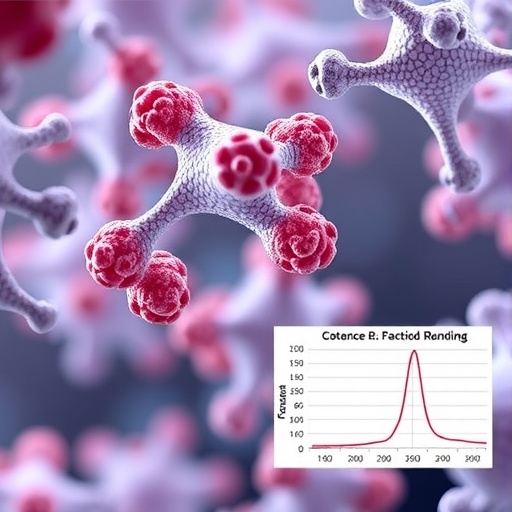
Antibody therapeutics have revolutionized modern medicine, providing highly targeted treatments for a range of conditions, including various cancers and autoimmune diseases. These biologic drugs are engineered to mimic the body’s own antibodies, designed to bind specific proteins and cells with precision. Yet, despite their specificity and therapeutic promise, a vexing challenge persists: the body’s immune system occasionally perceives these therapeutic antibodies as foreign, provoking the production of anti-drug antibodies (ADAs). This immune response not only diminishes the drug’s effectiveness but can also precipitate severe adverse events, including anaphylaxis, a sudden, life-threatening allergic reaction.
Recent groundbreaking research spearheaded by scientists at Chiba University in Japan sheds new light on the complexity underlying these dangerous immune responses. The team, led by Professor Hiroto Hatakeyama and Dr. Ruiheng Tang, focused their investigation on the binding interactions between therapeutic antibodies and Fc gamma receptors (FcγRs), specialized proteins found on the surface of immune cells. These receptors play a pivotal role in immune surveillance and response by recognizing the Fc region of antibodies. Intriguingly, their study reveals that the affinity of antibody therapeutics for FcγRs correlates strongly with the likelihood of triggering ADA production and consequent anaphylaxis.
Published in the March 2026 issue of the Journal for ImmunoTherapy of Cancer, the study employed sophisticated experimental models using tumor-bearing mice to disentangle these molecular mechanisms. Two monoclonal antibodies targeting programmed death-ligand 1 (PD-L1), a checkpoint inhibitor protein exploited by cancer cells to escape immune attack, were evaluated. The first antibody, designated 10F.9G2, exhibited high affinity for FcγRs and was found to induce rapid, fatal anaphylaxis accompanied by elevated ADA titers. In stark contrast, MIH6, another PD-L1-specific antibody with significantly lower FcγR binding affinity, did not elicit comparable immune reactions, demonstrating minimal ADA production and absence of anaphylactic symptoms.
To validate the causative role of Fcγ receptor engagement in this immune phenomenon, the researchers engineered variants of the 10F.9G2 antibody with attenuated FcγR binding. Remarkably, these modified antibodies failed to provoke anaphylaxis or trigger high ADA levels, underscoring the critical influence of FcγR affinity in modulating immune outcomes. Diving deeper, the study identified tumor-associated myeloid cells — a subset of immune cells residing within the tumor microenvironment — as key mediators in this process. These cells capture antibodies via FcγRs and potentially facilitate antigen presentation, thereby stimulating robust immune activation that culminates in heightened ADA generation.
This discovery marks a paradigm shift in understanding antibody-induced anaphylaxis. Classically, such allergic reactions have been attributed mainly to immunoglobulin E (IgE) pathways, whereby IgE antibodies prime mast cells and basophils to release inflammatory mediators like histamine. However, emerging evidence, bolstered by this study, points to significant IgE-independent mechanisms driven by Fcγ receptors. Critically, when the researchers pharmacologically blocked FcγRs, the pathological cascade was interrupted: antibody capture by myeloid cells plummeted, ADA levels declined, and survival rates improved in the animal models.
The clinical implications of these insights resonate beyond the laboratory. Analysis of post-marketing safety data from the U.S. Food and Drug Administration Adverse Events Reporting System (FAERS) revealed parallel trends. FDA-reported cases of anaphylaxis were disproportionately linked to FDA-approved antibody therapeutics known to engage FcγRs with high affinity or exhibit potent antibody-dependent cellular cytotoxicity (ADCC) activity, a functional readout of immune cell activation mediated by FcγRs. This convergence of preclinical and clinical data highlights Fcγ receptor interactions as potential biomarkers and therapeutic targets to mitigate immunogenic complications in antibody therapy.
Such revelations urgently call for the refinement of antibody drug design, prioritizing modulation of Fcγ receptor affinity to balance therapeutic efficacy with immunogenic safety. Tailoring the Fc region of therapeutic antibodies to reduce undesirable FcγR binding could limit ADA development and minimize risks of severe hypersensitivity reactions, without compromising anti-cancer activity. Additionally, targeting tumor-associated myeloid cells or implementing FcγR blockade strategies could emerge as adjunct approaches to control or prevent life-threatening anaphylaxis, enhancing treatment tolerability.
Professor Hatakeyama stresses the broader significance of these findings, noting that while their research employed tumor models, the principles uncovered may extend to diverse clinical scenarios involving antibody-based drugs. He underscores the potential for these mechanistic insights to inform safer clinical applications and guide regulatory frameworks for biologic therapies. The study envisions a future where immunogenicity can be anticipated and circumvented through rational antibody engineering coupled with immune modulation.
Moreover, the study exemplifies the intricate interplay between therapeutic antibodies, immune receptors, and the tumor microenvironment. Tumor-associated myeloid cells—often implicated in immune suppression and tumor progression—here emerge as unintentional facilitators of adverse immune responses. By elucidating their role in antibody capture and ADA induction, this research opens avenues for further exploration into the immunobiology of these cells, potentially unveiling novel immunotherapeutic targets.
In sum, this research marks a significant stride in decoding the molecular basis of antibody-related anaphylaxis. It challenges conventional paradigms centered solely on IgE-mediated pathways and spotlights Fcγ receptor interactions as central arbiters of immune recognition and adverse reactions. This enhanced understanding holds promise for optimizing antibody therapeutics—a class of drugs poised at the forefront of precision medicine—with improved safety profiles and enduring clinical benefits.
As antibody therapies continue to proliferate across oncology and beyond, these findings may stimulate widespread reevaluation of immunogenic risk factors and spearhead innovative strategies to overcome them. The future of antibody drug development may well hinge on harnessing such insights, paving the way toward therapies that are not only powerful but also predictably safe.
Subject of Research: Animals
Article Title: Antibody therapeutics with high affinity for FcγRs exacerbate anaphylaxis via FcγR-mediated capture by tumor-associated myeloid cells
News Publication Date: 4-Mar-2026
Web References:
Journal for ImmunoTherapy of Cancer
DOI: 10.1136/jitc-2025-013316
References:
Tang, R., Aibai, A., Tamemoto, Y., Kume, R., Yasuda, K., Sato, K., Abo, H., Tsuji, K., Higashi, K., Kiyoshi, M., Hashii, N., Ishii-Watabe, A., Kawashima, H., & Hatakeyama, H. (2026). Antibody therapeutics with high affinity for FcγRs exacerbate anaphylaxis via FcγR-mediated capture by tumor-associated myeloid cells. Journal for ImmunoTherapy of Cancer, 14(3), e013316.
Image Credits: Professor Hiroto Hatakeyama from Chiba University, Japan
Keywords: Antibody therapy, Anaphylaxis, Fc receptors, Anti-drug antibodies, Tumor-associated myeloid cells, Immune response, Cancer immunotherapy, Immunogenicity, Monoclonal antibodies, Antibody-dependent cellular cytotoxicity, Allergic reactions, Immune disorders


