

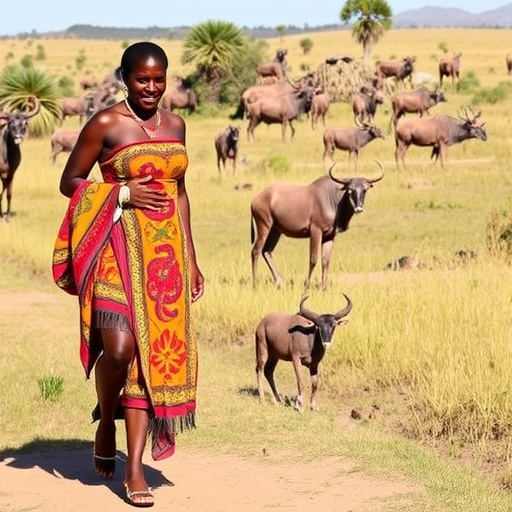
Recent research has illuminated the intricate interplay between stress responses and androgen levels among Himba women, a semi-nomadic group indigenous to Namibia. This study, conducted by researchers Prall, Scelza, and Trumble, sheds light on how environmental and social stressors can influence hormonal balances, ultimately impacting health and behavior. The remote ecosystem in which the Himba live provides a unique backdrop for understanding the physiological adaptations that arise in response to stress.
The Himba women, known for their strong cultural identities and unique lifestyle, are not just subjects of anthropological interest; their biological responses to stress have significant implications for our understanding of human physiology. This population’s traditional practices and close connection to nature may contribute to their distinctive physiological adaptations. The researchers aimed to explore how stress, potentially arising from societal pressures and environmental challenges, affects the levels of androgens, which are important hormones responsible for a range of biological functions.
A focal point of the study was the measurement of stress-induced hormone changes, particularly focusing on cortisol and testosterone levels. Cortisol, often referred to as the “stress hormone,” is produced by the adrenal glands in response to stress. The study observed that elevated cortisol levels could negatively influence testosterone synthesis, which may affect reproductive health and overall vitality. By examining samples from the Himba women, the researchers found remarkable patterns that correlate stress levels with fluctuating androgen concentrations.
The hormonal fluctuations exhibited by Himba women provide a fascinating glimpse into the adaptive mechanisms of human beings under stress. This research not only reflects the resilience of the Himba but also poses broader questions about how stressors in modern life can similarly impact hormonal health. Understanding these biological responses helps delineate the line between environmental stress and health outcomes across different populations, elucidating why some communities might be more resilient than others.
Moreover, the study emphasized the role of cultural context in shaping physiological responses to stress. Himba women maintain traditional lifestyles that include unique nutritional practices, social support systems, and activities that may buffer against stress. This cultural resilience might help explain the observed hormonal balance, suggesting that lifestyle choices play a crucial role in influencing health outcomes. The interactions between stress and hormonal levels underscore the need to consider both biological and cultural factors when evaluating health.
As a part of their research, the authors also addressed the potential implications of these findings for public health. By understanding the physiological responses to stress among Himba women, researchers can develop educational programs and interventions aimed at improving health outcomes for women in similar environments worldwide. This could be particularly beneficial in regions where stress is a predominant factor affecting women’s health.
The importance of these findings transcends anthropological interest; they highlight the necessity of integrating biological, psychological, and social perspectives in health research. The study of the Himba women serves as a crucial reminder of the diverse ways in which human beings adapt to their environments. By focusing on a specific population that reflects a unique lifestyle and set of challenges, the researchers have opened up avenues for further exploration of stress and hormonal interactions.
Additionally, the research draws attention to the need for longitudinal studies exploring how adaptations to stress might change over time and across generations. As environmental pressures continue to evolve, particularly with climate change and globalization, understanding how these factors influence stress responses will be imperative.
In conclusion, the innovative research conducted by Prall, Scelza, and Trumble enriches our understanding of the physiological ramifications of stress in human populations. The insights gathered from the Himba women not only contribute to a body of knowledge surrounding stress and health but encourage a broader conversation regarding the interplay between biology and culture. As this field continues to evolve, the implications for public health and well-being will undoubtedly resonate across diverse communities, urging a more comprehensive approach to understanding human resilience.
The authors of the study invite further discourse around these findings, suggesting that interdisciplinary collaborations could lead to innovative solutions aimed at mitigating the adverse effects of stress on health. The complexity of human biology dictates that there is no one-size-fits-all model, and this research underscores the importance of localized studies that respect and understand cultural specificities.
In an age where stress is omnipresent, understanding its impact at a biological level becomes more crucial than ever. By unraveling the dynamics of stress and androgen levels, especially in culturally rich communities like the Himba, researchers can better inform strategies that promote health and well-being. The future of health research hinges on integrating these insights, supporting the notion that cultural context and individual experience matter immensely in the science of human health.
This study signifies a step towards harmonizing the consequential relationship between environmental influences, cultural practices, and biological responses, ultimately aiming to enhance the quality of life for women worldwide, irrespective of their geographic location.
Subject of Research: The interplay between stress responses and androgen levels among Himba women.
Article Title: Stress and Androgens in Himba Women
Article References:
Prall, S., Scelza, B. & Trumble, B.C. Stress and Androgens in Himba Women.
Adaptive Human Behavior and Physiology 9, 371–386 (2023). https://doi.org/10.1007/s40750-023-00227-w
Image Credits: AI Generated
DOI: 10.1007/s40750-023-00227-w
Keywords: Stress, Androgens, Himba Women, Hormonal Responses, Cultural Resilience, Public Health


