

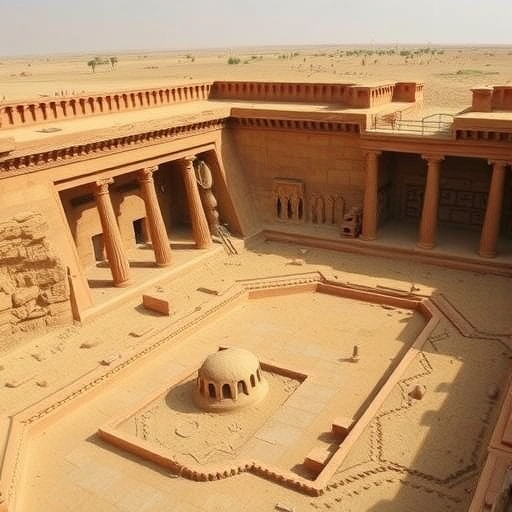
In the quest to unravel the complexities of ancient societies, recent research led by a team of archaeologists has brought to light critical findings about pre-adult burials at Tombos, a site in the Nile Valley. This investigation, spearheaded by Buzon, Whitmore, and Smith, aims to shed light on the social age and health status of young individuals during their life courses, providing invaluable insights into the cultural practices of ancient communities surrounding the Nile.
The backdrop of this research is set in the ancient Egyptian civilization, known for its rich cultural heritage and intricate burial customs. Tombos, located on the Nile’s bank, is an archaeological site that has revealed a wealth of information about the lifestyle and societal structures of its ancient inhabitants. The team’s research specifically focuses on the pattern of burials for individuals who did not yet reach adulthood, which opens critical discussions regarding the roles and perceptions of children in ancient society.
At its core, the study offers a nuanced perspective on social stratification within ancient Egyptian culture. By analyzing the burial context of pre-adults, the researchers are attempting to understand how these young individuals were situated within their families and broader community structures. The findings are expected to reveal disparities in care and social significance accorded to children from different social strata, contributing to the broader discourse on socio-economic differences in ancient civilizations.
One of the fascinating aspects of the research is its emphasis on health throughout life, particularly in the context of childhood and early adolescence. The analysis encompasses osteological assessments, revealing insights into the physical health of pre-adults based on skeletal remains. This biological data, combined with contextual information from the burial sites, allows the team to construct a narrative of health challenges and survivorship that young individuals faced in ancient Nile Valley societies.
The demographic of pre-adults stands out as a focal point for understanding mortality rates in ancient times. Researchers underscore the high rates of childhood mortality and its implications on social structures and familial bonds in ancient communities. The investigation into burial practices extends beyond mere death; it explores the meanings attributed to these youthful lives and the prevailing attitudes towards aging and mortality.
The methodologies employed in this research illuminate the complexity of burial practices. By utilizing advanced techniques such as bioarchaeological analysis and isotopic studies, the team can delve deeper into individual life histories. These methods provide a clearer picture of the health challenges faced by these young people, including any dietary deficiencies or diseases that might have impacted their lives.
As the research progresses, the framework of social age is being further detailed, offering a comparative analysis against contemporary understandings of youth. The distinctions drawn between social age and biological age help elucidate how ancient cultures perceived and interacted with their youth, challenging modern assumptions about childhood. This aspect of the study invites reflection on how perceptions of age and maturity influence societal structures today.
Engagement with local and historical contexts is a crucial element of the research. The site of Tombos serves not only as a repository of physical remains but also as a narrative tapestry of ancient social practices. By contextualizing burials within the broader practices of the time, the study emphasizes how the ancient Egyptians honored their dead, particularly the younger members of society, thus revealing their values and cultural priorities.
The implications of this research extend far beyond scholarly discourse; they resonate with contemporary discussions around youth and societal roles. The findings provoke questions about how societies honor their young and the socio-cultural dynamics that shape perceptions of youth. In examining pre-adult burials, the study thus serves as a reflection on modern attitudes toward young individuals and the inherent responsibilities societies hold towards them.
Furthermore, there’s an ecological angle to consider. The health status, as indicated by the skeletal remains, reflects not only individual lifestyles but also environmental conditions prevalent during the periods of these young individuals. The relationship between health and environment in ancient Nile Valley societies underscores how ecological pressures influenced not just individual outcomes but the community at large, demonstrating a confluence of nature and nurture in shaping societal health.
A conclusion drawn from the research posits that a more profound understanding of youth mortality and burial practices can lead to progressive frameworks for appreciating the lives and contributions of young people in historical narratives. Just as contemporary societies strive to give voice to youth and recognize their roles, acknowledging the experiences of children in ancient times prompts a reevaluation of historical narratives, ensuring that they are inclusive of all social demographics.
In sum, the ongoing research at Tombos presents a compelling narrative that connects the past with contemporary themes of youth, mortality, and societal roles. As the study advances towards its publication, it promises to lay the groundwork for future explorations of ancient societies’ perspectives on children. This focus may one day transform not only archaeological discussions but also inform current cultural attitudes towards youth, further bridging the gap between ancient practices and modern understandings.
This examination of pre-adult burials paves the way for future archaeological endeavors that aim to explore similar themes across different historical contexts. It is a reminder of the layers of complexity that lie beneath our feet and how even a single burial can unlock stories that resonate through time. As we continue to uncover these narratives, we shape a richer understanding of humanity’s tapestry, both in the past and as we move into the future.
The research encapsulated here is set to make waves in both archaeological circles and broader cultural conversations, inviting a reevaluation of how we perceive youth across ages. The blend of biological, social, and cultural analyses enriches our understanding of the ancient Nile Valley, a crucial chapter in the grand narrative of human civilization.
Subject of Research: Pre-adult burials at Tombos in the Ancient Nile Valley.
Article Title: Pre-Adult Burials at Tombos: An Investigation of Social Age and Health Over the Life Course in the Ancient Nile Valley.
Article References:
Buzon, M.R., Whitmore, K.M. & Smith, S.T. Pre-Adult Burials at Tombos: An Investigation of Social Age and Health Over the Life Course in the Ancient Nile Valley.
Afr Archaeol Rev 42, 495–517 (2025). https://doi.org/10.1007/s10437-025-09637-5
Image Credits: AI Generated
DOI:
Keywords: pre-adult burials, Tombos, Nile Valley, social age, childhood mortality, health, ancient Egyptian culture.


