

The American Meteorological Society (AMS) is at the forefront of publishing cutting-edge research in the domains of climate, weather, and hydrology through its twelve specialized journals. Its recent wave of early online publications, which are peer-reviewed but not yet in final form, sheds new light on the intricate relationships and evolving patterns of atmospheric phenomena in the context of a changing global climate.
One significant advancement comes from the Monthly Weather Review, where a compelling study investigates the spatial-temporal dynamics of U.S. tornadoes and their correlation with extratropical cyclones. This research reveals a robust covariation pattern that may elucidate the previously observed southeastward shift in tornado occurrences across the United States. By deepening our understanding of the meteorological drivers behind tornadic activity, this work opens avenues to enhance predictive models and assess climate change impacts on severe weather frequency and distribution.
In an alarming revelation published in the Journal of Climate, scientists have documented a global surge in tropical cyclone rapid slowdown events, particularly near coastal regions. Slower-moving tropical cyclones exacerbate damage due to prolonged precipitation and sustained wind exposure. The study identifies a fourfold increase in such slowdown events within 400 kilometers of coastlines since the early 1980s, attributing the phenomenon primarily to an increase in rapid intensification events—not changes in steering flows. This intensification of slow-moving hurricanes foreshadows heightened risks for coastal communities worldwide.
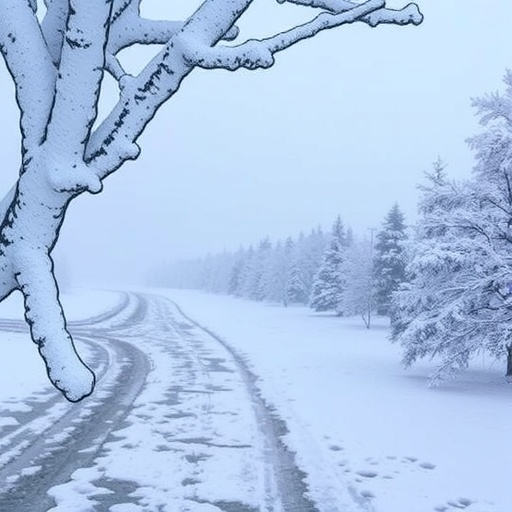
Parallel to these findings, research in the Journal of Hydrometeorology tracks a troubling downward trend in snow cover across the Northern Hemisphere since 1980. Employing a fine-grained grid analysis, the study maps snow presence shifts and notes substantial negative trends particularly throughout Europe and central Asia, as well as the southern fringes of snow distribution zones. Intriguingly, early-season snow cover has shown slight increases, while late-season coverage diminishes substantially, signaling shifts in snowpack dynamics that bear broad hydrological and ecological implications.
The Bulletin of the American Meteorological Society offers crucial insights into the intersection of climate services and Indigenous communities. A national survey targeting Tribal climate information users and providers underscores the critical need for more customized, accessible data streams that correspond with Tribal governance and decision-making processes. The study highlights the demand for enhanced grants, tools, and trainings tailored specifically for Native Tribes, empowering them to adapt more effectively to the accelerating challenges posed by climate change.
Focusing on extreme precipitation, a modeling study in the Journal of Hydrometeorology assesses the future frequency of the exceptional rainfall associated with Hurricane Ida’s remnants in the Northeastern United States. The study projects that by the year 2100, under high greenhouse gas emission trajectories, such rare daily rainfall events could occur up to five times more frequently. This alarming increase underscores the intensification of extreme hydrometeorological events in warming climates and the critical need for resilient infrastructure and proactive adaptation strategies.
Meanwhile, a fascinating investigation into winter weather impacts on school transportation in Ontario, published in Weather, Climate, and Society, challenges preconceived notions about snow-induced disruptions. By analyzing five years of cancellation data, researchers identified a “slush zone” in central Ontario—an area distinct from both southern and northern regions—where mixed precipitation of rain and snow is the predominant cause of school bus cancellations. This nuanced understanding urges reevaluation of weather preparedness across varying climatic subregions.
In stark contrast to the intensifying precipitation extremes elsewhere, a study examining southern Pakistan reveals a counterintuitive projection: extreme multi-day monsoon rainfall events, like the catastrophic floods of 2022, could diminish substantially by century’s end. Modeling results indicate a potential reduction to just 22% of current frequencies under severe warming scenarios. Such findings highlight the complex, region-specific expressions of climate change that must be meticulously accounted for in global impact assessments and resource planning.
The intricate relationship between climate change apprehensions and reproductive choices also emerges in recent work published in Weather, Climate, and Society. A cross-sectional inquiry among Turkish women of reproductive age found a positive association between heightened climate concern and the desire to have children. This somewhat paradoxical outcome contrasts with other global research portraying climate anxiety as a deterrent to reproduction. The study attributes this divergence, in part, to demographic factors such as education and income, which correlate with environmental awareness and family planning ideologies.
Together, these papers reflect the breadth and depth of AMS’s commitment to advancing atmospheric and environmental sciences. They provide a multi-faceted glimpse into how climate and weather patterns are evolving against the backdrop of anthropogenic change, informing scientific understanding and public policy alike. From the intricate meteorology of tornadogenesis to the socio-cultural dimensions of climate-induced behavioral change, the latest research signals a period of profound transformation and urgent inquiry.
For those interested in delving deeper into these topics, all articles mentioned are accessible via the AMS journals portal, offering direct links to the studies and enabling engagement with the forefront of scientific investigation. The variety of journals—ranging from the Journal of Climate to Weather, Climate, and Society—ensures a comprehensive platform for scientists, policymakers, and the public to explore critical issues of atmospheric science, water resources, and climate adaptation.
As AMS continues to convene global experts and disseminate pivotal research findings, its role remains vital in guiding society through the complexities of climate variability and extreme weather phenomena. The insights furnished by these recent studies not only enrich the scientific community’s grasp of atmospheric processes but also direct attention toward actionable pathways to mitigate and adapt to the mounting environmental challenges confronting humanity.
Subject of Research: Climatology, Atmospheric Science, Hydrometeorology, Climate Change Impacts on Weather Extremes
Article Title: Multiple Early-Online Articles on Climate and Weather from AMS Journals
News Publication Date: 2024
Web References: https://journals.ametsoc.org/


