

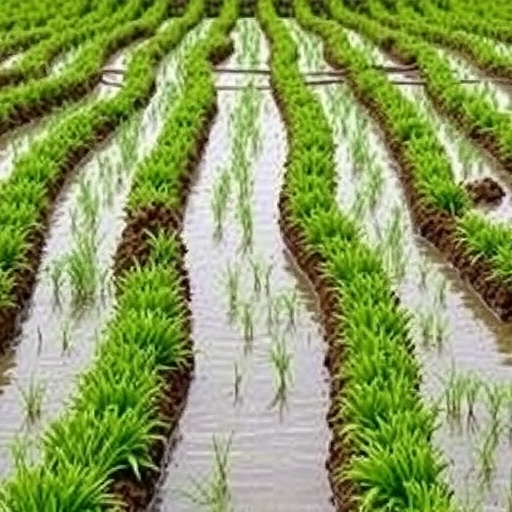
Water scarcity represents one of the most pressing challenges facing the agricultural sector in the 21st century, with ramifications for food security, ecosystem health, and economic stability worldwide. In this context, a groundbreaking study recently published in npj Sustainable Agriculture has shed light on innovative cropping strategies that could remarkably alleviate water scarcity in the North China Plain, one of the world’s most critical agricultural zones. This research presents a pioneering approach to sustainable water management through alternative cropping systems, offering a beacon of hope for regions grappling with dwindling water resources.
The North China Plain (NCP) is a vital grain-producing area, feeding hundreds of millions of people, yet it faces severe water shortages due to overextraction of groundwater and climate variability. Traditional monoculture cropping practices, mainly maize and wheat, have heavily stressed the fragile aquifers beneath the region. Recognizing the unsustainability of current agricultural water demand, the research team embarked on a comprehensive study to evaluate how alternative cropping systems could optimize water use without compromising yield.
At the heart of the study lies a comparative analysis of conventional cropping patterns with carefully designed alternative systems aimed at reducing evapotranspiration and maximizing soil moisture retention. By integrating crops with varying water needs and growth cycles, the researchers developed rotational and intercropping strategies tailored specifically for the NCP’s climatic and edaphic conditions. This method leverages seasonal water availability and crop-specific physiological responses to water stress, providing a nuanced blueprint for sustainable agriculture in water-limited environments.
Advanced hydrological modeling coupled with field-based experimentation formed the cornerstone of the investigation. The research incorporated extensive datasets from meteorological stations, soil moisture sensors, and remote sensing technologies to capture precise water use dynamics at multiple scales. These technical innovations allowed for real-time monitoring and prediction of soil-water-plant interactions, which were crucial in validating the efficiency of the alternative cropping systems under diverse scenarios of water availability.
One of the most striking findings from the study is that certain crop combinations not only reduce water consumption but also increase overall water use efficiency (WUE). By substituting traditional maize-wheat rotations with systems including drought-tolerant legumes and deep-rooted crops, water uptake from deeper soil layers improved, reducing reliance on irrigation. The inclusion of legumes also enhanced soil nitrogen levels through biological fixation, diminishing the need for synthetic fertilizers and thus contributing to broader environmental sustainability.
The study’s data reveal that these alternative cropping systems can reduce groundwater depletion rates by up to 30% while maintaining or even enhancing crop yields. This balance between conservation and productivity represents a significant leap forward for regional water management policies, presenting empirical evidence that water-saving measures need not sacrifice food security. The researchers further demonstrated that the adoption of these systems could mitigate the negative feedback loops exacerbated by over-irrigation, such as soil salinization and aquifer subsidence.
Furthermore, this research underscores the importance of agroecological principles in addressing complex water challenges. By focusing on crop diversity, soil health, and water cycling, the alternative cropping systems foster resilient agroecosystems that can better withstand climatic shocks and water stress. The study advocates for a paradigm shift from purely yield-centric farming towards integrated approaches that prioritize ecosystem services and resource conservation.
Economic analyses embedded within the research established the financial viability of these cropping transitions. Farmers could benefit from reduced input costs associated with lower irrigation demands and fertilizer applications, while also gaining from diversified crop markets. This finding is pivotal for policy makers and stakeholders who must balance economic incentives with sustainability goals when promoting agricultural innovation.
The research also explores the role of policy frameworks and technological diffusion in facilitating widespread adoption of these alternative systems. Through participatory stakeholder engagement, extension services, and digital platforms for knowledge sharing, the study delineates pathways to accelerate the transition towards sustainable water use in agriculture. The integration of empirical science and socio-economic considerations provides a holistic strategy for addressing the intertwined challenges of water scarcity and food production.
Climatic data modeling suggests that the benefits of alternative cropping systems will be even more pronounced under future climate change scenarios, which predict increased variability in precipitation and higher temperatures for the North China Plain. The adaptive capacity of these systems makes them well-suited to buffer against climate-induced water stress, highlighting their relevance beyond immediate water conservation needs.
The researchers emphasize that the success of these cropping innovations depends heavily on tailored regional implementation and continuous monitoring. Site-specific agronomic practices, control of planting schedules, and responsive irrigation management are crucial to harness the full potential of alternative cropping systems. Thus, capacity building and investment in agricultural infrastructure are essential complements to these scientific advances.
Beyond the North China Plain, the insights gained have global implications for semi-arid and water-stressed agricultural zones worldwide. Regions in South Asia, Africa, and the American West could adapt elements of these cropping systems to their distinct agroclimatic contexts, suggesting a scalable model for global food security enhancement under water limitations.
Importantly, the study also advances methodological approaches in sustainable agriculture research by integrating cross-disciplinary techniques spanning crop physiology, hydrology, remote sensing, and socio-economics. This integrative research model epitomizes modern scientific inquiry needed to tackle complex environmental issues.
In summary, the innovative alternative cropping systems devised and examined by Zhao et al. represent a highly promising solution to alleviate water scarcity in the North China Plain. By harmonizing water conservation with agricultural productivity, this research paves the way towards sustainable intensification of food production in a water-constrained world. The convergence of ecological wisdom, technological innovation, and participatory policy design embodied in this study offers a replicable roadmap for resilient and responsible agriculture in the era of climate uncertainty.
Subject of Research:
Alleviation of water scarcity through alternative cropping systems in the North China Plain, with a focus on hydrological efficiency, crop rotation strategies, and sustainable agriculture practices.
Article Title:
Alleviating water scarcity by alternative cropping systems in the North China Plain.
Article References:
Zhao, J., Yang, Y., Meki, M.N. et al. Alleviating water scarcity by alternative cropping systems in the North China Plain. npj Sustainable Agriculture 4, 33 (2026). https://doi.org/10.1038/s44264-026-00145-w
Image Credits: AI Generated
DOI: https://doi.org/10.1038/s44264-026-00145-w


