

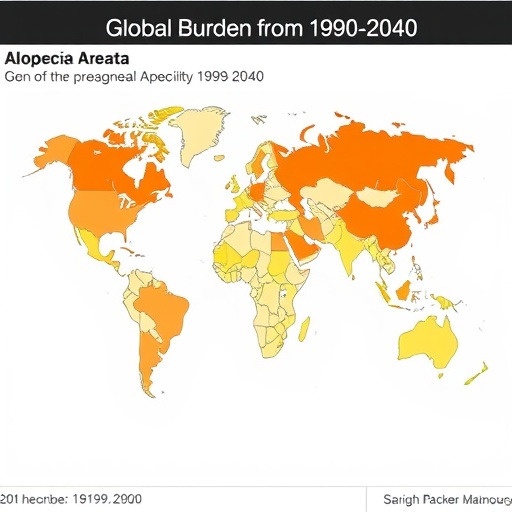
A recent systematic analysis has unveiled the global, regional, and national burden of alopecia areata, casting a stark light on a condition that affects millions around the world. Conducted by researchers Zhang and Guo, the study utilizes data from the Global Burden of Disease Study 2021, spanning the years from 1990 to 2021, and offers predictions for the prevalence and impact of this autoimmune disorder through the year 2040. The findings are set against the backdrop of a growing awareness of alopecia areata and its psychological and social consequences for those affected.
Alopecia areata is characterized by sudden hair loss in patches, and although the pathophysiology is not completely understood, it is believed to involve genetic factors and immune dysregulation. The study highlights that the burden of alopecia areata is not merely physical; it carries significant psychological implications that can vary across different populations. This aspect of alopecia areata should not be overlooked, as the mental health implications can affect quality of life and social well-being.
Global statistics from the study reveal an alarming rise in the prevalence of alopecia areata in the past three decades. While the condition has historically been viewed as predominantly affecting younger demographics, increasing reports of cases among older adults challenge this stereotype. The data indicate that the incidence rates are climbing across various age groups, making it essential for healthcare systems worldwide to adjust their focus towards effective management and support for this condition.
Regional disparities are stark within the findings, with some areas showing significantly higher burdens of alopecia areata than others. For instance, the analysis indicates that certain regions of Asia and Europe report higher prevalence rates, likely due to genetic predispositions and varying environmental factors. Understanding these regional differences is crucial for policymakers and health professionals aiming to tailor interventions and allocate resources effectively to counteract the disease’s impacts.
Furthermore, the study projects future trends and indicates that by 2040, the burden of alopecia areata could rise dramatically if current treatment options and public awareness remain stagnant. This forecast underscores the necessity for targeted research into new therapeutic modalities. Advances in fields such as immunotherapy and regenerative medicine may offer hope for patients suffering from this debilitating condition by potentially restoring hair growth and, more importantly, improving mental health outcomes.
In conjunction with the quantitative data, the authors paid close attention to the qualitative impact of alopecia areata. They noted that individuals grappling with this condition often face stigma and social isolation, exacerbating feelings of anxiety and, in some cases, leading to depression. It is vital for society to foster a more inclusive understanding of alopecia areata to help alleviate the burden on those affected. Educational initiatives can play a critical role in dismantling these barriers and fostering empathy and support from the community.
The research also emphasizes the role of healthcare providers in recognizing and addressing the needs of alopecia areata patients. Physicians are called upon to not only provide medical treatment but also to engage in open dialogues about the emotional aspects of living with hair loss. Such interactions can significantly enhance the patient’s sense of agency and control over their condition. Therefore, an integrated approach to treatment—one that encompasses medical, psychological, and social support—emerges as the most effective strategy for comprehensive care.
As the study garnered attention across various platforms, it highlighted a burgeoning movement among those affected by alopecia areata. The growing presence of support networks and advocacy groups signals a shift towards a community-centric approach to tackling the condition. These organizations not only provide vital resources for patients but also work to raise public awareness about the implications of alopecia areata, promoting inclusivity and understanding.
Moreover, the findings of Zhang and Guo serve as a clarion call to researchers, clinicians, and policymakers to prioritize alopecia areata in their agendas. The comprehensive scope of the study showcases the necessity for continuous surveillance of the disease burden while advocating for additional research to understand the underlying mechanisms and identify effective treatments. The collaboration between different stakeholders in the medical community could catalyze innovation and ultimately improve the lives of those affected.
In conclusion, the systematic analysis of alopecia areata presented by Zhang and Guo not only elucidates the alarming scale of the condition but also emphasizes the importance of addressing its multifaceted impact. As the research charted the path of the disease from 1990 to 2021, it provides invaluable insights into how medical and societal approaches must evolve to meet the growing needs of afflicted individuals. The discussion surrounding alopecia areata is more critical than ever, and it challenges us to foster an informed and compassionate environment for those affected.
While the future holds promise with advancements in medical science, it’s equally crucial to remember that the journey to acceptance and support within society has just begun. The voices of those living with alopecia areata must continue to resonate, guiding efforts towards comprehensive care and holistic understanding of the condition. Engaging with this research can pave the way for transformative dialogues and initiatives that genuinely address the needs of millions worldwide affected by alopecia areata.
The study serves as an indispensable resource, urging all stakeholders to engage with the narrative of alopecia areata. With growing visibility and advocacy, the hope is to cultivate an environment where individuals can not only thrive despite their diagnosis but feel embraced, understood, and validated in their experiences. As we advance, the goal of minimizing the burden of alopecia areata and enriching the dialogue around it must remain central to both scholarly pursuits and community actions.
Subject of Research: Alopecia Areata Burden and Prevalence
Article Title: Global, regional and national burden of alopecia areata from 1990 to 2021: a systematic analysis of the global burden of disease study 2021, with predictions to 2040
Article References:
Zhang, M., Guo, Y. Global, regional and national burden of alopecia areata from 1990 to 2021: a systematic analysis of the global burden of disease study 2021, with predictions to 2040.
Arch Dermatol Res 318, 65 (2026). https://doi.org/10.1007/s00403-026-04524-8
Image Credits: AI Generated
DOI: https://doi.org/10.1007/s00403-026-04524-8
Keywords: Alopecia Areata, Burden of Disease, Mental Health, Autoimmune Disorder, Global Health, Healthcare Policy


