

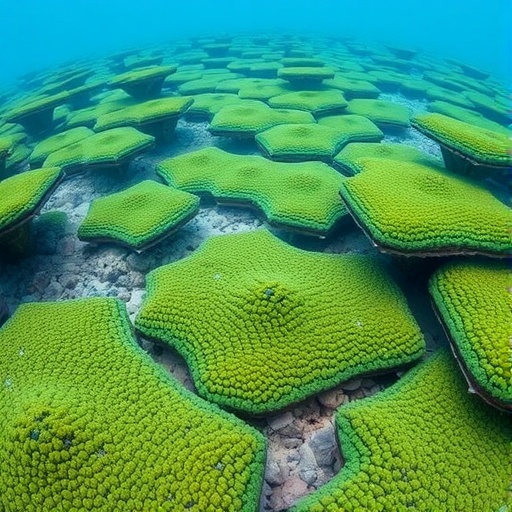
In an alarming development for marine ecosystems, recent research highlights the growing concern surrounding long-sediment-laden algal turfs and their impact on coral reef resilience. Conducted by a team including researchers M.C. Ladd, A.A. Shantz, and A.R. Harborne, this study reveals the complex interactions between algal growth and sediment accumulation, which together create a negative feedback loop detrimental to the health of coral reefs. The findings suggest that these algal turfs not only thrive under conditions of nutrient enrichment but also contribute to the degradation of coral populations, exacerbating the ongoing crisis faced by these vital marine habitats.
Coral reefs are renowned for their biodiversity and ecological significance, serving as critical habitats for a plethora of marine species. Yet, recent decades have seen an alarming decline in coral health globally, primarily attributed to climate change, overfishing, and pollution. The introduction of long-sediment-laden algal turfs marks a crucial facet of this wider issue, as these algal formations can outcompete coral for space and resources, leading to shifts in community structures that favor algal proliferation over coral growth.
One of the primary drivers behind the rapid growth of these algal turfs is nutrient loading, often a direct result of human activities such as agriculture and urban development. Increased levels of nitrogen and phosphorus in coastal waters can fuel algal blooms, creating an environment where these opportunistic species can thrive. As the algal turfs grow, they become entangled with sediment, further complicating the relationship between algae and coral. This combination results in an environment that can smother corals, depriving them of light and essential nutrients.
The research indicates that the sediment associated with these algal turfs serves to anchor them more effectively, allowing them to withstand disturbances that might uproot less established species. This resilience enhances their competitive edge, further entrenching their dominance in degraded reef ecosystems. Consequently, coral populations find themselves facing increased challenges, as their ability to recover from various stressors diminishes in the presence of these robust algal communities.
Interestingly, the study also sheds light on how the decline of coral can, paradoxically, facilitate the continued expansion of these algal turfs. As corals die off due to a myriad of stressors, including ocean warming and acidification, the available substrate becomes dominated by algae. This transition can create a self-perpetuating cycle: as more corals succumb to stress, the algal turfs expand, further limiting the available space for coral regrowth.
The implications of this research extend beyond local ecosystems; they are indicative of a broader trend observed in marine environments across the globe. Coral reefs are considered canaries in the coal mine for ocean health, and the rise of long-sediment-laden algal turfs offers a stark warning about the consequences of human impact on marine ecosystems. If current trends continue, the resilience of coral reefs will be further compromised, leading to shifts in marine biodiversity and ecosystem services that countless species, including humans, depend upon.
The study emphasizes the urgent need for concerted conservation strategies that target nutrient input and address factors contributing to the decline of coral reefs. Policy interventions that prioritize reducing pollution and restoring ecosystems can play a crucial role in reversing these trends. Moreover, promoting sustainable practices in agriculture and coastal development can mitigate the nutrient loading that fuels algal growth.
Further research is imperative to understand the complex dynamics between algal turfs and coral reefs fully. Developing predictive models can help scientists and policymakers craft effective management strategies that preserve these biodiverse ecosystems for future generations. Such efforts could involve monitoring algal growth patterns, sediment dynamics, and the health status of coral populations over time, using technology to gather crucial data in real time.
Another avenue for exploration lies in looking at potential biological controls for regulating algal populations. Biologists are investigating the use of herbivorous fish and invertebrates to manage algal growth, recognizing their critical role in maintaining the balance between algal and coral communities. By reestablishing these natural controls, it may be possible to enhance coral resilience and facilitate recovery in areas experiencing algal overgrowth.
The rise of long-sediment-laden algal turfs is not merely an isolated phenomenon but part of a larger tapestry of changes facing marine ecosystems. Understanding this phenomenon through rigorous scientific inquiry is essential for informing effective conservation strategies. The outcome of this research could be a pivotal point in determining the future of coral reefs, one that emphasizes the intricate balance necessary for maintaining ecological health in our oceans.
In summary, the research conducted by Ladd, Shantz, and Harborne underscores the pressing challenges presented by long-sediment-laden algal turfs in the context of global coral reef degradation. This critical study illuminates the need for a multifaceted approach to marine conservation. By recognizing the complex interdependencies within marine ecosystems and addressing the drivers of algal proliferation, there is potential to protect coral reefs and the myriad of life they support.
Undoubtedly, this emerging field of study will generate further discussions among scientists, policymakers, and conservationists about the best strategies to combat the pervasive threats to coral reefs. As we navigate the complexities of marine conservation, it is crucial to foster collaboration across disciplines and geographies to ensure the survival of these vital ecosystems.
Subject of Research: The impact of long-sediment-laden algal turfs on coral reef resilience.
Article Title: The rise of long-sediment-laden algal turfs: an additional negative feedback process limiting reef resilience.
Article References:
Ladd, M.C., Shantz, A.A., Harborne, A.R. et al. The rise of long-sediment-laden algal turfs: an additional negative feedback process limiting reef resilience.
Coral Reefs (2025). https://doi.org/10.1007/s00338-025-02796-6
Image Credits: AI Generated
DOI: https://doi.org/10.1007/s00338-025-02796-6
Keywords: coral reefs, algal turfs, sediment accumulation, marine ecosystems, biodiversity, nutrient loading, ecological health, conservation strategies, climate change, reef resilience.


