

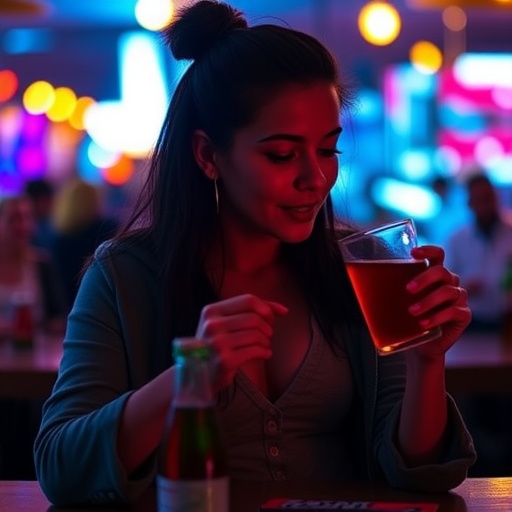
Exposure to alcohol-promoting content on social media platforms has emerged as a significant influence on the drinking behaviors and attitudes of young adults, according to new experimental findings published in JAMA Pediatrics. This comprehensive study sheds light on how the pervasive presence of alcohol-related posts, often disseminated by charismatic influencers, can subtly shape desires to consume alcohol even among those with varying degrees of prior alcohol experience. By advancing our understanding of the behavioral psychology underpinning this exposure, the research underscores the complex interplay between digital media consumption and public health outcomes.
Social media, with its unprecedented reach and dynamic engagement mechanisms, has revolutionized communication, yet also introduced new vectors through which social norms are constructed and perpetuated. The study focused on quantifying the immediate psychological impact of viewing alcohol-promoting content, demonstrating that such exposure correlates strongly with an increased inclination to drink. Remarkably, this effect was observed regardless of an individual’s baseline drinking history, highlighting the powerful role of visual and narrative cues within social feeds.
The researchers employed a rigorous experimental design featuring randomized exposure paradigms, allowing them to isolate the influence of alcohol-positive messaging from confounding factors. Participants were systematically shown curated content featuring endorsements, lifestyle depictions, and celebratory portrayals surrounding alcoholic beverages. The methodology incorporated psychometric assessments measuring craving intensity and longing for alcohol consumption post-exposure, thereby providing concrete metrics relating social media input to behavioral intention.
One of the pivotal findings of the research is the role played by social media influencers—the individuals who command large followings and often personify aspirational lifestyles. The influence exerted by these digital personalities extends beyond mere product promotion; they serve as cultural vectors amplifying the normalization of alcohol use among impressionable demographics. This phenomenon raises critical questions about the ethical responsibilities of content creators and platforms in moderating substance-related communications.
The study’s implications resonate deeply within the framework of behavioral psychology, which examines how environmental stimuli shape human actions. Alcohol-promoting social media content operates akin to a conditioned stimulus, potentially triggering conditioned responses such as craving or social acceptance behaviors. In young adults, whose behavioral patterns are actively forming, such repeated exposures might engrain patterns that elevate the risk of habitual or problematic drinking behaviors in later life.
Public health experts have long recognized the challenge posed by traditional advertising of alcoholic beverages, but social media introduces a new dimension wherein user-generated content blurs the lines between organic expression and targeted marketing. This research highlights that despite regulatory frameworks addressing conventional media, digital environments remain a relatively unregulated frontier, allowing alcohol promotion to proliferate unchecked, often masquerading as peer interaction or entertainment.
The psychological mechanisms identified suggest that visual and experiential portrayals of alcohol consumption, especially when framed positively, can heighten adolescents’ and young adults’ expectations of pleasure or social gain from drinking. This expectancy reinforces consumption desires and may contribute to a feedback loop where individuals seek out additional alcohol-related content, thereby exacerbating the cyclical nature of exposure and craving.
In light of these findings, there is a clear imperative for policymakers, educators, and platform administrators to consider more robust interventions aimed at reducing youth exposure to alcohol-promoting social media content. Potential strategies could include enhanced content moderation protocols, transparent influencer marketing disclosures, and digital literacy programs emphasizing critical consumption of media messages related to substance use.
Moreover, the study contributes to the burgeoning field of digital epidemiology, which explores how online behaviors and exposures influence health outcomes. By empirically linking social media content to immediate behavioral intentions, this research provides a foundational framework for future investigations into the longitudinal impacts of digital alcohol promotion on consumption patterns and associated morbidity.
The challenge remains to balance freedom of expression with public health imperatives, but these findings stress that ignoring the influence of social media on youth drinking behaviors risks perpetuating a silent epidemic. Prominent social media platforms may need to reevaluate their content algorithms to minimize unintended promotion of harmful behaviors, while fostering environments more conducive to health-positive messaging.
In conclusion, exposure to alcohol-positive content on social media is not merely a benign reflection of contemporary culture but constitutes a measurable risk factor influencing young individuals’ desires to drink. Addressing this issue involves cross-sector collaboration spanning regulatory bodies, healthcare practitioners, and technologists, as well as empowering young people with skills to critically engage with the digital environments they inhabit.
The study’s lead author, Dr. Jon-Patrick Allem, emphasizes the importance of this research in the context of escalating social media use among youths. He invites further scholarly discourse to expand upon the findings and develop targeted interventions that protect vulnerable populations from subliminal influences encouraging alcohol use.
By unveiling the subtle yet potent effects of alcohol-related social media exposure, this work marks a crucial step towards informed public health strategies that leverage emerging digital realities to foster healthier youth communities worldwide.
Subject of Research: Influence of alcohol-promoting social media content on drinking desire among young people
Article Title: (Not Provided)
News Publication Date: (Not Provided)
Web References: (Not Provided)
References: (Study DOI: 10.1001/jamapediatrics.2025.6335)
Image Credits: (Not Provided)
Keywords: Social media, Content analysis, Alcoholic beverages, Adults, Young people, Behaviorism, Pediatrics


