

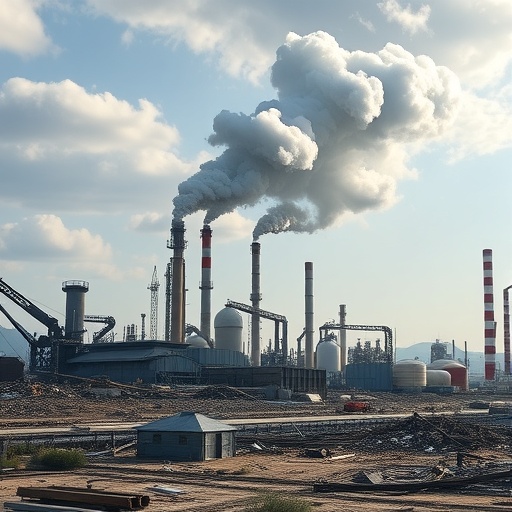
Per- and polyfluoroalkyl substances, commonly known as PFAS, are a group of manmade chemicals that have gained significant attention due to their widespread use in various industrial and consumer products. These substances are found in non-stick cookware, water-repellent clothing, and even in firefighting foams. Their chemical structure, which includes carbon-fluorine bonds, enables them to resist degradation in the environment, leading to their classification as “forever chemicals.” As environmental scientists and policymakers grapple with the implications of PFAS contamination, the spotlight increasingly turns toward technologies designed for their destruction and removal.
Despite extensive efforts to remediate PFAS pollution, a growing body of evidence has unveiled a troubling reality: many of the destruction technologies implemented result in the formation of gaseous and aerosol fluorinated products, referred to as products of incomplete destruction (PIDs). This release of PIDs can occur through various thermal, chemical, electrical, or biological degradation methods. The existence of these harmful byproducts challenges the assumption that achieving a high destruction and removal efficiency, often reported to be over 99.99%, equates to the safe elimination of PFAS from the environment.
The categorization and measurement of airborne PIDs remains a crucial area of research. As researchers strive to fully understand the implications of PFAS destruction methods, accurate methods to quantify these emissions are plentiful yet diverse. The complexity of circumventing the formation of these byproducts stems from the varying polarity and volatility of the compounds involved. Thus, identification and characterization of the PIDs demand sophisticated and multifaceted analytical approaches that can capture the full breadth of emissions in the atmosphere.
One prominent concern regarding PIDs is their potential impact on global warming. Compounds like CF4 are known greenhouse gases with a significantly high global warming potential. This means that while the breakdown of PFAS may reduce their immediate toxicological impacts, the unintended emissions of products like CF4 could lead to long-lasting consequences for our climate. Scientists now face the challenge of comprehensively understanding whether these emissions outweigh the benefits derived from PFAS destruction technologies.
As communities affected by PFAS pollution advocate for solutions, the demand for technologies that can minimize aerial emissions becomes paramount. Understanding the complete lifecycle of PFAS from production to destruction requires a holistic approach that prioritizes protective measures for community health while addressing environmental concerns. This paradigm shift indicates that scientists must balance technological innovation with robust assessments of potential risks and hazards posed by PIDs.
Research initiatives are now focusing on developing tailored methods that not only measure the extent of airborne PIDs but also facilitate public discourse about their implications. By engaging with community stakeholders, scientists can ensure that the information generated doesn’t just remain confined to academic journals. Making sense of these metrics can empower local communities to seek necessary modifications to PFAS destruction technologies that prioritize their health and safety.
Moreover, determining the most effective measures to protect communities involves closing the mass balances associated with PFAS destruction. The presence of unaccounted-for fluorinated emissions in the atmosphere highlights the urgent need for sustainable practices tailored to minimize the release of hazardous byproducts. The precautionary principle suggests that communities must not simply rely on high destruction efficiencies but should also advocate for transparency in the emissions detailed by PFAS destruction technologies.
There’s a pressing need for cross-disciplinary collaboration: toxicologists, atmospheric scientists, chemists, and engineers must work in tandem to unravel the complexities of PIDs. Breakthroughs in research and technology could lead to innovative methods for controlling or even eliminating the production of gaseous and aerosol-phase fluorinated compounds associated with PFAS destruction. Such insights could pave the way towards a better understanding of how to manage PFAS contamination effectively.
The intricate relationship between public health and environmental science is increasingly reflected in regulatory frameworks around PFAS emissions. Policymakers are challenged to integrate scientific findings into actionable guidelines and standards to ensure communities are effectively safeguarded. The overlapping impacts of PFAS destruction on air quality and climate change further underscore the urgency of enacting regulations that do not merely focus on removal efficiencies, but instead take a broader view of public health and ecological stability.
In conclusion, the mission to eradicate PFAS from our environments is a multifaceted challenge that demands profound scientific inquiry and community involvement. The emphasis must be placed not only on total destruction but also on ensuring that emerging technologies do not inadvertently introduce new risks in the form of PIDs. Continued research will be essential to comprehensively characterize these byproducts, thus empowering communities with the knowledge needed to advocate for safer, more effective technologies that prioritize health and environmental stewardship.
As scientists make strides in this essential field of research, they also illuminate the path toward a future where PFAS are managed responsibly, and communities can breathe cleaner air, free from the contaminating legacy of these persistent chemicals. The narrative surrounding PFAS destruction and its impact on human health and environmental integrity is still being written, and it will require an unwavering commitment from researchers, policymakers, and community members alike to ensure that it ends with a solution that truly protects public health.
Subject of Research: PFAS Destruction Technologies and Airborne Emissions
Article Title: Air emissions during destruction of PFAS-containing materials.
Article References:
Silsby, S., Sühnholz, S., Qanbarzadeh, M. et al. Air emissions during destruction of PFAS-containing materials.
Nat Rev Earth Environ (2026). https://doi.org/10.1038/s43017-025-00755-x
Image Credits: AI Generated
DOI:
Keywords: PFAS, destruction technologies, airborne emissions, environmental health, PIDs, greenhouse gases, community safety.


