

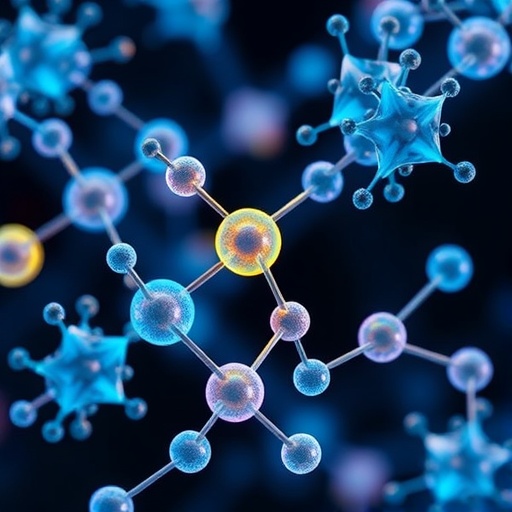
In the relentless quest for innovative medicines, the process of drug discovery often resembles a formidable game of molecular Tetris, where chemists piece together atoms and molecules with painstaking precision. Traditionally, the creation of optimized molecules that serve as effective drugs entails exhaustive experimentation—a laborious journey steeped in immense costs and time commitments. Yet, the evolution of machine learning offers a transformative avenue to accelerate this intricate process. A recent groundbreaking study, published in the prestigious journal Nature, pioneers this frontier by developing an advanced predictive modeling system that marries chemical intuition with computational efficiency to revolutionize drug development.
This novel machine learning framework sidesteps the traditional reliance on expensive and computationally demanding physics-based chemical simulations. While these classical methods provide detailed reaction insights, their scalability is constrained, especially when tasked with evaluating thousands of potential molecular candidates. Researchers, spearheaded by Simone Gallarati, a joint postdoctoral investigator affiliated with the University of Utah and UCLA, endeavored to craft a statistical model capable of predicting reaction outcomes with remarkable accuracy, yet at a fraction of conventional costs. The core ambition was to build a “smart” system that could tackle complex chemical reactions without necessitating an impractically large dataset.
Integral to the challenge of drug molecule design is the phenomenon of chirality—the “handedness” of molecules. These mirror-image forms, though structurally similar, can possess starkly different biological activities. In pharmaceutical chemistry, synthesizing the therapeutically beneficial enantiomer while minimizing production of its potentially harmful counterpart is paramount. This demand has driven the exploration of asymmetric catalysis, where catalysts are engineered to preferentially produce one enantiomer over the other. However, screening the vast landscape of catalysts, ligands, and substrates to achieve optimal enantioselectivity is a daunting task that magnifies the need for predictive computational tools.
The research team’s novel system represents a high-throughput computational filter that converts the molecular components of reactions into quantifiable numerical data amenable to machine learning analysis. This innovation allows for the rapid, cost-effective screening of tens of thousands of chemical structures. Remarkably, their model demonstrated the ability to make reliable predictions with limited input data, significantly reducing the laborious trial-and-error experimentation traditionally required in laboratories. Such efficiency not only saves time and resources but also accelerates the pace at which promising drug candidates progress through development pipelines.
Matthew Sigman, a coauthor and chemistry professor at the University of Utah, underscores a persistent challenge within the AI-driven chemistry domain: the scarcity of extensive, high-quality datasets. Unlike broad AI applications that thrive on massive data pools, experimental chemistry often faces prohibitive costs and lengthy timelines associated with acquiring detailed reaction data. This scarcity makes training robust predictive models difficult. The breakthrough in this study lies in the system’s ability to construct effective models from sparse datasets and, impressively, extrapolate predictive power to chemical reactions unencountered during training, thus expanding the utility and applicability of the tool.
The focus of this work lies in asymmetric cross-coupling reactions—meticulous chemical processes crucial for constructing complex molecular frameworks in pharmaceutical agents. These reactions enable the union of two carbon-based fragments through a metal-catalyzed mechanism, which, with the aid of specific ligands, determines the three-dimensional orientation and stereochemical outcome of the product molecule. In practice, traditional experimentation without strategic guidance often yields a racemic mixture—equal amounts of left- and right-handed enantiomers. The researchers’ system, however, optimizes conditions to achieve striking enantioselectivity, potentially delivering 95% of the desired enantiomer in contrast to an unimproved 50/50 distribution.
Training the model entailed assimilating data from four key academic studies that explored nickel-catalyzed asymmetric cross-coupling reactions with a variety of ligands. The integrity and diversity of these data sets formed the backbone of the model’s learning phase. To rigorously test its predictive prowess, the research team challenged the algorithm to forecast outcomes for hypothetical reactions featuring compounds outside the essential training set. These progressively difficult tests evaluated the model’s capacity for generalization, revealing robust prediction accuracy even when confronted with uncharacterized chemical environments.
The validation phase of this computational endeavor was conducted in the laboratory of Abigail Doyle at UCLA, with doctoral candidate Erin Bucci undertaking a pivotal role in experimental testing. Bucci highlights the enormous practical impact of integrating this machine learning tool in a laboratory setting. By reducing the number of reactions from dozens to a mere handful, the tool directly mitigates the consumption of costly reagents and the labor required for chemical synthesis, leading to substantial cost savings and a more efficient research cycle.
Beyond the specific reaction systems tested, the authors articulate a broader vision for the applicability of their approach. This predictive framework, adaptable in principle to diverse catalytic systems and reaction types, opens doors to deeper mechanistic understanding and more informed rational design strategies within chemistry as a whole. Abigail Doyle notes that this approach is far from a mysterious “black box” and instead offers chemists nuanced insights that can inspire novel hypotheses and experimental pursuits.
From an industrial perspective, the implications of this work are profound. The pharmaceutical sector, perpetually driven to accelerate timeframes from discovery to clinical trials, stands to benefit immensely from tools capable of optimizing chemical syntheses for proprietary molecules not previously documented. Matthew Sigman emphasizes the strategic value in streamlining reaction development and cost management, elements that can decisively influence whether promising compounds successfully advance in the drug development pipeline.
This innovative work was orchestrated through collaboration among leading academic scientists, supported by major funding bodies including the Swiss National Science Foundation, the U.S. National Science Foundation, and the National Institutes of Health. The successful integration of computational chemistry, machine learning, and experimental validation embodies a compelling model for future interdisciplinary endeavors aimed at transforming the landscape of medicinal chemistry and pharmaceutical innovation.
In sum, this pioneering advancement in transferable enantioselectivity modeling surmounts long-standing limitations posed by data scarcity and computational expense. By enabling accurate, generalizable reaction predictions with minimal input, it ushers in a new era where artificial intelligence and chemistry synergize to expedite drug discovery—offering tangible hope for swifter development of safe, effective therapies that can improve human health on a global scale.
Subject of Research: Not applicable
Article Title: Transferable enantioselectivity models from sparse data.
News Publication Date: 11-Feb-2026
Web References:
https://www.nature.com/articles/s41586-026-10239-7
References:
Gallarati, S. et al., Transferable enantioselectivity models from sparse data. Nature (2026). https://doi.org/10.1038/s41586-026-10239-7
Image Credits:
Madeline Ruos/UCLA
Keywords
Drug discovery, Drug development, Drug candidates, Bioactive compounds, Drug targets, Medicinal chemistry, Biochemical engineering, Computational chemistry, Organic reactions, Organic compounds, Asymmetric catalysis, Organic synthesis


