

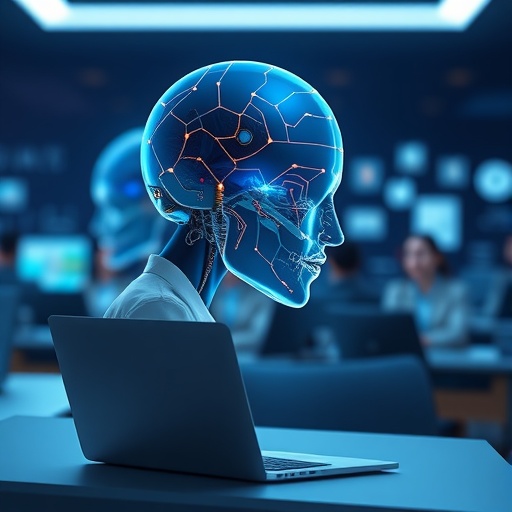
In the rapidly evolving landscape of psychology training, a groundbreaking study has emerged that integrates artificial intelligence (AI) to enhance the educational experience for aspiring psychologists. This innovative research, led by a team including prominent figures such as A. Hronis, N. Winiarski, and A. Moustafa, explores the potential of AI-driven simulations to replicate real-life client interactions. This approach not only underscores the increasing relevance of technology in mental health education but also heralds a new era of training methodologies that promise to reshape how future professionals engage with their clients.
The foundation of this research lies in the recognition that, traditionally, psychology training has relied heavily on manual, often static methodologies. Trainees often engage with role-plays, observational studies, and theoretical frameworks, which can limit their ability to experience genuine client interactions in controlled environments. Hronis and his colleagues posit that AI can bridge this gap by creating dynamic, responsive interactions that mimic real-life therapeutic scenarios, providing students with an invaluable opportunity to practice their skills in a safe and constructive setting.
This innovative approach hinges on sophisticated AI algorithms that are capable of understanding and responding to human emotions. Utilizing natural language processing (NLP) and machine learning, these systems can simulate various psychological states and client responses based on a plethora of input, creating a more authentic training environment. The ability of AI to analyze and adapt to the user’s inputs allows for a tailored educational experience that is unique to each interaction, fostering deeper learning outcomes for students.
Moreover, the application of AI in psychology training is not just about simulating interactions but also about collecting and analyzing vast amounts of data regarding trainee performance. By monitoring how students respond to different client scenarios, AI can identify strengths and weaknesses, offering personalized feedback to improve skills. This data-driven approach empowers trainers to provide more targeted guidance, significantly enhancing the pedagogical framework of psychology training programs.
The research conducted by Hronis and his team is particularly timely as the demand for mental health professionals continues to escalate. With the global mental health crisis exacerbated by various stressors, including the COVID-19 pandemic, it has become imperative to equip new psychologists with the necessary skills to navigate complex emotional landscapes. AI-enabled training offers an effective solution to prepare students to handle a diverse range of client needs, ensuring they are not just well-informed but also adept at practical application.
One of the most remarkable aspects of this study is the potential scalability of AI simulations in psychology training. Unlike traditional training regimens that may require a substantial investment in resources and time, AI systems can be made widely accessible, allowing educational institutions to implement advanced training tools without the logistical and financial burdens commonly associated with conventional methods. This accessibility could democratize psychology training, reaching a broader audience and producing a more diverse cadre of professionals in the field.
Ethical considerations likewise play a crucial role in the integration of AI in psychology education. As future psychologists are trained using AI, the ethical ramifications of AI interactions must be closely examined. These simulations must be designed to prioritize the psychological well-being of future clients, ensuring that trainees understand the ethical implications of technology in the therapeutic context. Hronis and his colleagues advocate for the development of guidelines and ethical standards that will govern the use of AI in training programs, shaping future practices toward responsible integration of technology.
While the study heralds an exciting frontier in psychology training, it also raises pertinent questions regarding the human touch in therapeutic settings. The essence of psychotherapy is built on empathy, connection, and understanding—qualities that are inherently human. Critics of AI integration may voice concerns that technology could undermine the importance of interpersonal relationships in therapy. Acknowledging this perspective, the researchers emphasize that AI is meant to augment, not replace, the human elements of psychological practice.
The findings presented in this research have sparked conversations among educators, practitioners, and technologists alike. As the field of psychology continues to intersect with advanced technologies, stakeholders are beginning to explore how best to embrace this change while maintaining the core values of the profession. Building a collaborative framework between technologists and psychologists will be essential in ensuring that the evolution of training methodologies reflects the ideals of compassion and care that lie at the heart of mental health work.
Looking ahead, the future appears bright for the integration of AI in psychology training. As technology continues to advance, it is reasonable to anticipate the creation of even more sophisticated seminar programs and interactive platforms. These developments promise to enhance the learning processes, making training more engaging and relevant in a world where mental health is increasingly prioritized. With the right balance of innovation and ethical diligence, the field of psychology stands on the precipice of a transformative leap forward.
Ultimately, this research is a call to action for educators and practitioners to embrace the possibilities that AI offers while not losing sight of the essence of what it means to be a psychologist. The innovation represented by Hronis, Winiarski, and Moustafa’s work signals a shift towards a future where technology and human expertise coalesce to create a more effective, compassionate, and holistic approach to mental health training.
As this study gains traction, it is likely to resonate with a wide audience beyond academia. The implications of AI in psychology training can stimulate important discussions about mental health in society and the role technology plays in fostering understanding and empathy in human relationships. The intersection of these fields may inspire a new generation of psychologists prepared for the challenges and opportunities that lie ahead.
The research by Hronis et al. stands as a testament to the potential of AI to revolutionize traditional paradigms in various disciplines. By focusing on creating a practical, innovative, and ethical training environment, this study paves the way for enhanced educational experiences that benefit both future psychologists and the clients they will ultimately serve.
As the world becomes more interconnected through technology, the quest for excellent psychological education will require adaptability and forward-thinking strategies. The successful integration of AI into this realm represents not just a methodological advancement but a broader societal shift toward embracing tools that empower human interaction, foster understanding, and ultimately enhance the well-being of individuals in need.
Subject of Research: The integration of artificial intelligence in psychology training.
Article Title: Using artificial intelligence to simulate client interactions for psychology training.
Article References: Hronis, A., Winiarski, N., Moustafa, A. et al. Using artificial intelligence to simulate client interactions for psychology training. Discov Psychol (2025). https://doi.org/10.1007/s44202-025-00543-0
Image Credits: AI Generated
DOI:
Keywords: Artificial Intelligence, Psychology Training, Client Interactions, Ethical Considerations, Natural Language Processing.


