

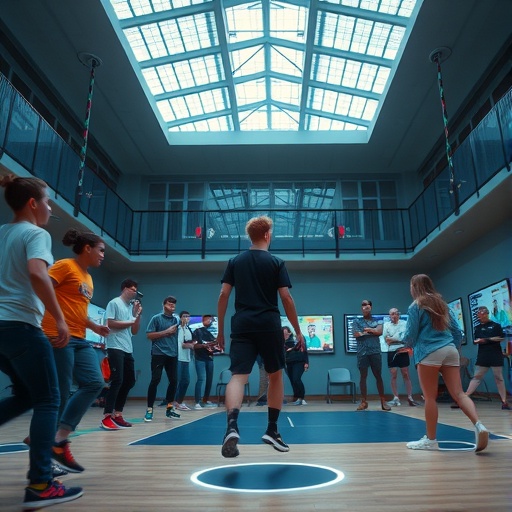
In a groundbreaking study, researchers Zhou and Wu dive deep into the intersection of artificial intelligence (AI) and physical education within universities. This transformative exploration not only highlights the pressing need for reform in the traditional educational models but also embraces the technological advancements shaping the future of academia. This study, documented in “Discov Artif Intell,” presents a compelling narrative about how AI can redefine the physical education landscape, improving both teaching methodologies and learning outcomes.
As universities worldwide grapple with the challenges posed by conventional teaching methods, Zhou and Wu advocate for integrating AI solutions to enhance physical education. Their research signals a pivotal shift from outdated paradigms to a more interactive, data-driven approach. The essence of their study lies in addressing the limitations of traditional physical education, which often falls short in meeting the diverse needs of students. By leveraging AI capabilities, educational institutions can foster an inclusive environment that caters to varying skill levels and learning styles.
One of the core components of this reform is the application of AI algorithms in personalizing training programs for students. By analyzing individual performance metrics, such as heart rate, stamina, and skill level, AI systems can tailor workout regimes that align with each student’s unique needs. This personalized approach not only maximizes student engagement but also vastly improves physical outcomes. The authors emphasize that with AI’s predictive capabilities, instructors can anticipate students’ challenges and dynamically adjust curricula to ensure optimal learning experiences.
Moreover, Zhou and Wu underscore the significance of data collection in enhancing educational practices. Through AI, vast amounts of data can be gathered and analyzed in real-time, providing insights into student performance and engagement levels. Higher education institutions can use this data to refine their physical education programs continuously. The capacity for continuous feedback loops, where instructors receive immediate input on student performance, fosters an agile educational approach, allowing for timely interventions when students struggle.
The environmental aspect of physical education is another essential element of the study. The integration of AI technologies can also promote eco-friendly practices within physical education programs. By utilizing predictive analytics, universities can optimize schedules and resource allocations, minimizing waste and ensuring that facilities are used efficiently. Sustainability in sports equipment and facilities management can also be enhanced through AI insights, aligning physical education with broader institutional goals concerning environmental responsibility.
An equally vital topic addressed by Zhou and Wu is the mental health implications of physical education. By integrating AI, educational platforms can support the mental well-being of students participating in physical education. Stress monitoring wearables, processed by AI, can provide insights into students’ emotional states during physical activities. Such technologies facilitate a healthier balance between physical exertion and mental relaxation, vital in today’s fast-paced academic environment.
In addition to these advantages, Zhou and Wu illustrate how gamification, a principle rooted in AI technology, can revolutionize traditional physical education methods. By gamifying workout sessions, universities can leverage competitive experiences to boost student motivation. AI can track progress, facilitate competitions, and provide real-time feedback in engaging formats, thereby revolutionizing student interactions with physical education.
The impact of AI extends beyond enhanced student experiences. It also shapes instructor dynamics, allowing for more efficient class management and organization. AI systems can assist educators in crafting lesson plans that utilize both traditional and digital resources. The increased focus on outcomes and objectives will lead to more effective teaching strategies as educators receive data-driven support in their pedagogy.
Zhou and Wu also raise critical questions about equity and accessibility in physical education through this AI-led reform. They posit that while AI technologies hold the potential to democratize access to physical education resources, certain disparities may emerge. Institutions must work proactively to ensure equitable access to technology, preventing a digital divide where some students benefit from AI-enhanced education while others remain excluded.
To support the implementation of AI in physical education, Zhou and Wu advocate for comprehensive training programs for educators. They argue that for this technological shift to be effective, instructors must be well-versed in leveraging AI tools. Training should focus not only on the technical skills necessary to utilize these tools but also on understanding the foundational theories of intelligent education practices. Continuous professional development is critical to preparing educators for the evolving landscape of teaching and learning.
The study’s findings resonate beyond individual institutions, suggesting that a collaborative approach among universities can lead to widespread improvements in physical education. Sharing best practices, pooling resources, and fostering partnerships can catalyze innovation in teaching methodologies across campuses. This collaborative spirit is essential for maximizing the effectiveness of AI technologies in education.
In conclusion, the research conducted by Zhou and Wu heralds a significant shift in how physical education can be restructured for improved learning outcomes through AI. This call to action necessitates a collective effort from educators, administrators, and technology developers to embrace a future where technology and traditional offerings coexist harmoniously. If correctly harnessed, AI has the potential to revolutionize physical education and could set a precedent for reimagining other educational disciplines.
Ultimately, this study opens the floodgates for further research and implementation of AI technologies across educational spheres. As physical education evolves, so too will the methodologies that underpin it, leading to richer, more engaging experiences for generations of students to come. The possibilities are vast, and the potential benefits extend beyond education to foster healthier lifestyles and communities at large.
Subject of Research: Reforms in university physical education through artificial intelligence.
Article Title: Reforming university physical education with artificial intelligence for enhanced teaching and learning.
Article References:
Zhou, J., Wu, W. Reforming university physical education with artificial intelligence for enhanced teaching and learning.
Discov Artif Intell (2025). https://doi.org/10.1007/s44163-025-00531-2
Image Credits: AI Generated
DOI:
Keywords: Artificial Intelligence, Physical Education, Education Reform, Data Analysis, Personalized Learning, Mental Health, Gamification, Equity in Education.


