

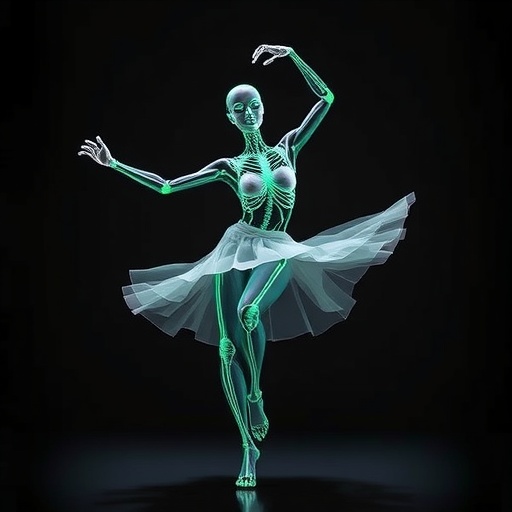
In a groundbreaking new study, researchers have unveiled a deep learning framework designed to optimize dance movements both aesthetically and biomechanically. This innovative approach, developed by Y. Shen, represents a significant leap forward in the intersection of artificial intelligence and performing arts, particularly in the realm of dance. For centuries, dancers have relied on rigorous training to perfect their craft, often guided by tradition and intuition. However, Shen’s research introduces a method that harnesses the power of deep learning to analyze and enhance the intricate balance between beauty and technical execution in dance performances.
The primary objective of Shen’s framework is to analyze dance movements through the lens of biomechanics—a field concerned with the physical principles of human motion. By integrating biomechanical analysis with aesthetic criteria, the framework offers a dual perspective that could revolutionize how dancers train and choreograph their performances. This duality is essential, as the artistry of dance cannot be separated from the physical mechanics that underlie it. As dance continues to evolve, so too must the methods through which dancers and choreographers understand and refine their art.
Utilizing large datasets of dance movements, the framework employs deep learning algorithms to identify patterns that correspond to both successful execution and aesthetic appeal. For each dance movement, the model assesses a wide array of parameters, from joint angles to speed and timing. By analyzing these elements, the system is capable of generating recommendations on how to adjust particular movements for optimal performance outcomes. This feedback mechanism allows dancers and choreographers to experiment with suggestions grounded in data, enhancing creativity while fostering technical skill.
This research brings a new dimension of precision to dance by creating a symbiotic relationship between technology and artistry. Traditionally, choreographers often rely on intuition or collaborative feedback to refine their movements. However, by integrating technology into this creative process, Shen’s framework empowers artists to make informed decisions based on quantifiable metrics. This not only aids in individual improvement but could also lead to the development of groundbreaking new choreography that redefines existing movement vocabulary.
The significance of biomechanical optimization cannot be overstated. Dancers are continuously at risk of injury due to the physically demanding nature of their art. The combination of aesthetic and biomechanical analysis serves not only to elevate performance quality but also to promote dancer health. By identifying movements that place undue stress on the body, the framework offers insights into safer practices that can help to reduce injury rates. This focus on dancer well-being is a crucial aspect of contemporary dance training, making Shen’s work particularly relevant in today’s environment where health and sustainability of practice are paramount.
Moreover, the use of deep learning in performing arts research marks a pivotal moment that bridges technology and human expression. While algorithms have previously been seen as a tool for efficiency, Shen’s framework demonstrates their potential to facilitate deeper understanding of complex art forms. As this technology continues to advance, the implications for dance extend beyond optimization and safety; it opens up new avenues for exploring the essence of artistic expression itself. The potential to algorithmically understand and recreate the intricacies of human emotion encapsulated in dance movements is a frontier ripe for exploration.
The adaptability of this framework is another notable attribute. Designed to accommodate various dance styles, from ballet to hip-hop and contemporary dance, the deep learning model can be tailored to individual genre specifics. This versatility means that dancers from diverse backgrounds can benefit from the research’s findings, irrespective of their particular discipline. By creating a universal platform that applies to different movements, Shen’s framework fosters a sense of inclusivity and shared knowledge that can inspire dancers everywhere.
As dancers increasingly seek to refine their techniques through technology, the implications of this research resonate far and wide. Dance schools and studios could implement Shen’s framework to enhance their curriculums, creating a generation of dancers who merge intuition and data-driven insights. Such integration could redefine training methods, contributing to more profound artistic explorations and performances that are both stunningly beautiful and physically sound.
In addition, dance competitions may also reap the benefits of this technology; judges could utilize insights generated from the framework to provide constructive feedback based on objective data rather than subjective impressions. This could lead to a more transparent and equitable judging process, fostering an environment where each dancer’s unique talents shine while adhering to high performance standards.
Looking to the future, Shen’s research sets the stage for a new breed of artist—one who is as comfortable navigating the intricacies of a deep learning model as they are performing on stage. As this melding of dance and technology continues to evolve, we can anticipate a transformative impact on both the art of dance and the technologies we harness to propel it forward. This ambitious venture not only affirms the relevance of AI in artistic realms but also stimulates conversations about what it means to be a dancer in the 21st century.
Finally, the exploration of deep learning’s potential in artistry serves as an essential reminder about the importance of innovation in preserving and cultivating the performing arts. As technologies like Shen’s framework emerge, they reinforce the idea that art is not static; it adapts, grows, and intertwines with the very tools we develop. In doing so, it creates a thrilling nexus of possibilities for both dancers and audiences alike, ensuring that the art form remains vibrant and relevant for generations to come.
Shen’s contribution is a vivid example of how the arts and technology can converge, producing results that elevate the human experience. As we look ahead, the question remains: what new heights can dancers reach when guided by the sophisticated insights of artificial intelligence? The journey has only just begun, and the possibilities are as boundless as the art of dance itself.
Subject of Research: Deep Learning Framework for Dance Optimization
Article Title: Deep Learning Framework for Aesthetic and Biomechanical Optimization of Dance Movements
Article References:
Shen, Y. Deep learning framework for aesthetic and biomechanical optimization of dance movements.
Discov Artif Intell (2026). https://doi.org/10.1007/s44163-025-00768-x
Image Credits: AI Generated
DOI: 10.1007/s44163-025-00768-x
Keywords: Deep learning, Dance optimization, Biomechanics, Aesthetic analysis, Artificial intelligence, Dance training techniques.


