

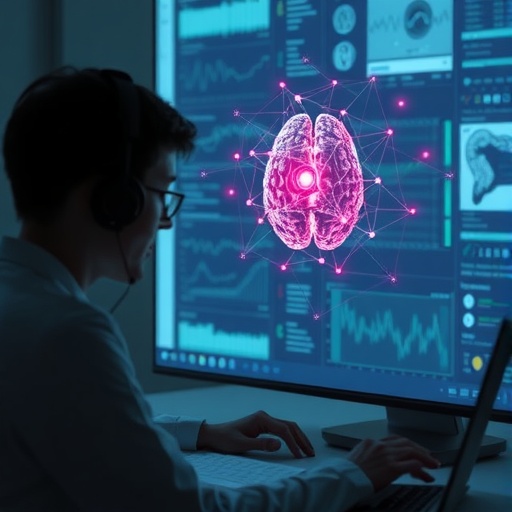
In the ever-evolving landscape of psychiatry, the integration of artificial intelligence (AI) is proving to be a revolutionary force. The recent pilot study conducted by Emekli, Emekli, and Özel delves into the innovative use of AI for generating case scenarios and multiple-choice questions. This pioneering research not only aims to enhance the educational tools for psychiatric training but also seeks to automate a significant portion of the training process, making it more efficient and relevant to contemporary mental health challenges.
At the heart of this study is the pressing need for effective educational methodologies in psychiatry. Traditional teaching methods often struggle to keep pace with the rapid advancements in the field. The introduction of AI-generated content could bridge this gap by providing curated, contextually relevant, and varied educational resources. The study aims to evaluate the functionality of AI as a versatile educational tool for practitioners and students alike. By exploring different avenues of AI, the researchers aim to reshape conventional educational approaches in psychiatry.
The researchers initially set their sights on case scenarios, which could provide aspiring psychiatrists with a practical context in which to apply their theoretical knowledge. The team utilized a range of AI algorithms to generate realistic case scenarios based on historical data and current trends in psychiatric diagnoses. Through this method, they were able to create scenarios that reflect actual patient presentations, ensuring that the educational content is both applicable and impactful. The study illustrates how AI can analyze vast amounts of data to identify patterns and trends, which can in turn facilitate the development of realistic psychiatric cases.
Moving beyond case scenarios, the creation of tailored multiple-choice questions (MCQs) is another significant focus of this research. Multiple-choice questions are a staple in medical education, providing a straightforward method of assessing knowledge and comprehension. By employing AI, the researchers were able to generate MCQs that align closely with the generated case scenarios, thus creating a cohesive learning experience. The questions not only test knowledge but also encourage critical thinking, as they require students to synthesize information across various domains of practice.
A crucial component of the study was the validation of the AI-generated content through expert review. Notably, the researchers collaborated with seasoned psychiatrists to evaluate the relevance and accuracy of the generated case scenarios and questions. This vetting process is essential to ensure that the AI outputs meet the rigorous standards required in psychiatric education. The feedback from these experts revealed insightful perspectives that helped refine the AI algorithms, paving the way for enhanced accuracy and effectiveness.
One of the striking innovations highlighted in this study is the capacity for constant improvement inherent within AI systems. Unlike traditional methods that can become outdated as new research emerges, AI has the ability to process new information and adjust its outputs accordingly. This feature not only allows for real-time updates to case scenarios and questions but also ensures that educational content remains relevant to evolving clinical practices and findings. Consequently, students and practitioners alike benefit from the most up-to-date and evidence-based information.
The implications of this research extend beyond the mere generation of educational content. If successfully adopted, AI-assisted methodologies could significantly alleviate the burden on educators, allowing them to focus more on interactive teaching methods and less on the administrative aspects of curriculum design. This shift could foster a more dynamic learning environment, wherein educators serve as facilitators of knowledge rather than sole sources of information. As a result, the role of the educator becomes one of mentorship and guidance, promoting a more holistic approach to psychiatric training.
Moreover, the enhancement of online educational platforms through AI could contribute to broader access to psychiatric education, particularly in underserved communities. By providing high-quality, AI-generated content remotely, practitioners across various locations could enhance their knowledge and skills. This democratization of education could have profound effects on mental health care delivery, enabling a more uniformly educated workforce capable of addressing diverse patient needs.
As with any burgeoning technology, the integration of AI into psychiatry raises ethical considerations. The reliance on AI-generated content necessitates an ongoing discourse about the responsibility associated with its use. Such discussions are critical for ensuring that the technology serves humanity positively and ethically, without compromising academic integrity or patient care standards. The research by Emekli, Emekli, and Özel highlights the importance of navigating these ethical waters carefully, particularly as AI technologies continue to advance.
Another critical aspect of AI in psychiatry is its potential for personalized education. By analyzing individual learning patterns and effectiveness, AI can tailor content to meet specific needs. This level of personalization in educational approaches can lead to improved comprehension and retention of knowledge, as students engage with material that resonates with their learning styles. Personalized learning experiences pave the way for a new era of education in psychiatry, where AI serves to enhance individual capabilities.
Furthermore, the generation of AI-assisted case scenarios and questions could lead to improved assessments of competency in psychiatric practice. Enhanced MCQs can not only measure knowledge but also determine how well a practitioner can apply their learning in real-world scenarios. This approach is particularly vital in psychiatry, where clinical judgment and nuanced understanding are crucial to effective patient care. The ability to assess and refine these competencies through AI could bridge the gap between theoretical knowledge and practical application.
As we reflect upon the findings of this study, it becomes evident that the integration of AI into psychiatric education is not merely a trend but a necessary evolution. The innovative work of Emekli, Emekli, and Özel serves as a blueprint for the future of medical education, paving the way for a more efficient, relevant, and personalized approach to training future mental health professionals. Ultimately, the implications of this research stretch far beyond the classroom; they may redefine how psychiatric care is taught, learned, and delivered in the years to come.
In conclusion, the pilot study paves the way for a new era of psychiatric education that embraces AI as a transformative tool. As the gap between traditional teaching methods and modern requirements narrows, the educational landscape in psychiatry is poised for a significant overhaul. This shift not only aims to enhance the training of future practitioners but also holds the promise of providing high-quality mental health care to diverse populations around the globe.
Subject of Research: The use of artificial intelligence in generating case scenarios and multiple-choice questions for psychiatric education.
Article Title: Artificial Intelligence–Assisted Generation of Case Scenarios and Multiple-Choice Questions in Psychiatry: A Pilot Study.
Article References:
Emekli, E., Emekli, E. & Özel, B. Artificial Intelligence–Assisted Generation of Case Scenarios and Multiple-Choice Questions in Psychiatry: A Pilot Study.
Acad Psychiatry (2025). https://doi.org/10.1007/s40596-025-02298-1
Image Credits: AI Generated
DOI: https://doi.org/10.1007/s40596-025-02298-1
Keywords: AI, psychiatry education, case scenarios, multiple-choice questions, medical training.


