

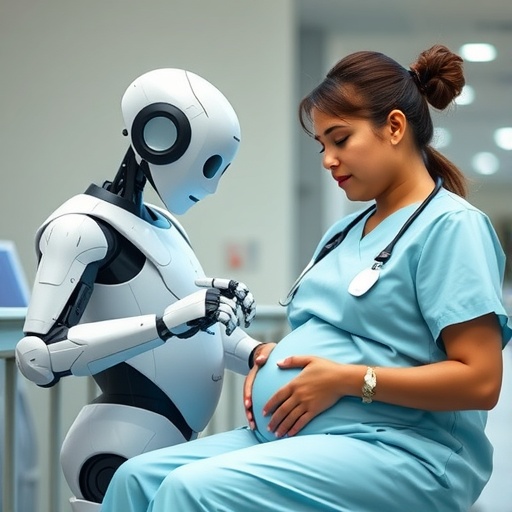
In recent years, the realm of medical education has experienced a profound transformation, driven largely by advancements in technology and artificial intelligence. One significant and innovative exploration in this field has been the integration of AI chatbots into the training of maternity nursing students. This breakthrough is not merely a response to the ongoing digital evolution but rather an essential step towards enhancing the efficacy of nursing education and improving overall student performance in complex subjects such as electronic fetal monitoring. The study conducted by Abdelwahab, Aboraiah, and Elsayed provides critical insights into how digital tools can reshape pedagogical approaches and ultimately contribute to better healthcare outcomes.
Artificial Intelligence has begun to penetrate various aspects of education, aiding in the delivery of content and providing students with the resources they need to excel. The application of an AI chatbot specifically designed for electronic fetal monitoring offers nursing students immediate access to a wealth of information. The chatbot serves as an interactive learning companion, engaging students in real-time discussions and addressing their queries, thus bridging the gap that often exists in traditional educational settings. It allows students to explore scenarios, ask questions, and receive instant feedback, which is invaluable in a field as dynamic and critical as maternal health.
The study meticulously examines the performance outcomes of maternity nursing students who utilized this AI chatbot over a designated period. Initial findings indicate that students who engaged with the chatbot demonstrated enhanced understanding and retention of core concepts related to electronic fetal monitoring. The ability to interact with the chatbot not only aids in knowledge acquisition but also instills confidence in students, helping them prepare for real-life scenarios where they will need to apply this critical knowledge. This interactive element of the learning experience is pivotal; it transforms passive learning into an active and engaging process that resonates with students.
Furthermore, the researchers highlight the personalized learning experience facilitated by the chatbot. Unlike traditional teaching methods, the AI interface can be tailored to meet each student’s unique learning pace and style. By analyzing individual interactions, the chatbot can adjust its responses and provide targeted information that aligns with the student’s needs. This personalized approach ensures that each learner can catch up on challenging topics, thereby leveling the educational playing field and potentially leading to improved academic performance across the board.
Encouragingly, the study also addresses the broader implications of implementing AI technology in medical education. As healthcare becomes increasingly complex, the need for well-trained and knowledgeable professionals has never been more critical. By incorporating advanced tools like AI chatbots into nursing curricula, educational institutions can produce graduates who are not only proficient in theoretical knowledge but also adept in practical application, ensuring that they meet the rigorous demands of modern healthcare environments.
Engagement with AI technology also fosters a sense of autonomy among students, allowing them to take control of their learning journey. The immediacy of accessing information and guidance without the constraints of traditional classroom settings empowers students to explore topics more freely and deeply. This form of self-directed learning is essential in developing life-long learning habits that will serve nursing professionals throughout their careers. Such habits are particularly important in fields like maternal health, where new research and practices continuously emerge.
Moreover, the feedback received from students using the chatbot has been overwhelmingly positive. Many have reported that interacting with the AI has made learning about electronic fetal monitoring more enjoyable and less intimidating. This reduction in anxiety is particularly significant in nursing education, where the pressure to absorb complex information can often lead to stress. The chatbot provides a safe space for questions and clarifications, fostering a supportive learning environment that enhances student morale and promotes deeper engagement with the subject matter.
As instructors observe these improvements, there is a push for broader acceptance and integration of AI tools in nursing programs nationwide. The potential for AI to revolutionize educational practices in nursing is vast. By incorporating such technologies, educational institutions can not only enhance the quality of training but also ensure that graduates are better equipped to meet the challenges of the healthcare industry.
In conclusion, the research led by Abdelwahab, Aboraiah, and Elsayed sheds light on a promising future for nursing education. The integration of AI chatbots into the curriculum presents an exciting frontier that could redefine traditional learning methods, driving improvements in student engagement, knowledge retention, and overall performance. As the healthcare landscape continues to evolve, embracing such innovative educational strategies will be essential in preparing the next generation of nursing professionals to provide high-quality patient care in an increasingly complex world.
In essence, AI is not just a tool; it’s a transformative force that could redefine how we educate healthcare professionals. The future of nursing education lies in a balanced integration of technology and human-centered learning, with AI serving as a catalyst for improvement, innovation, and excellence in maternal health training.
Subject of Research: The effectiveness of AI chatbots in enhancing nursing students’ performance in electronic fetal monitoring.
Article Title: Effect of using artificial intelligence chatbot about electronic fetal monitoring on maternity nursing students’ performance.
Article References:
Abdelwahab, A.M.T., Aboraiah, M.I.H. & Elsayed, H.E. Effect of using artificial intelligence chatbot about electronic fetal monitoring on maternity nursing students’ performance.
BMC Med Educ (2025). https://doi.org/10.1186/s12909-025-08391-1
Image Credits: AI Generated
DOI: 10.1186/s12909-025-08391-1
Keywords: AI chatbot, maternity nursing education, electronic fetal monitoring, student performance, medical education technology.


