

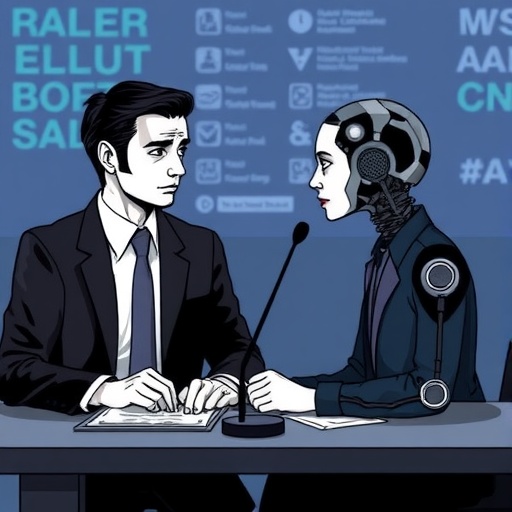
In the landscape of artificial intelligence, the nuances of human conversation remain challenging to replicate. This has been particularly evident in collaborative tasks designed for AI agents. Typically, AI agents are programmed to follow a rigid, round-robin speaking structure, an approach that limits their ability to behave like humans. Researchers from The University of Electro-Communications and the National Institute of Advanced Industrial Science and Technology (AIST) are pushing the boundaries of AI-human interaction by outlining a new debate framework that grants AI agents the freedom to interrupt, respond, and even remain silent according to their personality traits. This dynamic approach has proven to enhance the agents’ effectiveness during complex debates.
The core premise of the research is that human conversations are inherently messy and dynamic. Interruptions are commonplace and often serve a purpose: to assert agreement, to express uncertainty, or to enrich the discussion when a compelling idea emerges. On the contrary, many AI systems rigidly adhere to a predetermined order that fails to mirror these vital aspects of human dialogue. The researchers posited that by introducing more flexible conversational protocols, particularly those that allow for personality-driven interactions, the performance of AI agents could improve dramatically.
This innovative study proposes a framework wherein Large Language Model (LLM)-based agents operate without fixed speaking orders. This flexibility enables them to leverage their assigned personalities—traits drawn from the Big Five personality model including openness, conscientiousness, extraversion, agreeableness, and neuroticism—to navigate conversations more fluidly. The underlying research indicates that incorporating elements of human communication into AI processes not only reflects real-world interactions but also enhances task efficiency and accuracy.
Methodologically, the research team employed a sentence-by-sentence processing approach, allowing the agents to digest ongoing discussions in real time. This capability affords each agent the opportunity to calculate an urgency score based on the conversation’s dynamics. For instance, if an agent identifies a critical error or possesses vital information relevant to the discussion, it can promptly interrupt its counterpart. This intervention is designed not just for the sake of participating but for enriching the dialogue with pertinent insights. Conversely, agents can choose silence when they lack valuable contributions, thereby enhancing the quality of the conversation and reducing redundancies.
To evaluate the proposed framework, researchers utilized the Massive Multitask Language Understanding (MMLU) benchmark, assessing the agents’ performance against a baseline composed of conventional single-LLM systems. The outcomes were revealing; the “chaotic” agents—those exhibiting the flexibility to interrupt and respond based on their personality traits—significantly surpassed the accuracy of their rigid counterparts. This finding challenges the traditional belief that strict structures are essential for effective discourse among AI agents.
Additionally, the incorporation of personality traits yielded intriguing results regarding communication dynamics. By assigning characters to the agents, the study found a notable decrease in unproductive silences. Each agent’s distinct personality influenced its behavior during discussions, resulting in a more dynamic engagement with the group as a whole. For instance, some agents exhibited more dominance and proactivity while others took on more reflective roles, fostering a natural convergence around consensus.
The implications of this research extend well beyond mere functional improvements in AI systems. By mimicking the unstructured elements of human interaction, researchers are opening avenues for more intuitive and effective AI collaboration. Interruption and silence, often seen as disruptive in conventional discourse, are reimagined as essential components of successful communication. This paradigm shift emphasizes the importance of human-like traits in the evolution of AI agents from mere tools to collaborative partners.
In future studies, the team aims to expand the application of this conversational framework into creative and collaborative tasks, exploring how digital personalities can be harnessed to optimize group decision-making processes. By further refining their approach, the researchers hope to develop metrics that reveal the depth of influence exerted by these personalities in diverse contexts. Understanding how AI can embody human-like traits, thereby enhancing collective problem-solving abilities, will be crucial as systems increasingly move towards more collaborative roles in various sectors.
As we envision a future populated by AI agents, the potential for these systems to engage in more human-like interactions is not merely futuristic speculation but an emerging reality backed by empirical research. This study lays the groundwork for a more sophisticated understanding of how AI can be designed to work alongside humans in an effective and harmonious manner. Although challenges remain, the shift toward incorporating personality-driven interactions heralds a new era in AI research—a frontier where the lines between human and machine communication continue to blur and evolve.
The journey towards enhanced AI-human collaboration is just beginning. Future explorations may require improved frameworks that not only focus on the efficiency of AI agents but also aim to deepen the understanding of machine-generated social behaviors. As researchers continue to delve into this exciting area, the outcomes stand to redefine the landscape of artificial intelligence fundamentally.
Strengthening our relationship with AI could very well hinge on our ability to mirror our richest communicative behaviors—those filled with nuance, spontaneity, and indeed, unpredictability. The forthcoming developments in this area are eagerly anticipated, as they promise to reshape our interaction paradigms and elevate our collective capabilities in the age of intelligent machines.
Strong evidence suggests that the road ahead involves less rigidity and an embrace of chaos—the rich tapestry that characterizes human discourse. Allowing AI to experience the ebb and flow of conversation, including interruptions and pauses for thought, could transform them into powerful allies in tackling complex challenges that lie ahead in multiple domains.
With ongoing exploration, researchers aspire to harness the lessons learned from human interactions and transplant them effectively into AI systems. This work not only stands to improve the functionality of AI but also serves as a reminder of the complexities and beauty of human communication. The continuous push for innovation in this arena holds implications for industries ranging from education to healthcare, where effective communication can significantly enhance outcomes.
As the dialogue between human creativity and artificial intelligence continues to advance, every development leaves us one step closer to achieving a seamless integration of these technologies into our everyday lives. The future of AI may lie not in programming rigid protocols but in nurturing dynamic exchanges that echo human behavior, fostering an environment that champions adaptability and understanding.
Subject of Research: AI communication dynamics in collaborative settings
Article Title: Enhancing AI Interaction through Personality-Driven Conversations
News Publication Date: October 2023
Web References: Not applicable
References: Not applicable
Image Credits: Yuichi Sei
Keywords
AI communication, personality traits in AI, collaborative AI, human-like AI interactions, Large Language Models, effective problem-solving, AI debate framework.


