

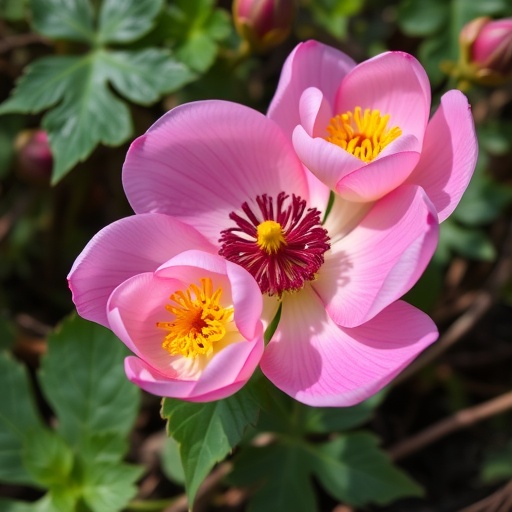
In recent years, the scientific community has witnessed a rising urgency surrounding the conservation of plant species that are teetering on the brink of extinction. Among these, Paeonia emodi, known for its medicinal properties and rich ornamental value, has emerged as a species of significant interest. The study led by Manzoor, Shahri, and Bhat (2025) introduces groundbreaking techniques using in vitro methods to ensure the preservation of this cherished plant. This research not only sheds light on the viability of threatened species conservation but also opens the door to biotechnological interventions that could revolutionize the field.
Paeonia emodi is indigenous to the Himalayan ranges, thriving in high-altitude regions. Its ecological and economic importance cannot be overstated, as the plant is not only valuable in traditional medicine but also holds a prominent place in landscape horticulture. Unfortunately, over-exploitation, habitat loss, and climate change have pushed this species towards the brink of extinction. To combat these pressing issues, innovative conservation strategies are urgently needed, making the recent research timely and critical.
The research undertaken by Manzoor and colleagues harnesses in vitro techniques that facilitate the regeneration of plant tissues outside their natural environment. This approach involves culturing cells, tissues, or organs of Paeonia emodi in a controlled environment, which is crucial for times when natural reproduction is hindered due to environmental factors or insufficient population density. Through optimizing various conditions such as nutrient media, growth regulators, and light conditions, the researchers were able to successfully initiate and sustain cultures of this threatened species.
One of the most exciting aspects of this in vitro study is the potential for rapid propagation of Paeonia emodi. The researchers reported an impressive success rate in terms of germination and regeneration of plantlets from cultured tissues. This finding suggests that with refined methodologies, it might be possible to produce large numbers of genetically identical plants, aiding in both conservation efforts and commercial cultivation. Such advancements could serve as a life raft for not only Paeonia emodi but for other threatened species as well.
The in vitro methodologies employed in the study also included calls for biotechnological innovations that would safeguard the genetic integrity of Paeonia emodi. Genetic erosion is a notable concern, particularly as climate change and human activity continue to disrupt natural habitats. By utilizing tissue culture techniques, the research team was able to create plantlets that retain the genetic characteristics of the original specimens. This is especially relevant for medicinal plants, where the pharmacological traits are often tied closely to their genetic makeup.
Moreover, the study has broader implications for the conservation strategies employed in botanical gardens and arboreta around the world. These institutions often play a pivotal role in preserving threatened species and can use the findings from Manzoor et al. to enhance their existing conservation protocols. The application of in vitro techniques can streamline conservation efforts by allowing for more efficient propagation of rare species, which can then be reintroduced into their native habitats.
The research team also addressed the importance of public awareness and stakeholder engagement in conservation efforts. As Paeonia emodi holds substantial cultural significance in various local communities, involving these communities in conservation activities is crucial. Enabling them to recognize the value of this plant not only furthers their commitment to its preservation but also enriches biodiversity efforts at a grassroots level.
As the study moves forward, it paves the way for future research that can explore the full genomic potential of Paeonia emodi. Understanding its genetic diversity will be imperative in ensuring not only survival but also the adaptability of this species in changing environmental conditions. Furthermore, this research lays a foundational framework for collaborative conservation efforts, bringing together scientists, policymakers, and local communities.
The in vitro technology discussed throughout the study is not only revolutionary for Paeonia emodi but sets a precedent for how plants at risk can be preserved through modern techniques. By adopting similar methodologies, conservationists can target a wider array of threatened species, creating a sustainable approach to preserving global biodiversity.
Another favorable aspect of this research is its focus on the economic feasibility of mass propagation. The prospect of establishing Paeonia emodi as a cultivated crop could provide economic incentives for local communities while simultaneously offering a solution to over-exploitation in the wild. By creating a market for sustainably cultivated plants, the dual goals of conservation and economic development can be harmoniously aligned.
The findings of Manzoor and colleagues invite further inquiry into the ecological interactions that support Paeonia emodi. Future studies could delve into how this species interacts with pollinators, soil microorganisms, and other flora and fauna in its native ecosystems. Understanding these relationships is essential for creating comprehensive conservation strategies that consider not just individual species, but the ecosystems they inhabit.
In conclusion, the innovative in vitro strategies unveiled in this research signify a turning point in plant conservation efforts, specifically for species like Paeonia emodi. As we endeavor to protect our planet’s biodiversity, the work of Manzoor, Shahri, and Bhat serves as a reminder that science, when fused with community engagement and practical application, can yield significant benefits for both threatened species and the people who cherish them. Through ongoing collaboration, education, and adaptation of modern techniques, we can aspire to restore what has been lost and cultivate a more sustainable future.
Subject of Research: Conservation of Paeonia emodi through in vitro technologies
Article Title: Harnessing in vitro technologies for conservation of Paeonia emodi, a threatened medicinal and ornamental species.
Article References:
Manzoor, M., Shahri, N.Z., Bhat, I.A. et al. Harnessing in vitro technologies for conservation of Paeonia emodi, a threatened medicinal and ornamental species.
Discov. Plants 2, 363 (2025). https://doi.org/10.1007/s44372-025-00448-1
Image Credits: AI Generated
DOI: https://doi.org/10.1007/s44372-025-00448-1
Keywords: Conservation, in vitro techniques, Paeonia emodi, plant propagation, biodiversity.


