

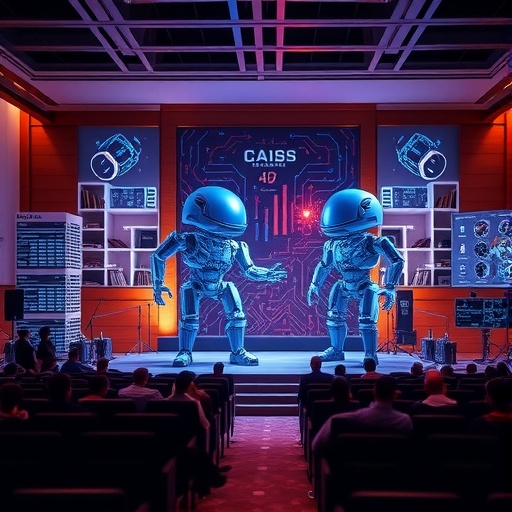
In an era where artificial intelligence (AI) increasingly permeates every facet of our lives, the engineering principles behind the creation and maintenance of AI systems remain underexplored. Upcoming conferences like the ACM Conference on AI and Agentic Systems (CAIS 2026), scheduled to take place from May 26 to May 29, 2026, in San Jose, California, signify a significant step towards remedying the gap in academia related to AI system engineering. This inaugural gathering aims to unite research experts and industry practitioners to tackle the pressing challenges associated with developing robust, effective AI systems that function reliably in real-world environments.
The rapid progression of AI technologies—from simple algorithms deployed for data processing to complex multi-component architectures—has been remarkable yet fraught with challenges. Many existing AI deployments function as standalone models, often failing to meet the nuanced demands of practical applications. Omar Khattab, an Assistant Professor at MIT and a member of the steering committee for CAIS, articulates a prevalent sentiment in the field: the realization that designing reliable AI software systems must transcend piecemeal approaches. Instead, it necessitates a commitment to developing a comprehensive engineering discipline.
A significant focus of CAIS is on the integration of components within AI systems rather than merely enhancing the capabilities of individual models. While advancements in machine learning have provided robust models that produce impressive results in isolation, they often struggle to operate cohesively within more extensive systems. This systemic view allows for a more profound understanding of how various AI components interact, enabling practitioners to construct applications capable of functioning with greater reliability and efficiency.
The discourse around what qualifies as an AI system also demands reevaluation. The distinction between temporary structures, or language-model scaffolds, and sustainable software systems cannot be overstressed. Scaffolds may temporarily enhance system capabilities; however, they lack the durability required for long-term deployment and continuous improvement. With this in mind, CAIS emphasizes the need for stringent evaluation methods that truly reflect real-world performance metrics such as latency and accuracy, ensuring that the systems created are not only functional but also trustworthy and dependable in practice.
The challenges of crafting reliable AI systems are multi-faceted, demanding a new framework that considers the myriad of interactions between different components. According to Matei Zaharia, a General Co-Chair of CAIS and Associate Professor at UC Berkeley, the complexity escalates significantly when one moves beyond individual models to consider system-wide optimization. Topics such as composition, verification, and evaluation rise to prominence, making them central to any discussion about engineering dependable AI systems. This conference embodies an opportune moment for collaborators from various fields to come together and address these crucial questions.
As the conference draws near, attention is directed toward the specifics of what participants can expect. CAIS 2026 aims to present pioneering research concentrated across four core areas vital for understanding AI system architecture. The architectural patterns and composition aspect will delve into the construction of AI systems that utilize multi-agent strategies, retrieval-augmented generation techniques, and other innovative workflows. By focusing on these elements, researchers can explore how best to tie disparate AI capabilities into a cohesive operational unit.
The second core area emphasizes system optimization and efficiency, a crucial consideration in an age where performance benchmarks dictate technology adoption. Addressing end-to-end optimization for non-differentiable pipelines allows engineers to navigate the convoluted landscape of cost-performance trade-offs that enterprises face when integrating AI into their operations. Insights gleaned from this research could lead to transformative practices that streamline workflows while ensuring that AI solutions remain cost-efficient.
The third key area concerns the engineering and operational aspects inherent to compound AI systems. In a reality where these solutions are deployed in production environments, understanding how to debug, monitor, and maintain the systems becomes indispensable. The importance of observability and safety cannot be understated, as organizations need assurance that their AI deployments come with robust risk management strategies.
Finally, the evaluation and benchmarking section of the conference will foster discourse around reproducibility and artifact standards that merit consideration in the evaluation methodologies for AI systems. With the integrating role of the conference in mind, the importance of reliable and systematic evaluation methods could form the bedrock of future research and practices in AI.
CAIS 2026 will incorporate an artifact-centric review process, showcasing a commitment to fostering a culture of rigorous research within the AI community. By incentivizing reproducibility through established ACM badges, the conference reaffirms its stance on validating research outputs, ensuring that findings can withstand the scrutiny they often face in practical scenarios.
Amidst a backdrop of rapid technological advancement, CAIS 2026 stands out as a beacon of innovation and collaboration. The emphasis on the engineering perspectives of AI signals a shift in how the field approaches its evolving challenges. By gathering some of the foremost minds in computer science and AI, the conference aims to lay down foundational principles that will guide scholarship, research, and application in the years to come.
As attendees prepare to converge in San Jose, the conference promises to catalyze meaningful conversations and collaborations. The profound need for interdisciplinary understanding in building AI systems cannot be overstated. By offering an inclusive platform that connects systems researchers, machine learning experts, and practitioners, CAIS 2026 is poised to chart a course that emphasizes shared foundations for developing AI technologies that thrive beyond the experimental phase.
The future of AI depends not just on making smarter algorithms but also on establishing a framework that aligns technological advancement with practical deployment. A successful shift toward engineering-oriented AI practices will enhance the dependability and applicability of AI systems worldwide. Thus, CAIS 2026 marks a pivotal moment, advocating for an era where the engineering of AI solutions is recognized as an essential discipline, no longer relegated to the realm of experimental practices or speculative technologies.
In conclusion, the inaugural CAIS conference is not just a response to existing challenges but a proactive step toward establishing a rigorously defined discipline that acknowledges the interplay between AI capabilities and their deployment in real-world contexts. It will forge connections that fuel advancements, ensuring that AI not only meets current needs but transforms future landscapes.
Subject of Research: Engineering AI systems
Article Title: Inaugural ACM Conference on AI and Agentic Systems Set to Address Engineering Challenges in AI
News Publication Date: [Date Not Provided]
Web References: [References Not Provided]
References: [References Not Provided]
Image Credits: [Credits Not Provided]
Keywords
Artificial Intelligence, System Optimization, AI Engineering, Conference, Machine Learning, Multi-Component Systems, Evaluation Methods, ACM, Research Collaboration.


