

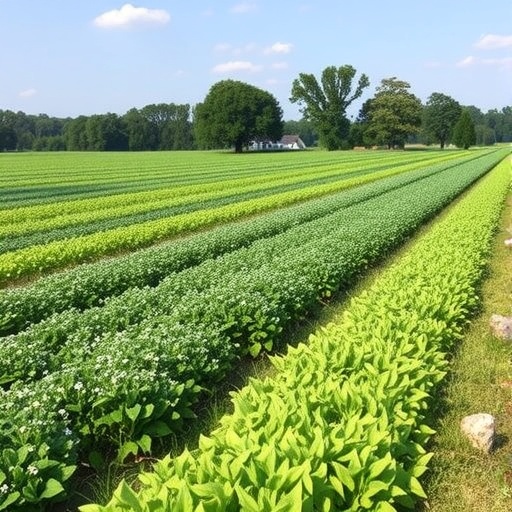
For 150 years, a modest parcel of land nestled within the University of Illinois Urbana-Champaign campus has served as a critical proving ground for agricultural science. Known as the Morrow Plots, this experimental field, established in 1876 by Professor Manly Miles, stands as the oldest continuous agricultural research site in the United States and the second oldest worldwide. Its longevity and consistent data collection have enabled researchers to rigorously investigate and refine farming practices over a century and a half, profoundly influencing modern agriculture.
Originally, agriculture was largely regarded as an artisanal craft, with farmers relying on tradition and personal experience over scientific evidence. The inception of the Morrow Plots revolutionized this approach by instituting controlled experiments that systematically tested the efficacy of various soil treatments, crop rotations, and fertilization strategies. These experiments conclusively demonstrated the advantages of crop rotation and balanced fertilizer application, which significantly increased crop yields, enhanced soil fertility, and improved the economic sustainability of farms.
The scientific methodology employed at the Morrow Plots set a precedent for empirical research in agronomy. By maintaining strict controls and detailed records over immense spans of time, scientists could parse out the effects of specific agricultural interventions from confounding environmental variables. This long-term perspective enabled groundbreaking insights into soil chemistry, nutrient cycling, and plant physiology, feeding directly into best practices that farmers across the globe adopted.
The University of Illinois Extension, founded in 1914, played an instrumental role in disseminating these research outcomes. It bridged the gap between academic research and practical farming, ensuring that innovations developed in the Morrow Plots were translated into accessible recommendations for farmers. This extension service rapidly expanded the impact of the research beyond the university grounds, shaping agricultural policy and practice across states.
Recent technological advances have further invigorated this historic experiment. The Morrow Plots’ extensive data archives, encompassing detailed records of crop hybrids, rotations, planting and harvest dates, yields, as well as fertilizer applications, have now been digitized. This transition to digital platforms facilitates sophisticated analyses using modern computational tools, including big data analytics and machine learning models, allowing researchers to uncover subtle patterns and forecast the outcomes of emerging agricultural techniques.
The sesquicentennial anniversary of the Morrow Plots in 2026 is marked by both celebration and innovation. Thanks to generous funding from Bayer’s Crop Science division, the exterior of the plots has undergone revitalization, ensuring their preservation and continued utility. Moreover, the establishment of a live webcam enables scientists, students, and the public to observe ongoing experiments and phenological changes in real time, fostering transparency and educational outreach.
Complementing the Morrow Plots, the newly designated Alma Mater Plots—a sprawling 80-acre research area on the university’s south farms—extend the tradition of agricultural experimentation into the 21st century. One principal research focus here is the role of subsurface tile drainage systems in crop productivity and nutrient runoff. Understanding these interactions is critical for designing cropping systems that maximize yield while minimizing environmental impacts such as water pollution.
The continuity of harvests and data collection at the Morrow Plots is unparalleled, with this year marking the 150th season of experimental cultivation. This enduring commitment exemplifies the foresight of early campus leaders who recognized the necessity of long-term investigations to unravel the complexities of soil-plant interactions and environmental dynamics. Their vision established a foundation upon which contemporary agricultural science continues to build.
This long-term experimental heritage offers unique opportunities to address future agricultural challenges, including climate change, soil degradation, and resource scarcity. By integrating modern technologies such as remote sensing, genetic crop improvements, and precision agriculture practices within the experimental frameworks established by the Morrow Plots, researchers aim to develop resilient and sustainable farming systems that can endure through the next century and beyond.
The leadership of the College of Agricultural, Consumer and Environmental Sciences at the University of Illinois has been pivotal in promoting this vital research. Dean German Bollero emphasizes the essential role of the Morrow Plots in fulfilling the land-grant mission to deliver evidence-based solutions that serve the public interest. The plots’ enduring relevance underscores the value of linking academic inquiry with practical impact on agricultural communities.
Public engagement remains a key component of the Morrow Plots’ legacy. The planned symposium and public tours scheduled for October 28, 2026, will not only highlight the historical significance of the site but also showcase cutting-edge research directions. These events aim to inspire broader awareness and support for continued innovation in agriculture, connecting stakeholders from farmers to policymakers to scientists.
At the core of this agricultural research enterprise is a recognition that soil health, crop productivity, and environmental stewardship are inextricably linked. Ongoing experiments at the Morrow and Alma Mater Plots delve into these interdependencies, examining how diverse crop rotations, nutrient management, and water control technologies can optimize ecosystem services while sustaining high yields. These insights are critical for meeting the dual goals of food security and environmental sustainability.
In summary, the Morrow Plots stand as a beacon of agricultural science innovation, embodying the power of sustained, methodical research across generations. Their story is not merely one of historical curiosity but a dynamic narrative of scientific discovery, technological adaptation, and commitment to the global challenge of feeding a growing population responsibly. As they enter their 150th year, the plots continue to cultivate knowledge that will shape the future of farming worldwide.
Subject of Research: Long-term agricultural experiments analyzing the effects of crop rotation, fertilization, and soil management on crop yields and soil health.
Article Title: Celebrating 150 Years of Agricultural Innovation at the University of Illinois’ Morrow Plots
News Publication Date: 2026
Web References:
- University of Illinois Morrow Plots: https://morrow.aces.illinois.edu/
- Bayer Crop Science: https://www.bayer.com/en/agriculture-overview
- National Historic Landmark: https://archive.org/details/morrowplotsnatio16univ/mode/2up
- Digitized Data Announcement: https://aces.illinois.edu/news/oldest-us-agricultural-plots-go-digital-130-years-data-now-online
Image Credits: University of Illinois Archives
Keywords: Morrow Plots, agricultural research, crop rotation, soil health, long-term experiments, University of Illinois, sustainable farming, agronomy, crop yields, digital agriculture, tile drainage, land-grant university


