

Nairobi, Kenya – February 20, 2026: Africa stands at a pivotal moment in harnessing the untapped power of its livestock genetic resources to confront pressing challenges related to productivity, climate resilience, and sustainable agricultural development. A groundbreaking open-access volume entitled African Livestock Genetic Resources and Sustainable Breeding Strategies: Unlocking a Treasure Trove and Guide for Improved Productivity was officially launched by the African Animal Breeding Network (AABNet), in collaboration with the International Livestock Research Institute (ILRI), the Centre for Tropical Livestock Genetics and Health (CTLGH), and the African Union’s Inter-African Bureau for Animal Resources (AU-IBAR). This comprehensive publication consolidates decades of interdisciplinary scientific research encompassing genetics, breeding methodologies, and adaptive strategies finely tuned for Africa’s diverse production environments.
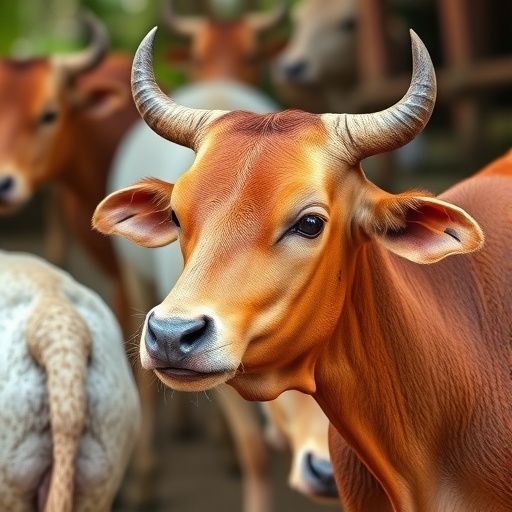
Africa remarkably harbors approximately one-third of the global livestock population, coupled with the richest biodiversity of indigenous breeds hardest hit by climate stresses. Indigenous cattle alone number an estimated 150 to 180 distinct genetic types, with goats exceeding 280 breeds, poultry reaching 126, and dromedaries exceeding 90 breeds. These animals have undergone millennia of natural selection, evolving unique physiologies and behaviors that confer resilience to temperature extremes, endemic diseases, and fluctuating fodder availability. Such adaptations underscore their critical role in enhancing climate adaptation frameworks within often resource-limited and smallholder-centric livestock production systems that predominate across the continent.
Despite this rich genetic heritage, a looming crisis threatens these invaluable genetic assets. Indiscriminate crossbreeding with exotic breeds, motivated by quests for improved short-term yields, is eroding the distinctive gene pools of indigenous populations. This genetic dilution compromises traits essential for environmental robustness and adaptive fitness. Concurrently, indigenous breeds exhibit lower productivity metrics in demanding environments, leading to greenhouse gas emissions intensity (ranging between 2.1 and 5.0 kg CO2-eq per kilogram of product) comparable to global averages but with total emissions still relatively modest compared to intensive industrial systems. Scientific consensus supports that judicious genetic improvement combined with enhanced animal health and management can simultaneously uplift productivity and reduce emissions intensity, thus contributing meaningfully to climate mitigation and food security goals.
Professor Appolinaire Djikeng, ILRI’s Director General, emphatically noted, “Africa’s livestock genetic diversity transcends mere heritage value; it is an indispensable tool for climate adaptation and sustainable development.” By implementing rigorously science-informed breeding strategies, the continent can leverage these unique genetic assets to produce more resilient, efficient, and environmentally friendly livestock populations. Such approaches necessitate not only cutting-edge genetics but also integrative agronomic and socio-economic insights that frame breeding programs within local realities.
Recognizing the heterogeneity of African farming systems, the book advocates for breeding objectives that explicitly reflect farmer priorities and production challenges. The integration of adaptation and mitigation parameters into breeding goals is crucial to ensuring relevance and uptake. Involvement of farmers as decision-makers enhances program sustainability, while institutional strengthening for data collection, genetic evaluation, and monitoring represents another indispensable pillar. Animal breeding professionals must embrace new capacities in computational genetics, quantitative trait loci mapping, and genomic selection methodologies specifically calibrated for African livestock contexts.
Professor Mizeck Chagunda, Director of CTLGH, highlighted the indispensable role of local breeds in underpinning climate-resilient agriculture: “Our indigenous breeds are not just genetic resources; they are core to sustaining livelihoods and responding nimbly to the unpredictable challenges imposed by climate change.” The science underpinning this assertion draws upon cutting-edge genomic characterization techniques that elucidate adaptive alleles conferring heat tolerance, disease resistance, and metabolic efficiency. These technologies empower breeding programs to select for multifaceted resilience traits rather than yield alone.
Addressing continental coordination gaps has been a longstanding hurdle to effective livestock genetic improvement. The publication launch underscores an ambitious agenda championed by AABNet, ILRI, CTLGH, and AU-IBAR, alongside national partners, aiming to foster multi-country genetic evaluations and fill capacity voids across institutions. This includes accredited training initiatives to build next-generation animal genetics expertise and systems fostering innovation uptake. Awareness campaigns and advocacy will catalyze investment and private sector engagement, while inter-institutional collaboration promises to scale up breeding programs and integrate sustainability metrics holistically.
Dr. Huyam Salih, Director of AU-IBAR, affirmed that safeguarding African indigenous livestock genetics constitutes a matter of regional climate and development security. She stressed strategic investment priorities in genetic characterization, the establishment of farmer-centric breeding initiatives, and the necessary institutional frameworks that will empower African nations to build resilient livestock sectors capable of thriving under climate uncertainty. The harmonized continental vision articulated by these organizations is poised to influence policy, programmatic design, and research prioritization for years to come.
For policymakers, researchers, and practitioners, the volume serves as an indispensable technical reference. It details prioritization strategies focusing on breeds exhibiting superior adaptive traits and explicates the alignment of breeding goals with prevailing production systems and farmer needs. Furthermore, it demystifies the practical application of modern genetic tools, including gene editing technologies such as CRISPR, genomic selection, and advanced reproductive biotechnologies tailored to multiple African livestock species. Importantly, the book offers roadmaps for integrating genetic improvement with broader conservation efforts to preserve breed diversity for future generations.
AABNet Chair Ed Rege contextualized the book’s purpose, explaining, “This publication represents our community’s collective expertise distilled into a foundational resource aimed at professionalizing animal breeding in Africa. By combating genetic erosion and ensuring farmers’ access to productive, adapted breeds, we are setting a new standard for sustainable livestock development.” The book is freely available as an open-access resource, providing a critical knowledge base for stakeholders across Africa and the global scientific community engaged in breeding, genetics, and sustainable agriculture.
In conclusion, the publication acts as both a clarion call and a practical guide for leveraging Africa’s unparalleled indigenous livestock genetic diversity as a cornerstone for achieving climate-resilient, sustainable livestock production systems. Strategic, science-based breeding and capacity-building initiatives will be indispensable for unlocking this treasure trove’s full potential. The focus on farmer engagement, institutional strengthening, and continental coordination reflects a holistic approach that is necessary to translate genetic resources into tangible improvements in productivity, environmental sustainability, and economic livelihoods for millions across Africa.
Subject of Research:
African indigenous livestock genetic resources; sustainable breeding strategies; climate resilience and adaptation; animal genetics and genomic technologies; livestock productivity in African production systems.
Article Title:
African Livestock Genetic Diversity: The Key to Climate-Resilient and Sustainable Livestock Production
News Publication Date:
20 February 2026
Web References:
Available through the official African Animal Breeding Network (AABNet) portal and partner institutional websites (ILRI, CTLGH, AU-IBAR).
References:
Consolidated scientific research and genetic evaluation data from African livestock breeding programs as detailed in African Livestock Genetic Resources and Sustainable Breeding Strategies.
Image Credits:
Not available in the source content.
Keywords:
Livestock, Africa, Indigenous Breeds, Genetic Diversity, Sustainable Breeding, Climate Resilience, Animal Genetics, Genomic Technologies, Food Security, Livestock Productivity


