

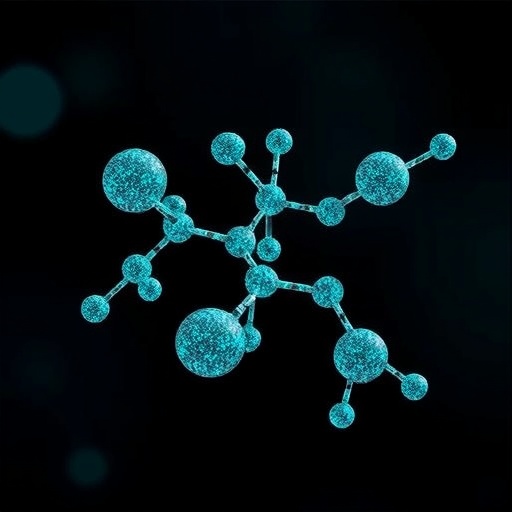
Methane stands as one of the most potent greenhouse gases affecting our planet, second only to carbon dioxide in its capacity to drive global temperature increases. Despite its strength in trapping heat, methane’s persistence in our atmosphere is comparatively short-lived. This temporal limitation is largely due to the action of hydroxyl radicals, often heralded as the atmosphere’s natural detergent. These highly reactive molecules possess the remarkable ability to break down methane rapidly, thereby modulating its atmospheric concentration and influence on climate change. However, as global temperatures climb, scientists face uncertainty regarding how these critical chemical agents will respond to the evolving environment.
Researchers from MIT are illuminating this vital issue by delving into the intricate dynamics that govern hydroxyl radical concentrations under warming scenarios. By creating a sophisticated new model, these scientists have been able to unravel the delicate balance of processes influencing hydroxyl radical levels. Their work sheds light on how rising temperatures impact not just the radicals themselves but the cascade of atmospheric reactions they mediate. This model provides vital insights into how shifts in atmospheric chemistry driven by climate change may alter our planet’s natural capacity to cleanse itself of potent greenhouse gases.
The findings reveal a nuanced interplay within the atmosphere. As global temperatures rise, the atmosphere holds increasingly more water vapor—a factor known to significantly elevate hydroxyl radical concentrations due to enhanced photochemical reactions. This would suggest an improved capacity for methane breakdown. Nevertheless, the story is more complex. Warming also stimulates the emission of biogenic volatile organic compounds (VOCs), naturally released by vegetation through processes like transpiration. These biogenic emissions contain reactive compounds that can reduce hydroxyl radical concentrations by chemically consuming them, thus offsetting to a considerable extent the gains achieved from increased water vapor.
Quantitatively, for a projected 2-degree Celsius rise in global average temperatures, the water vapor effect alone would enhance hydroxyl radical levels by about nine percent. Conversely, the accompanying rise in biogenic VOC emissions counteracts this increase, suppressing hydroxyl radical concentrations by approximately six percent. After accounting for these competing processes, the net effect is a modest increase of around three percent in the atmosphere’s ability to degrade methane and other reactive compounds. This balance reflects a delicate atmospheric tug-of-war with significant implications for climate modeling and future mitigation strategies.
The chemical nature of hydroxyl radicals underscores their central role in atmospheric chemistry. Composed of one oxygen and one hydrogen atom, paired with a single unpaired electron, hydroxyl radicals are extraordinarily reactive. This electron configuration enables them to strip electrons or hydrogen atoms from various molecules, breaking down complex pollutants into less harmful, more soluble substances. Not only do hydroxyl radicals contribute to methane degradation—responsible for removing about ninety percent of atmospheric methane—but they also target substances detrimental to air quality and human health, including pathogens and ozone.
Hydroxyl radicals’ short atmospheric lifetime contrasts markedly with carbon dioxide’s persistence. Methane molecules typically remain atmospheric residents for about a decade before reacting with hydroxyl radicals, whereas carbon dioxide can linger for centuries or millennia. This rapid clearance is crucial in controlling short-term climate forcing. However, the relentless increase of methane emissions, driven by both natural processes and anthropogenic activities, introduces uncertainty. Scientists have been striving to grasp whether hydroxyl radicals’ methane-clearing efficiency will keep pace under changing climatic conditions.
To explore these dynamics, the MIT team developed AquaChem, an innovative modeling tool that simulates atmospheric hydroxyl radical chemistry under varied climatic scenarios. By expanding an aquaplanet model—a conceptual Earth with an entirely ocean-covered surface—researchers minimized complexities stemming from land, ice, and topographical heterogeneities. This simplification allowed isolating the fundamental chemical responses to thermal changes. Into this framework, detailed atmospheric chemistry was integrated, including photochemical reactions and interactions influenced by key greenhouse gases and pollutants.
AquaChem’s simulations incorporated crucial emissions such as carbon monoxide, methane, nitrogen oxides, and volatile organic compounds from the year 2000 baseline, representing contemporary atmospheric conditions. This approach validated the model by reproducing observed chemical sensitivities, thus providing confidence in its predictive capabilities. Subsequently, the team simulated a global surface temperature increase of 2 degrees Celsius, aligning with likely warming trajectories if carbon emissions are not curtailed. This scenario allowed precise examination of how warming alters various emissions and chemistry pathways affecting hydroxyl radical levels.
Among all processes studied, two emerged as principal modulators of hydroxyl radical concentrations: rising atmospheric water vapor and increased biogenic VOC emissions. The augmentation of water vapor enhances photochemical generation of hydroxyl radicals, but the boosting of plant-emitted VOCs, such as isoprene, consumes hydroxyl radicals in chemical reactions that diminish their abundance. These competing forces underscore the complexity of atmospheric chemistry under warming climates and highlight the critical role of natural emissions, which introduce significant uncertainties in predicting hydroxyl radical trends.
Notably, the researchers acknowledge the existence of additional factors influencing these dynamics that were beyond the study’s scope. For instance, rising atmospheric carbon dioxide levels can dampen the temperature-driven increase in biogenic emissions, potentially altering the balance between hydroxyl radical production and destruction. The team plans to refine AquaChem by incorporating more variables and evaluating different climate change scenarios, seeking to clarify the contribution and variability of natural emissions and their ultimate impact on atmospheric cleansing processes.
Understanding the future trajectory of hydroxyl radicals is paramount because even small shifts—on the order of a few percentage points—can have outsized effects on methane lifetime and concentration in the atmosphere. Since methane’s enhanced greenhouse effect substantially contributes to near-term climate warming, elucidating the behavior of hydroxyl radicals helps improve predictions of climate feedbacks and informs mitigation policies that aim to stabilize or reduce atmospheric methane levels.
This research represents a significant stride forward in atmospheric chemistry modeling, merging theoretical rigor with practical climate relevance. It illustrates the intricate chemical feedback loops entwined with global climate patterns and emphasizes the delicate equilibrium maintained by natural processes within the Earth’s atmospheric system. Through tools like AquaChem, scientists edge closer to unraveling these complexities, guiding humanity’s response to the multifaceted challenge of climate change.
The work received support from Spark Climate Solutions and the National Oceanic and Atmospheric Administration, two entities invested in advancing climate science and solutions. The study appeared in the Journal of Advances in Modeling Earth Systems, contributing meaningful insights into the interplay between natural emissions, atmospheric radicals, and global warming effects.
Subject of Research: Hydroxyl radicals (OH) and their response to climatic warming, with implications for methane degradation and atmospheric chemistry.
Article Title: “Uncertain natural emissions dampen the increase in tropospheric hydroxyl radical (OH) with idealized surface warming”
News Publication Date: Not explicitly stated; based on context, it is recent as of 2024.
Web References:
- DOI link: http://dx.doi.org/10.1029/2025MS005248
Keywords: Methane emissions, hydroxyl radical, atmospheric chemistry, biogenic volatile organic compounds, water vapor, climate change, greenhouse gases, atmospheric modeling, air pollution, environmental sciences, aquaplanet model, chemical feedbacks.


