


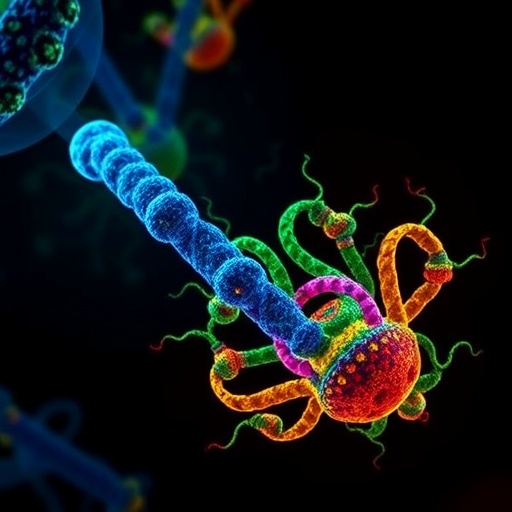
In breaking new ground in the complex battle against chronic myeloid leukemia (CML), a recent study sheds light on the intricate genetic interplay that may underlie drug resistance—a major hurdle in effective treatment. Chronic myeloid leukemia, a cancer characterized by the presence of the BCR-ABL fusion gene, has seen transformative therapeutic advances with the advent of tyrosine kinase inhibitors (TKIs). These agents specifically target the aberrant BCR-ABL oncoprotein, substantially improving patient outcomes. However, the phenomenon of drug resistance remains a formidable challenge, often leading to treatment failure and relapse among CML patients.
This cutting-edge investigation delves into the expression of genes pivotal to epigenetic regulation and tumor suppression—specifically histone deacetylase 8 (HDAC8), Sirtuin 1 (SIRT1), and the well-known tumor suppressor gene, P53. These genes have garnered significant attention in the oncology field due to their diverse roles in cellular regulation, apoptosis, and chromatin remodeling. Understanding their expression patterns in drug-resistant versus drug-sensitive CML patients offers fresh insights into molecular mechanisms underpinning resistance.
The researchers enlisted a cohort of 50 CML patients, carefully stratified into two groups based on their response to TKI therapy: those demonstrating resistance and those responsive to treatment. Complementing these patient samples, fifty healthy individuals served as controls to establish baseline gene expression levels. Peripheral blood samples were collected, from which total RNA was meticulously extracted and assessed for quality. Subsequent synthesis of complementary DNA (cDNA) laid the foundation for precise quantification via real-time polymerase chain reaction (Real-Time PCR), a gold standard technique for gene expression analysis.
One of the study’s pivotal findings was the pronounced overexpression of SIRT1 in drug-resistant patients compared to their drug-sensitive counterparts and healthy controls. The statistical significance of this elevation (p < 0.001) underscores SIRT1’s potential as a biomarker for resistance states. SIRT1 functions as a NAD+-dependent deacetylase involved in various cellular processes, including aging, DNA repair, and cell survival, implicating its dysregulation in cancer persistence mechanisms.
Intriguingly, the analysis revealed a lower ΔCT value for the p53 gene relative to SIRT1 within the resistant group, indicating complex regulatory dynamics. However, p53 expression did not differ significantly between drug-sensitive and drug-resistant groups (p = 0.593), suggesting that alterations in p53 alone may not serve as a reliable predictor of therapeutic response in CML. This finding aligns with the multifaceted role of p53, often modulated post-translationally rather than merely at the transcriptional level.
Equally compelling was the observation that HDAC8 expression was significantly elevated in CML patients compared to control subjects (p < 0.001). HDAC8—a member of the histone deacetylase family—plays a critical role in modifying chromatin structure, thus influencing gene expression patterns. The aberrant overexpression of HDAC8 could contribute to altered epigenetic landscapes that favor leukemic progression and compromise drug efficacy.
Collectively, the data propose a synergistic perturbation of SIRT1, HDAC8, and P53 gene expressions in the pathogenesis of CML and, notably, in mediating resistance to targeted therapies. This suggests that beyond the genomic aberrations driven by BCR-ABL, epigenetic modulators and tumor suppressor pathways intricately shape treatment outcomes. Importantly, these findings highlight the potential therapeutic value in modulating SIRT1 and HDAC8 activity to overcome drug resistance.
The implications of this study are profound for precision medicine approaches in CML. By integrating gene expression profiling of epigenetic regulators into clinical decision-making, oncologists may better predict which patients are at risk of resistance and tailor therapeutic regimens accordingly. This could entail combining TKIs with inhibitors targeting HDAC8 or SIRT1, strategies that are currently under exploration in various malignancies.
Moreover, understanding the nuanced roles of these genes enriches the broader narrative of cancer biology. Epigenetic dysregulation is increasingly recognized as a reversible contributor to malignancy, offering avenues for intervention beyond conventional genetic targeting. The dual role of SIRT1, both as a tumor promoter and suppressor depending on context, further accentuates the need for integrated molecular insights.
Methodologically, the study’s utilization of Real-Time PCR ensured accurate quantitation of gene expression, with careful control conditions enhancing data reliability. Statistical analyses performed using SPSS and Stata software reinforced the robustness of the findings by controlling for variability and confirming significance thresholds.
Future research avenues should aim to elucidate the mechanistic underpinnings by which HDAC8 and SIRT1 influence leukemic stem cell survival and drug resistance pathways. Additionally, longitudinal studies tracking gene expression profiles before, during, and after TKI therapy could clarify temporal dynamics and uncover windows for intervention.
This landmark research, published in BMC Cancer, paves the way for more nuanced, gene-targeted therapies that may ultimately surmount the current challenges of drug resistance in CML. It exemplifies the critical importance of deciphering the genetic and epigenetic crosstalk that governs cancer behavior, promising a new era where individualized treatment regimens improve survival and quality of life for leukemia patients worldwide.
In conclusion, the elaboration of HDAC8, SIRT1, and P53 gene expression patterns not only enriches our understanding of CML pathophysiology but also maps a frontier for innovative treatment strategies. These insights underscore an urgent need to integrate molecular diagnostics with therapeutic design, moving beyond conventional cytogenetic models toward holistic cancer management.
As the scientific community continues to unravel the complexities of CML resistance, such pioneering work highlights the vital role of gene expression studies in identifying novel biomarkers and potential drug targets. Harnessing these molecular insights could transform CML from a once-fatal malignancy into a highly controllable chronic condition.
This study ultimately affirms the dynamic interplay of genetic and epigenetic factors in cancer biology and the promise they hold for next-generation therapies. The road ahead in combating CML will undoubtedly be shaped by the continued interrogation of these molecular drivers, offering hope where resistance once prevailed.
Cite Scienmag News
Rowan B. (October 29, 2025). HDAC8, SIRT1, P53 Linked to Leukemia Drug Resistance. Scienmag. https://scienmag.com/hdac8-sirt1-p53-linked-to-leukemia-drug-resistance/
Rowan B. "HDAC8, SIRT1, P53 Linked to Leukemia Drug Resistance." Scienmag, 29 October 2025, https://scienmag.com/hdac8-sirt1-p53-linked-to-leukemia-drug-resistance/. Accessed 29 August 2026.
Rowan B. "HDAC8, SIRT1, P53 Linked to Leukemia Drug Resistance." Scienmag. October 29, 2025. https://scienmag.com/hdac8-sirt1-p53-linked-to-leukemia-drug-resistance/


