


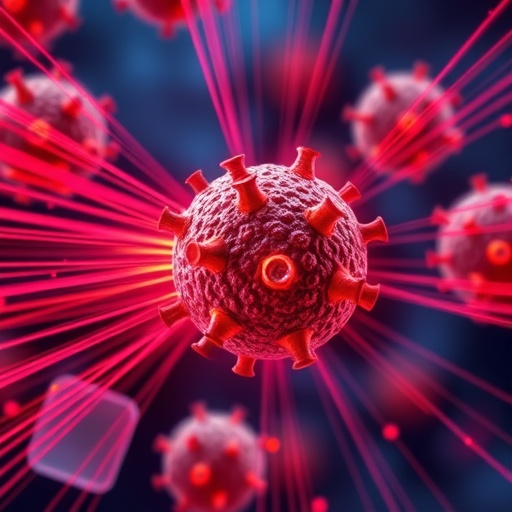
In an exciting breakthrough for cancer therapeutics, researchers have uncovered a novel approach to combat acute lymphoblastic leukemia (ALL) by combining static magnetic fields (SMFs) with the widely used chemotherapy drug doxorubicin. This innovative strategy intensifies the generation of reactive oxygen species (ROS) within leukemia cells, ultimately triggering apoptosis — the programmed cell death that is often dysregulated in cancerous tissues. The study opens potential avenues for improving therapeutic efficacy while possibly reducing the toxic side effects associated with conventional chemotherapy regimens.
Acute lymphoblastic leukemia, predominantly affecting children and young adults, is characterized by the uncontrolled proliferation of immature lymphoid cells in the bone marrow and peripheral blood. While advances in chemotherapeutic protocols have significantly enhanced survival rates, treatment resistance and relapse remain formidable challenges. The advent of adjunct therapies that can sensitize leukemic cells to existing drugs without escalating systemic toxicity is therefore a pressing need in oncology research.
The research team, composed of Nikkhah Bahrami, Sadeghian, and Vazifeh Shiran, explored the cellular and molecular dynamics induced by the synergistic application of SMFs alongside doxorubicin. Static magnetic fields, which exert constant magnetic forces without fluctuation over time, have been studied extensively for their biological effects but are now gaining attention for their ability to modulate cellular processes relevant to cancer pathophysiology.
Intriguingly, the combined treatment was observed to amplify oxidative stress within leukemic cells. ROS — chemically reactive molecules containing oxygen, such as peroxides and free radicals — play a dual role in cellular biology. At controlled levels, they are integral to signaling pathways and homeostasis, but excessive ROS can inflict oxidative damage on lipids, proteins, and nucleic acids, thereby initiating apoptosis. The study revealed that SMFs potentiate doxorubicin-mediated ROS generation, pushing the leukemic cells beyond a critical threshold of oxidative damage.
Mechanistically, doxorubicin functions by intercalating DNA strands and inhibiting topoisomerase II, disrupting DNA replication and repair. Additionally, it induces the formation of ROS as a byproduct of its redox cycling activity. The amplification of ROS by SMFs may result from magnetic field-induced alterations in radical pair reactions and electron spin states, enhancing free radical lifetimes and reactivity. This novel interplay provides a compelling rationale for integrating SMFs into conventional chemotherapy to escalate pro-apoptotic damage selectively within cancer cells.
The experimental design incorporated in vitro cultures of ALL cell lines exposed to varying intensities of SMF in combination with sub-lethal doses of doxorubicin. Quantitative assays measured intracellular ROS levels, mitochondrial membrane potential—the destabilization of which is a hallmark of apoptosis—and downstream caspase activation. The findings exhibited a significant increase in apoptotic markers and a concomitant decrease in cell viability compared to monotherapy controls.
One paramount advantage of this combinatorial modality lies in its potential to reduce the required dose of doxorubicin, thus mitigating the cardiotoxicity and myelosuppression commonly associated with high cumulative doses. Furthermore, the selective amplification of ROS in leukemic cells, sparing normal hematopoietic progenitors, hints at an improved therapeutic index, an essential parameter in clinical oncology.
This research situates itself at the interface of biophysics and molecular oncology, emphasizing how physical stimuli can modulate biochemical pathways to therapeutic advantage. The application of SMFs as a non-invasive adjunct could represent a paradigm shift, enabling clinicians to harness electromagnetic forces to sensitize tumors to well-established chemotherapeutics, potentially overcoming multidrug resistance mechanisms.
Another notable implication is the insight into radical pair theory within biological contexts. Static magnetic fields, by influencing the spin states of radical intermediates generated during oxidative metabolism, can alter the yield and distribution of ROS species. The study’s evidence suggests that leukemic cells can be strategically targeted through this biophysical lens, which may extend beyond ALL to other malignancies characterized by redox imbalance.
While these results are highly promising, translation into clinical practice will require extensive in vivo validation, dose optimization, and long-term safety assessments. Future studies must also elucidate whether intermittent or continuous exposure to SMFs yields the optimal therapeutic window and to what extent patient-specific factors modulate efficacy.
This innovative research heralds a new chapter in leukemia treatment, combining conventional chemotherapeutic agents with physical field applications to exploit vulnerabilities of cancer metabolism and survival pathways. It exemplifies the growing interdisciplinary collaboration that is reshaping cancer therapy, blending physics, chemistry, and biology to devise smarter, more effective treatments.
As researchers continue to probe the mechanistic underpinnings of SMFs’ influence on ROS dynamics and cellular apoptosis, we anticipate the refinement of personalized oncology protocols incorporating magnetic field conditioning. This non-pharmacological potentiation could dramatically alter therapeutic landscapes, offering renewed hope for patients with drug-resistant leukemias and beyond.
The amalgamation of static magnetic fields with doxorubicin to enhance ROS generation and induce apoptosis in acute lymphoblastic leukemia cells represents a pioneering approach that could redefine therapeutic standards. The study not only advances our understanding of cancer cell biology but also opens the door to novel, adjunctive treatment methodologies with profound clinical implications.
Cite Scienmag News
Nathaniel Bowman. (October 29, 2025). Static Magnetic Fields Boost Doxorubicin’s Leukemia Attack. Scienmag. https://scienmag.com/static-magnetic-fields-boost-doxorubicins-leukemia-attack/
Nathaniel Bowman. "Static Magnetic Fields Boost Doxorubicin’s Leukemia Attack." Scienmag, 29 October 2025, https://scienmag.com/static-magnetic-fields-boost-doxorubicins-leukemia-attack/. Accessed 3 September 2026.
Nathaniel Bowman. "Static Magnetic Fields Boost Doxorubicin’s Leukemia Attack." Scienmag. October 29, 2025. https://scienmag.com/static-magnetic-fields-boost-doxorubicins-leukemia-attack/


