


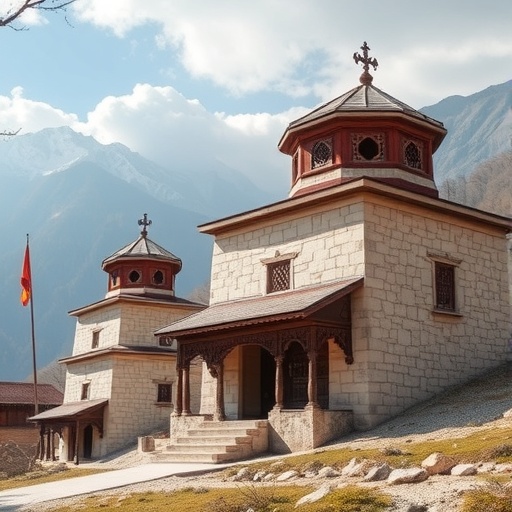
In the high-altitude region of Dolpo in north-west Nepal, a concerted effort is being made to document and preserve the rich Buddhist architectural heritage that dates back to the 11th century. This region is renowned for its remote and breathtaking landscapes, which are dotted with numerous ancient temples. However, these cultural treasures are increasingly threatened by natural disasters, such as earthquakes and landslides, alongside pressures from modern infrastructure developments, particularly the ambitious Chinese Belt and Road Initiative. The combination of these challenges and a lack of financial resources for ongoing maintenance makes the preservation of Dolpo’s numerous temples an urgent concern.
Researchers from Graz University of Technology (TU Graz), operating under the auspices of the Austrian Science Fund (FWF), have embarked on an extensive project to document and analyze these critical structures. Over several expeditions, the researchers have endeavored to create detailed 3D computer models of the temple complexes, which serve both as a means of cataloging the existing structures and as a tool for fostering awareness of their cultural significance. This academic pursuit not only contributes to the field of architectural history but also aims to bolster efforts for future preservation and restoration of these sacred buildings.
Carmen Auer, a lead researcher from the Institute of Architectural Theory, History of Art and Cultural Studies, articulates the challenge posed by the scarcity of written and pictorial documentation concerning these temples. Given that the buildings themselves often provide the most reliable information regarding their history, the study has set out to generate new knowledge about the sacred architecture of this remote region. Notably, the insights derived from the research will be made publicly available, paving the way for potential renovations and fostering a greater understanding of the cultural heritage, both locally and globally.
To tackle the unique challenges posed by Dolpo’s rugged terrain and its limited accessibility, the research team undertook substantial preparatory work. Traditional surveying methods were deemed unsuitable due to the area’s inaccessibility on foot and the necessity for lightweight equipment that can endure high-altitude conditions. Additionally, the lack of reliable electricity and internet connectivity has led to the innovative use of solar panels and batteries, enabling the researchers to adapt their software for remote functionality, which is crucial for conducting this fieldwork.
The team implemented a comprehensive set of advanced surveying techniques, which included laser scanning, surveying total stations, mini-drones, and high-resolution DSLR cameras. These tools proved instrumental in documenting not only the structural integrity of the temples but also the intricate artworks, inscriptions, and decorative elements that adorn them. The rigorous data amassed during this fieldwork has culminated in the creation of 3D models and 2D plans of the sites, which provide invaluable insights into their architectural composition and historical contexts.
As of now, 18 Buddhist sites have been meticulously documented, with 16 of these locations having undergone detailed surveys and analyses. Each temple forms part of a larger sacred landscape that has evolved over centuries, shaped by geographical considerations, historical narratives, and spiritual beliefs of the local population. This delicate interplay necessitates an open dialogue with the community to ensure that the documentation process respects both cultural practices and local knowledge.
The researchers have already outlined plans for additional exploration of Dolpo in the coming years, particularly focusing on the northernmost areas. Within this region lies the Yangtse Monastery, where many architectural treasures remain undocumented. Thus, efforts to safeguard this historic legacy will continue, emphasizing the importance of both conservation and community involvement in fostering the cultural identity of the region.
Through their dedicated work, the TU Graz team hopes not only to protect Dolpo’s invaluable cultural assets but also to spark greater interest and investment in the maintenance of these ancient structures. By enhancing public awareness of the region’s historical significance, the researchers aim to galvanize support for preservation efforts that could mitigate the risks posed by environmental degradation and modern development.
The research findings have been detailed in the journal “Heritage,” marking a notable contribution to the growing body of knowledge surrounding Buddhist architecture in high-altitude settings. The publication aims to encourage interdisciplinary discourse around the conservation of cultural heritage sites and cross-border collaborations that are increasingly vital in our interconnected world.
In conclusion, the initiative undertaken by TU Graz serves as a prime example of how academia can bridge the gap between cultural heritage preservation and technological advancement. By harnessing modern tools and fostering community engagement, there lies a hopeful path forward for the conservation of Dolpo’s sacred architecture, ensuring that these historical treasures endure for future generations to appreciate and learn from.
Keywords
Cultural Heritage, Buddhist Architecture, Dolpo, Nepal, Remote Sensing, Preservation, 3D Modeling, Community Engagement, Interdisciplinary Research.
Cite Scienmag News
Courtney Benton. (October 23, 2025). TU Graz Explores Preservation of Endangered Cultural Heritage in the Western Himalayas. Scienmag. https://scienmag.com/tu-graz-explores-preservation-of-endangered-cultural-heritage-in-the-western-himalayas/
Courtney Benton. "TU Graz Explores Preservation of Endangered Cultural Heritage in the Western Himalayas." Scienmag, 23 October 2025, https://scienmag.com/tu-graz-explores-preservation-of-endangered-cultural-heritage-in-the-western-himalayas/. Accessed 1 September 2026.
Courtney Benton. "TU Graz Explores Preservation of Endangered Cultural Heritage in the Western Himalayas." Scienmag. October 23, 2025. https://scienmag.com/tu-graz-explores-preservation-of-endangered-cultural-heritage-in-the-western-himalayas/


