


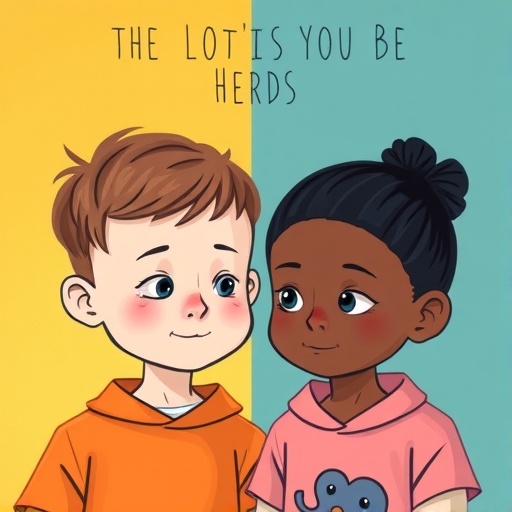
Exploring the intricate dynamics of social perceptions is fundamental in understanding how children navigate their social worlds. A pivotal research piece titled “First Impressions Matter: Exploring Children’s Negative Perceptions of Autistic Children” dives deep into the biases that children often harbor toward their autistic peers. This detailed investigation reveals a troubling trend: children are likely to form negative first impressions of autistic children, based purely on their demeanor and behaviors. At a time when understanding and compassion should permeate childhood interactions, these findings serve as a wake-up call, emphasizing the importance of early social education in combatting ingrained biases.
The study, spearheaded by Van Esch and colleagues, meticulously outlines the nuances involved in children’s perceptions. Researchers found that typical children frequently categorize autistic peers through a lens of misunderstanding and preconceived notions. The resultant negative impressions can lead to exclusion or social isolation, creating a cycle where autistic children are further marginalized in social settings. It raises critical questions about how societal norms influence these perceptions and drives anxiety around developmental diversity among young individuals.
Furthermore, the research illustrates that children learn to identify and label differences early in life, often adhering to societal stereotypes that distort their views on autism. These stereotypes are perpetuated by media portrayals and social narratives that frequently paint autistic individuals in a negative light. By examining the origin of these negative perceptions, the study aims to foster dialogs aimed at dismantling damaging societal narratives about autism.
The ramifications of these findings extend beyond the classroom or playground. They suggest the necessity for targeted interventions to reshape how children perceive autism. Pedagogical strategies, including inclusive education practices, can be utilized to enhance awareness and acceptance among children. Schools can develop programs to teach empathy and inclusivity, thus encouraging interactions based on understanding rather than fear or prejudice.
Interestingly, the researchers also delved into the role of parental attitudes in shaping children’s perceptions. Studies indicate that children often mirror their parents’ beliefs and attitudes towards autism. This discovery highlights the critical role that families play in either perpetuating biases or fostering inclusivity. Parents are urged to engage in open conversations about neurodiversity, and they can frame autism in a positive context to encourage a shift in their children’s outlook.
Moreover, the role of teachers cannot be understated. Educators are in a unique position to facilitate acceptance and understanding within their classrooms. By incorporating discussions about neurodiversity into curricula, teachers foster an environment that promotes empathy and respect from an early age. Such educational frameworks can challenge misconceptions and allow children to appreciate the rich diversity in human behavior.
Peer relationships are crucial in childhood development and can greatly influence how children perceive one another. As the research indicates, fostering friendships across diverse neurological profiles helps mitigate misunderstandings. Initiatives that encourage peer interactions can help dismantle biases that arise from ignorance. When children engage with their autistic counterparts meaningfully, they learn to appreciate differences rather than labeling them negatively.
The findings also expand the conversation on the importance of social skills programming. Organizing workshops and group activities that promote cooperative play can enhance interpersonal skills among children. These settings can serve as platforms for positive interactions, where typical and autistic children collaborate, fostering a more inclusive social environment. As these initiatives gain traction, they may lead to notable shifts in children’s perceptions over time.
While awareness of autism has increased significantly in recent years, there remains a global need for foundational education that promotes understanding from an early age. Misconceptions surrounding autism are often rooted in fear of the unknown. As this study reveals, children make swift judgments, often based on their limited experiences and exposure. Therefore, targeted educational initiatives to introduce all children to the spectrum of neurodiversity are imperative.
Further, the study’s insights imply that interventions should extend beyond formal educational settings. Communities can develop public awareness campaigns aimed at normalizing conversations about autism. By engaging broader societal forces such as media outlets, non-profits, and community organizations, we can work collectively to reshape public perceptions. Raising awareness can transform societal attitudes, a shift essential for building a more inclusive future.
In a social climate where diversity should be celebrated, the study by Van Esch and colleagues highlights the urgency of confronting negative perceptions directly. Much work remains to be done in educating children about autism so they can foster an understanding rich in empathy, compassion, and acceptance. When we equip children with the tools to appreciate differences, we lay the groundwork for a more inclusive society where every child has the opportunity to thrive free from bias.
Ultimately, the overarching message of this research resounds with clarity: first impressions are influential, but they need not dictate social realities. Armed with knowledge, empathy, and a commitment to inclusivity, society can positively alter the trajectory of how children perceive one another. As we strive to break down barriers and build bridges, we create a collective responsibility to uplift each child’s unique narrative in the intricate tapestry of life.
Cite Scienmag News
Ophelia Keating. (October 20, 2025). Children’s Negative Views on Autistic Peers Explored. Scienmag. https://scienmag.com/childrens-negative-views-on-autistic-peers-explored/
Ophelia Keating. "Children’s Negative Views on Autistic Peers Explored." Scienmag, 20 October 2025, https://scienmag.com/childrens-negative-views-on-autistic-peers-explored/. Accessed 1 September 2026.
Ophelia Keating. "Children’s Negative Views on Autistic Peers Explored." Scienmag. October 20, 2025. https://scienmag.com/childrens-negative-views-on-autistic-peers-explored/


