

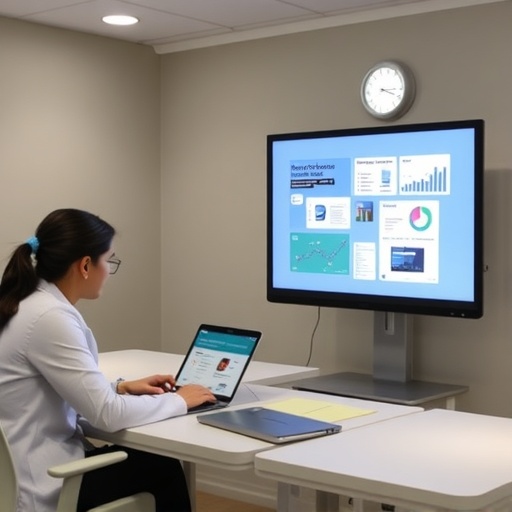
In the rapidly evolving field of healthcare, the convergence of nursing and informatics has become increasingly critical. New research conducted by a team of scholars, led by Ming Shen, alongside colleagues Zhiwei Feng and Ying Shen, has illuminated a transformative approach to enhancing informatics literacy among undergraduate nursing students. The study, titled “Enhancing undergraduate nursing informatics literacy through design-based learning: a mixed-methods participatory action research study,” presents novel strategies that combine academic rigor with practical application, bridging gaps in knowledge and fostering skills essential for the future of nursing practice.
The integration of technology in healthcare has underscored the necessity for nurses to possess a solid grounding in informatics. As healthcare systems increasingly rely on data-driven decision-making, the ability to navigate complex information systems has become indispensable. The traditional curriculum often falls short in equipping nursing students with the competencies required for effective informatics use in clinical settings. Recognizing this, the researchers aimed to explore innovative teaching methods that could effectively address these gaps in nursing education.
In this extensive mixed-methods study, the authors implemented design-based learning (DBL) as a central pedagogical strategy. DBL emphasizes the creation of real-world solutions through a project-based framework, where students actively participate in the learning process. By engaging in collaborative projects, students are encouraged to apply theoretical knowledge in practical settings, ultimately fostering a deeper understanding of informatics principles and their applications in nursing.
The researchers involved undergraduate nursing students in participatory action research, allowing them to be co-creators of the learning experience. This approach not only empowers students but also enhances their engagement and ownership over their education. The study highlighted how this method can cultivate critical thinking and problem-solving skills, which are vital in the dynamic and often unpredictable landscape of healthcare.
As the participants navigated through the DBL process, they designed and implemented solutions to authentic informatics challenges faced in clinical settings. Through iterative cycles of design, feedback, and refinement, students gained firsthand experience in translating theoretical knowledge into practice. This experiential learning not only heightened their informatics literacy but also equipped them with a valuable skill set that will benefit their future careers.
Moreover, the researchers gathered qualitative data through participant reflections and feedback sessions, which were instrumental in evaluating the efficacy of the DBL approach. Students reported increased confidence in their informatics abilities and an enhanced understanding of how to leverage technology to improve patient care outcomes. This qualitative insight underscores the potential of design-based learning as a transformative teaching strategy in nursing education.
Quantitative metrics were also employed to assess the impact of the program on student learning outcomes. Pre- and post-intervention assessments revealed significant improvements in informatics literacy scores among participants. The findings suggest that the design-based learning approach not only meets the educational needs of nursing students but also aligns with the demands of contemporary healthcare environments.
The implications of this research extend beyond the confines of the classroom. In a time when healthcare systems are increasingly focused on data management and analytics, nurses must be prepared to utilize informatics tools effectively. The integration of such educational methodologies in nursing curricula represents a paradigm shift towards producing a workforce that is not only clinically competent but technologically adept.
Furthermore, as the healthcare landscape continues to shift towards telehealth and remote patient monitoring, the necessity for competent informatics use becomes even more pronounced. The findings of Shen and colleagues provide a blueprint for educational institutions seeking to adapt their programs to meet the evolving needs of the healthcare industry. By cultivating informatics literacy through innovative teaching methodologies, nursing schools can better prepare graduates for the complexities of modern patient care.
The study by Shen et al. highlights the potential for design-based learning to serve as a model for other disciplines within healthcare education. As interdisciplinary collaboration becomes increasingly vital in addressing healthcare challenges, the principles inherent in DBL may offer valuable insights for enhancing learning across various domains, including pharmacy, social work, and medicine.
In conclusion, the research conducted by Shen, Feng, and Shen represents a landmark contribution to the field of nursing informatics education. By employing design-based learning and participatory action research, the study showcases the strengths of innovative pedagogies in fostering informatics literacy among nursing students. This research not only enriches the academic discourse around nursing education but also holds the potential to transform educational practices in ways that will resonate through generations of healthcare professionals.
The findings of this study encourage ongoing dialogue about the future of nursing education and the role of informatics in shaping the competencies required for effective patient care. As the healthcare industry continues to innovate and evolve, it remains imperative for future generations of nurses to be well-versed in informatics, ensuring that they can meet the demands of the profession with confidence and expertise.
Emphasizing the importance of collaboration and the integration of technology in nursing education serves as a reminder of the critical need for educators to remain attuned to the changing landscapes of healthcare. Ultimately, the work by Shen and his team paves the way for a brighter future in nursing education, equipping students with the tools and knowledge necessary to thrive in a fast-paced, information-driven world.
Shen, M., Feng, Z., Shen, Y. et al. Enhancing undergraduate nursing informatics literacy through design-based learning: a mixed-methods participatory action research study.
BMC Nurs 24, 1268 (2025). https://doi.org/10.1186/s12912-025-03927-8
Cite Scienmag News
Ophelia Keating. (October 18, 2025). Boosting Nursing Informatics Literacy with Design Learning. Scienmag. https://scienmag.com/boosting-nursing-informatics-literacy-with-design-learning/
Ophelia Keating. "Boosting Nursing Informatics Literacy with Design Learning." Scienmag, 18 October 2025, https://scienmag.com/boosting-nursing-informatics-literacy-with-design-learning/. Accessed 5 November 2026.
Ophelia Keating. "Boosting Nursing Informatics Literacy with Design Learning." Scienmag. October 18, 2025. https://scienmag.com/boosting-nursing-informatics-literacy-with-design-learning/