


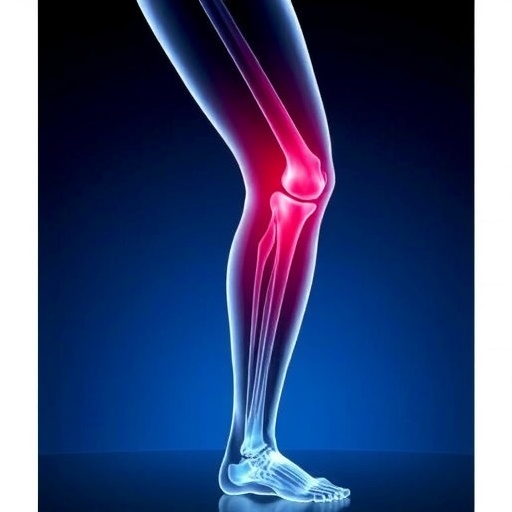
In the realm of orthopedic rehabilitation, understanding the intricacies of knee function following surgical interventions, particularly total knee arthroplasty (TKA), has become a pivotal area of research. A recent study conducted by Blessinger et al. delves deep into this subject, illuminating the complex relationship between kinematics and muscle functionality during the sit-to-stand transition, an essential everyday activity that significantly impacts the quality of life for individuals recovering from TKA.
Our bodies are intricate systems, and the sit-to-stand movement is a striking example of this complexity. It involves coordinating numerous muscle groups, articulating joints, and regulating balance and posture. For TKA patients, recovering the ability to perform this motion efficiently and painlessly can signify a successful rehabilitation process. However, the question remains: which factors predominantly drive this recovery? Is it primarily the correct kinematic patterns, or is muscle function the linchpin during this critical transition?
The study meticulously examines kinematics, which refers to the motion of points, bodies, and systems without considering their mass or the forces that cause them to move. In the context of TKA, kinematics encompasses the movements of the knee joint, hip joint, and even the torso during the sit-to-stand process. By analyzing the angles and velocities of these movements, researchers can gain insight into the mechanical performance differences between individuals post-surgery and the normal populations.
Moreover, muscle function, the capacity of muscle fibers to generate force, plays a pivotal role in supporting body weight and mobilizing during this transition. After TKA, the quadriceps and hamstring muscles, in particular, may not function as effectively as they did prior to surgery. This impairment can affect how well an individual can rise from a seated position, revealing the dynamic interplay between muscle strength, endurance, and movement mechanics.
Through a detailed analysis of patients undergoing rehabilitation, the researchers sought to identify whether enhanced kinematic patterns could be attributed to superior muscle function or if kinematic rehabilitation pathways could lead to improved muscle performance. Utilizing state-of-the-art motion capture technology and force plates, the team collected comprehensive data on the biomechanics of the sit-to-stand motion in subjects who had undergone primary TKA.
The data collected was telling. Patients who exhibited more normal kinematic patterns—defined by smoother, more controlled movements—also tended to demonstrate higher muscle function scores. This correlation suggested that, for effective rehabilitation, therapies should focus on both aspects of recovery concurrently. Strengthening exercises combined with kinematic training may provide a holistic approach, facilitating a better and more rapid recovery process.
Notably, the findings also raised crucial discussions regarding rehabilitation protocols. Current practices typically emphasize muscle strengthening or flexibility independently. However, the study’s insights might compel rehabilitation professionals to reassess such approaches. Training should not merely concentrate on lifting heavier weights or increasing joint mobility; instead, integrating kinematic analysis into physical therapy regimens could be beneficial for long-term outcomes.
In pursuit of understanding the clinical implications of these findings, the researchers highlight how improved kinematic patterns may not only enhance performance in therapeutic settings but also translate to tangible benefits in everyday activities, such as returning to work or engaging in leisure activities. By facilitating smoother sit-to-stand transitions, healthcare providers can significantly uplift the quality of life for TKA patients.
Additionally, the implications of this study extend beyond immediate postoperative care. It hints at the importance of ongoing assessments of both muscle function and kinematics even months or years following surgery. Continuing to monitor these patterns can provide invaluable insights into long-term recovery trajectories and aid clinicians in modifying therapeutic approaches as necessary.
The journey of recovery from total knee arthroplasty is not straightforward; it is often laden with challenges such as pain, stiffness, and loss of mobility. By advocating the importance of comprehensive recovery strategies that focus on both kinematic performance and muscle functionality, the research team hopes to shed light on a path that not only enhances rehabilitation outcomes but also instills a sense of empowerment in patients as they navigate their recovery.
This study serves as a clarion call for renewed focus on evaluating and treating knee function in a more integrated manner. As we stand at the intersection of biomechanics, physical therapy, and patient-centered care, the insights from Blessinger et al. could redefine conventional rehabilitation practices, signaling a gratifying shift towards holistic and evidence-based approaches in orthopedic recovery.
In conclusion, the interplay between kinematics and muscle function in the sit-to-stand transition offers a critical lens through which to view the rehabilitation of TKA patients. For healthcare professionals, leveraging this knowledge to create multifaceted, tailored rehabilitation programs could potentially change the landscape of recovery for countless individuals. As research continues to evolve in this area, it is crucial to remain steadfast in our commitment to enhancing rehabilitation practices, ultimately leading to improved patient outcomes and better quality of life.
Blessinger, K.S., Roelker, S.A., Lloyd, R.A. et al. Do Kinematics or Muscle Function During Sit-to-Stand Change Following a Primary Total Knee Arthroplasty?. Ann Biomed Eng (2025). https://doi.org/10.1007/s10439-025-03782-3
Cite Scienmag News
Ophelia Keating. (August 31, 2025). Kinematics and Muscle Function Post-Knee Arthroplasty. Scienmag. https://scienmag.com/kinematics-and-muscle-function-post-knee-arthroplasty/
Ophelia Keating. "Kinematics and Muscle Function Post-Knee Arthroplasty." Scienmag, 31 August 2025, https://scienmag.com/kinematics-and-muscle-function-post-knee-arthroplasty/. Accessed 31 August 2026.
Ophelia Keating. "Kinematics and Muscle Function Post-Knee Arthroplasty." Scienmag. August 31, 2025. https://scienmag.com/kinematics-and-muscle-function-post-knee-arthroplasty/


