


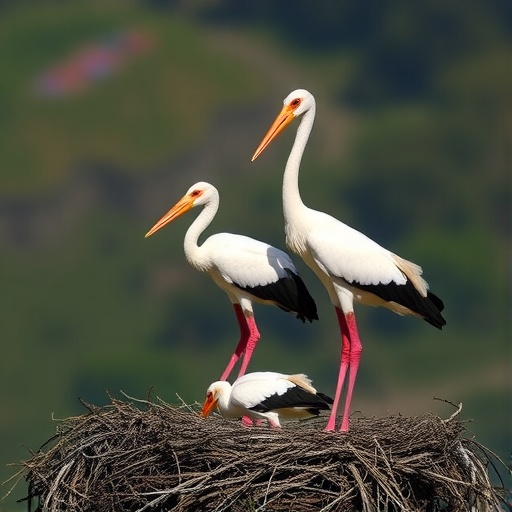
In the realm of avian ecology, few studies have captured the pivotal interactions between age and nesting behavior as profoundly as the recent investigation into the solitary nesting habits of the white stork (Ciconia ciconia). Conducted by a prominent team of researchers, including Bialas, Gaona-Gordillo, and Dylewski, this research is set to redefine our understanding of avian life cycles and habitat preferences. It highlights a nuanced dimension of avian reproductive strategies, particularly how factors like age can significantly influence nest site selection and success, thus reverberating through entire ecosystems.
White storks are not just a spectacle of nature; they are key indicators of ecological health. Optimal nesting sites are critical to the survival of these magnificent birds, providing them with safety from predators and proximity to food sources. The study dives deeply into the correlations between the age of the stork and the attributes of the nesting sites they choose. Interestingly, as storks mature, their choices of nest locations reflect their increased experience and adaptation to environmental pressures.
The research details how younger storks tend to select nesting sites that are more exposed and less secure, potentially leading to a lower survival rate of their fledglings. In contrast, older storks demonstrate a remarkable shift towards sites characterized by denser vegetation and higher elevations, which offer enhanced protection from predators and environmental hazards. This is not merely a coincidence; it is a testament to the learned behaviors accumulated over years of survival.
In addition to establishing a connection between age and nesting choice, the study also observes the broader implications for the white stork population. By prioritizing safer nesting sites, older storks can increase the likelihood of their offspring’s survival, affecting population dynamics and reproductive success rates in the long term. This phenomenon echoes the vital processes of natural selection, whereby advantageous traits are passed down through generations, ultimately shaping the future of the species.
Through a meticulous analysis of various nests, the researchers utilized cutting-edge methodologies, including tracking technology and detailed habitat assessments. These approaches allowed them to gather invaluable data on nest selection across a wide array of environmental conditions. By using such innovative techniques, the study captures the delicate balance of decision-making in storks and raises questions about how these behaviors could adapt in changing climates.
Moreover, the implications of this research extend beyond the white stork itself. Understanding these nesting behaviors allows scientists to glean insights into the broader ecosystem dynamics. As the white stork plays a role in controlling pest populations and influencing vegetation, their nesting preferences can inform conservation strategies for other species sharing their habitats.
The age-related segregation observed in the nesting sites also incites a discussion about the inherent adaptability of storks to shifting environments. As climate change continues to pose threats to avian habitats, the flexibility in nesting choices might be a crucial trait for the survival of many bird species. When younger birds are trained to identify dangerous nesting sites through the observations of older, more experienced storks, we might witness a remarkable shift in how these species respond to ecological shifts.
The foundational research conveyed through this study serves as a valuable framework for future studies concerning avian ecology and behavior. With their findings, the authors emphasize the necessity to continue exploring the dynamics of age, experience, and environmental interaction not only in storks but across various avian and wildlife species. Such comprehensive studies are critical if conservationists aim to create effective strategies that protect these species and their habitats for years to come.
In light of these compelling findings, it is clear that the relationship between age and nesting site selection is a crucial avenue for further exploration in avian research. The white stork, long regarded as a symbol of good luck, exemplifies the intricate dance of nature, where every decision can lead to profound consequences on individual survival and species longevity.
As this captivating study gains traction within the scientific community, it opens avenues for both academic research and public interest. The more we understand about species like the white stork, the better equipped we are to conserve them and their environments. This is an urgent narrative, as the survival of the white stork is reflective of broader environmental health – an issue that resonates deeply in the current age of climate volatility.
In summary, the investigation into the nesting behaviors of white storks yields significant insights that could reshape avian ecology. By linking age and habitat preference, the authors unveil a sophisticated understanding of survival strategies that goes beyond mere instinct. As the dialogue continues, one can only hope that this research informs a broader conversation about the importance of safeguarding vital ecosystems. The white stork, through its age-related behaviors, underscores a narrative of resilience and adaptation, reminding us of the delicate balance that exists within nature and the necessity to preserve it for future generations.
Bialas, J.T., Gaona-Gordillo, I., Dylewski, Ł. et al. Age-related nest-site segregation in a solitary nesting population of white stork Ciconia Ciconia.
Front Zool 22, 19 (2025). https://doi.org/10.1186/s12983-025-00574-2
Cite Scienmag News
Gavin Prescott. (August 31, 2025). Age-Dependent Nesting Patterns in White Storks. Scienmag. https://scienmag.com/age-dependent-nesting-patterns-in-white-storks/
Gavin Prescott. "Age-Dependent Nesting Patterns in White Storks." Scienmag, 31 August 2025, https://scienmag.com/age-dependent-nesting-patterns-in-white-storks/. Accessed 3 September 2026.
Gavin Prescott. "Age-Dependent Nesting Patterns in White Storks." Scienmag. August 31, 2025. https://scienmag.com/age-dependent-nesting-patterns-in-white-storks/


