

In recent years, environmental pollution has emerged as a paramount concern for scientists and policymakers alike. One of the significant contributors to this challenge is the pervasive contamination of water systems with antibiotics and various nutrients. Traditional methods of remediation have often proven inadequate, particularly in complex matrices where these pollutants exist. In a remarkable study led by researchers Gupta and Philip, published in the journal Environmental Science and Pollution Research, an innovative bioremediation strategy utilizing self-acclimatized microalgae-bacteria consortia has shown promising results, indicating a potential revolutionary advancement in the field of wastewater management.
The research set out to evaluate the efficacy of a novel bioremediation approach that combines the strengths of microalgae and bacteria to tackle antibiotic pollution. While standalone bioremediation systems have been employed in various environments, the findings suggest that a combined approach may significantly enhance the degradation of harmful pollutants. This is particularly critical as antibiotic resistance becomes a growing concern globally, making the removal of these substances from the environment imperative.
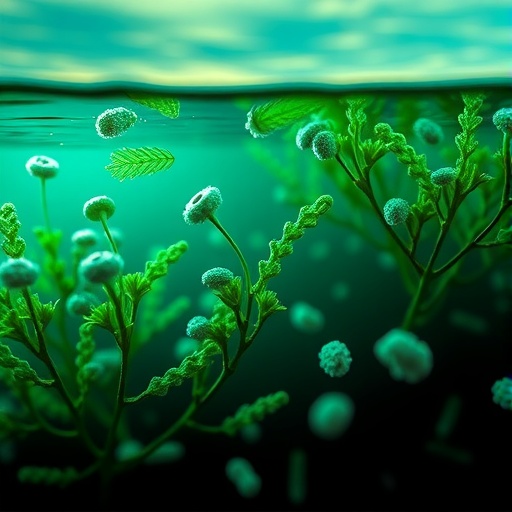
In the study, the researchers created self-acclimatized consortia, which refers to the cultivation of microalgae and bacteria together in a manner that allows them to adapt and thrive in the presence of environmental stressors, specifically antibiotics and nutrient influx. This acclimatization process not only enhances the metabolic capabilities of the organisms involved but also fosters a synergistic relationship that promotes more efficient bioremediation. This stands in contrast to traditional methods where individual species are used in isolation, often leading to subpar results.
To assess the effectiveness of the microalgae-bacteria consortia, the researchers carried out a comprehensive series of experiments in controlled environments. The results illuminated a stark contrast between the dual system approach and standalone systems, with the combined consortia achieving significantly higher rates of pollutant degradation. Real-time monitoring of pollutant levels illustrated a drastic reduction in antibiotic concentrations, validating the hypothesis that synergistic interactions can lead to enhanced bioremediation outcomes.
The study emphasizes the role of microalgae as not only oxygen producers but also as facilitators of nutrient cycling in aquatic ecosystems. Microalgae are adept at utilizing nutrients such as nitrogen and phosphorus, which are often found in excess in contaminated water bodies. This not only helps in purifying the water but also prevents algal bloom scenarios, which can deteriorate water quality and disrupt aquatic life. The unique ability of microalgae to absorb these nutrients while simultaneously supporting bacterial partners creates a dynamic ecosystem where both parties thrive.
Moreover, the cost-effectiveness of this bioremediation method cannot be overstated. Traditional remediation technologies can be prohibitively expensive and resource-intensive. In contrast, the self-acclimatization process harnesses native microorganisms, thereby reducing reliance on expensive chemical treatments or engineered solutions. This affordability makes it an attractive option for municipalities and industries looking to manage wastewater more sustainably.
Another noteworthy aspect of the research is the environmental applicability of the microalgae-bacteria consortia. The study tested the method across diverse complex matrices to simulate real-world conditions, demonstrating the flexibility and resilience of this bioremediation technology. The ability of the consortia to adapt to varying environmental cues indicates its potential for widespread use in different geographic and pollution contexts, a feature that traditional bioremediation methods often lack.
Although promising, the researchers acknowledge that further studies are necessary to fully understand the long-term viability of these consortia in various ecosystems. Future investigations will aim to explore the ecological implications of introducing such engineered systems into natural environments and assess potential impacts on native microbial communities. This precaution is vital to ensure that the solution does not inadvertently lead to new ecological challenges while solving existing ones.
The implications of this research extend beyond mere academic interest; they touch on critical issues such as public health, environmental stewardship, and sustainable development. As antibiotic resistance continues to rise globally, the need for effective wastewater treatment solutions becomes more pressing. The insights gained from Gupta and Philip’s work provide a roadmap for innovators, environmentalists, and policymakers to adopt more holistic approaches to environmental management.
In conclusion, the breakthrough findings provide an optimistic outlook on bioremediation technologies tailored for combating antibiotic pollution. By leveraging the natural rhythms of microbial life and fostering inter-species cooperation, these self-acclimatized consortia not just remediate pollutants but do so with minimal economic and ecological costs. As researchers globally strive to combat water pollution effectively, the methodologies explored in this study could serve as a cornerstone for future innovations in bioremediation and environmental protection.
The study paved the way for a significant paradigm shift in remediation strategies. With growing awareness of antibiotic contamination’s impact on human and environmental health, the research advocates for a comprehensive reevaluation of existing wastewater treatment protocols. With promising results already showcased in the preliminary phases, the potential of these microalgae-bacteria systems could mark a pivotal moment in the fight against environmental pollution.
Reflecting on the essence of this research, it becomes evident that interdisciplinary collaboration will be crucial. Bringing together microbiologists, ecologists, and environmental engineers will help fine-tune these bioremediation approaches, maximizing their potential and ensuring their safe and effective application across diverse environments. As we stand on the brink of new discoveries in this domain, the insights from the ongoing research will undoubtedly shape the future of sustainable water management.
Efficiency is critical; thus, integrating advanced technologies with biological systems could enhance monitoring and operational capabilities. Automating the processes involved in maintaining optimal growth conditions for these consortia can streamline operations, reducing human error and increasing the overall effectiveness of wastewater treatment systems.
Ultimately, this research serves as a call to action for the scientific community and environmental advocates alike. As pollution persists and the consequences of inaction become more dire, the urgency to embrace innovative solutions like the self-acclimatized microalgae-bacteria consortia model grows. It is time to reimagine our approach to environmental cleanup, taking cues from natural ecosystems and harnessing their inherent talents. The future of bioremediation may quite possibly lie in the delicate balance of life itself, a lesson that Gupta and Philip’s research elegantly illustrates.
Gupta, Y., Philip, L. Accelerated bioremediation of antibiotics and nutrients in complex matrices using self-acclimatized, cost-effective microalgae‑bacteria consortia: a comprehensive comparison with standalone systems. Environ Sci Pollut Res (2025). https://doi.org/10.1007/s11356-025-36895-2
Cite Scienmag News
Savannah Blake. (August 30, 2025). Enhancing Antibiotic Bioremediation with Microalgae-Bacteria Consortia. Scienmag. https://scienmag.com/enhancing-antibiotic-bioremediation-with-microalgae-bacteria-consortia/
Savannah Blake. "Enhancing Antibiotic Bioremediation with Microalgae-Bacteria Consortia." Scienmag, 30 August 2025, https://scienmag.com/enhancing-antibiotic-bioremediation-with-microalgae-bacteria-consortia/. Accessed 23 November 2026.
Savannah Blake. "Enhancing Antibiotic Bioremediation with Microalgae-Bacteria Consortia." Scienmag. August 30, 2025. https://scienmag.com/enhancing-antibiotic-bioremediation-with-microalgae-bacteria-consortia/




